Table of Contents
- What Is a Mobile Coffee Trailer for Events?
- Mobile Coffee Trailer vs. Cart: Key Differences
- Mobile Coffee Trailer Health Department Requirements
- Coffee Catering for Weddings: Creating Memorable Moments
- Mobile Coffee Cart Rental Cost and Pricing Models
- Event Types and Service Options
- Equipment, Power, and Technical Requirements
- Booking Your Mobile Coffee Trailer: What to Expect
Last Updated: August 6, 2026
What Is a Mobile Coffee Trailer for Events?
A mobile coffee trailer for events is a fully equipped, towable unit that brings specialty coffee service directly to your venue. It combines commercial-grade espresso machines, grinders, refrigeration, and water systems in a compact, self-contained package designed for weddings, corporate gatherings, brand activations, and private celebrations.
Guests get freshly prepared specialty drinks without your event requiring a dedicated indoor kitchen or barista station. The trailer arrives, sets up in your parking lot or outdoor space, and operates independently. When the event ends, it departs, leaving no footprint behind.
Colada Kulture Co. specializes in this exact service across Miami and South Florida, delivering custom specialty coffee experiences tailored to your event’s vibe, guest count, and menu preferences. The real value isn’t just the coffee, it’s the experience. A well-executed mobile coffee service becomes a conversation point and a memorable detail guests actually talk about after your event.
Mobile Coffee Trailer vs. Cart: Key Differences
A mobile coffee cart is a wheeled stand or compact unit that fits in a standard vehicle. It typically features a single espresso machine, grinder, and basic water/waste systems. Setup takes 15-30 minutes. Carts work best for smaller events (under 100 guests), farmers markets, and intimate gatherings. The Ferla Mini Coffee Cart, for example, starts under $5,000.
A mobile coffee trailer is a towable unit ranging from 14 to 30 feet in length. It contains multiple espresso machines, commercial refrigeration, larger water storage, and sometimes additional equipment like grinders, cold brew taps, and pastry displays. Setup typically takes 45 minutes to 2 hours. Trailers handle high-volume service for 200+ guests without quality degradation. The Hudson Trailer Company builds custom 14-foot and 17-foot models starting at $44,000.
For most corporate events and upscale weddings in South Florida, a trailer is the standard. It signals investment in the guest experience and eliminates the "rushed barista" problem during peak service windows.
Mobile Coffee Trailer Health Department Requirements
If you’re operating a mobile coffee trailer commercially, health department compliance is the foundation of legal operation.
NSF Certification and Compliance Standards
NSF (National Sanitation Foundation) certification is the gold standard for mobile food service equipment. NSF-certified equipment meets strict standards for material safety, construction, and cleanability.
A compliant mobile coffee trailer includes:
- NSF-certified espresso machines and grinders
- Stainless steel counters and sinks
- Separate hot and cold water systems with backflow prevention
- Adequate drainage and grey water storage (typically 40+ gallons)
- Handwashing stations with hot and cold running water
- Proper ventilation and exhaust systems
- Food storage at correct temperatures
Many manufacturers now offer NSF-certified models as standard. This certification simplifies permitting because inspectors know the equipment meets baseline safety requirements.
Permitting and Local Regulations
Every Florida county and municipality has its own mobile food service permitting process. Generally, you’ll need:
- A mobile food service license from the Florida Department of Business and Professional Regulation (DBPR)
- Local county health department approval
- City or county mobile food service permit
- Proof of liability insurance (typically $1M minimum)
- A commissary or central kitchen for prep work (depending on your menu)
- Regular health inspections (usually quarterly)
The permitting timeline typically runs 30-60 days from application to approval. If you’re renting a trailer from a service like Colada Kulture Co., they handle the licensing and compliance. You book the service, they show up with all permits current and equipment certified.
Coffee Catering for Weddings: Creating Memorable Moments
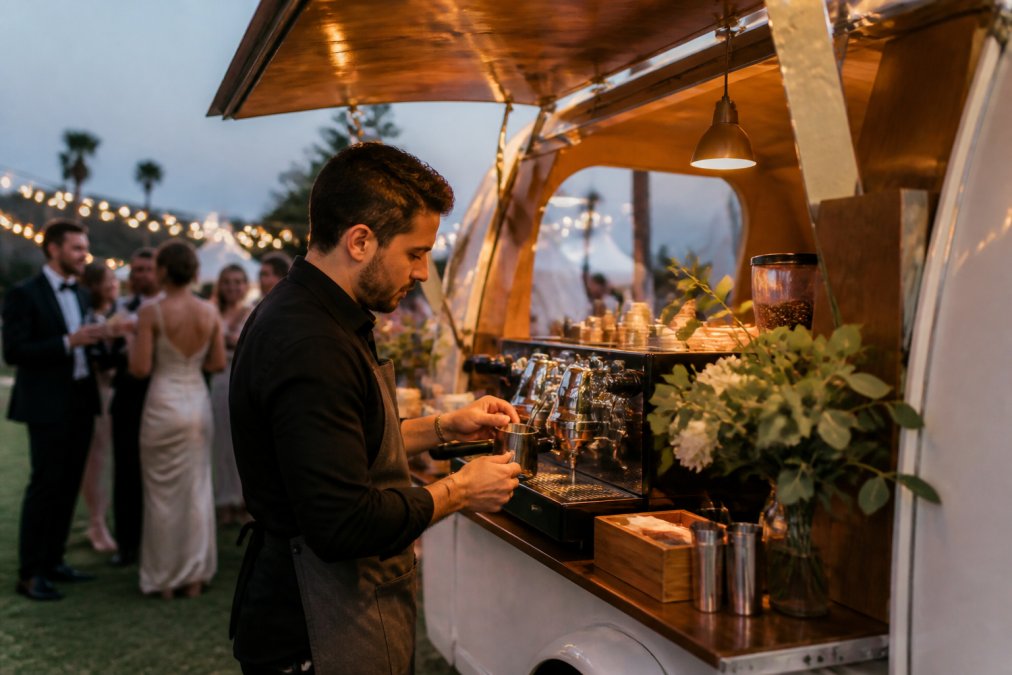
Weddings are where mobile coffee trailers shine. They solve a real problem: guests want quality coffee during receptions, but traditional catering rarely prioritizes it. A dedicated espresso bar becomes a focal point where guests linger, socialize, and create memorable moments.
The trailer arrives 1-2 hours before your reception, sets up in a designated outdoor area or covered space, and operates throughout your event. Professional baristas manage the flow, customize drinks to guest preferences, and maintain quality during peak service windows.
Custom Drink Menus and Branding
Rather than a fixed menu, you collaborate with your coffee service to design drinks that reflect your event’s tone. A luxury wedding might feature branded cappuccinos with latte art, cold brew with premium milk options, and specialty syrups. A corporate event might emphasize efficiency with pre-set options.
Colada Kulture Co. works with couples and event planners to build custom menus aligned with their vision. This might include seasonal flavors, signature drink names tied to your wedding theme, or matcha lattes for health-conscious guests. A curated menu prevents decision paralysis and allows baristas to work efficiently.
Space and Setup Logistics
Most venues can accommodate a mobile trailer. Parking lots, gardens, covered pavilions, and some indoor spaces work. The key requirements are level ground, access for the tow vehicle, and proximity to power.
Setup space typically needs 20 by 15 feet minimum. Most services arrive 90 minutes before service begins, complete setup, run equipment tests, and prepare initial stock.
Mobile Coffee Cart Rental Cost and Pricing Models
Pricing for mobile coffee trailer rental varies based on event size, duration, menu complexity, and location.
Factors Affecting Your Quote
Several variables influence your final cost:
- Guest count: 50 guests versus 200 guests changes equipment requirements and staffing
- Event duration: 2-hour service versus 4-hour service affects barista time and supply costs
- Menu complexity: Simple menu costs less than elaborate options with matcha, specialty syrups, and pastries
- Location and travel: Events within Miami proper cost less than those requiring longer drives
- Day and season: Weekend rates typically exceed weekday rates; peak wedding season costs more than off-season
- Setup requirements: Standard parking lot setup is straightforward; rooftop access or high-rise complications increase cost
- Beverage add-ons: Pastries, snacks, or cold brew kegs add to the total
Purchase vs. Rental: Which Makes Sense for Your Event
If this is a one-time event, rental is the obvious choice. You avoid $44,000+ capital investment, permitting headaches, and ongoing maintenance. Rental services like Colada Kulture Co. handle licensing, insurance, and equipment maintenance.
If you’re considering a coffee trailer business, operating regularly for corporate clients or managing multiple events monthly, purchase makes financial sense. The Hudson Trailer Company’s $44,000 base unit pays for itself after roughly 20-30 events at typical rental rates.
For most event planners and corporate teams booking a single event, rental is the pragmatic path.
Event Types and Service Options
Mobile coffee trailers adapt to different event contexts.
Corporate Events and Brand Activations
Corporate events demand efficiency and brand consistency. The typical setup positions the trailer near the main gathering area, baristas serve pre-set options quickly, and the experience feels premium but frictionless. Some corporate clients add branded cups or custom signage to reinforce their brand identity.
Brand activations benefit from the visual impact of a mobile trailer. It signals investment, creates a gathering point, and generates social media content.
Private Functions and Social Gatherings
Weddings, anniversary celebrations, and milestone birthday parties benefit from the emotional value of a mobile coffee trailer. For weddings specifically, the coffee bar often operates during cocktail hour or late evening, when guests want a pick-me-up without the heaviness of a full bar.
Intimate gatherings use smaller carts or trailers. The focus shifts from high-volume service to personalized interaction. Baristas might spend time chatting with guests and creating custom drinks on the spot.
Equipment, Power, and Technical Requirements
Power Supply Options: Generator vs. Shore Power
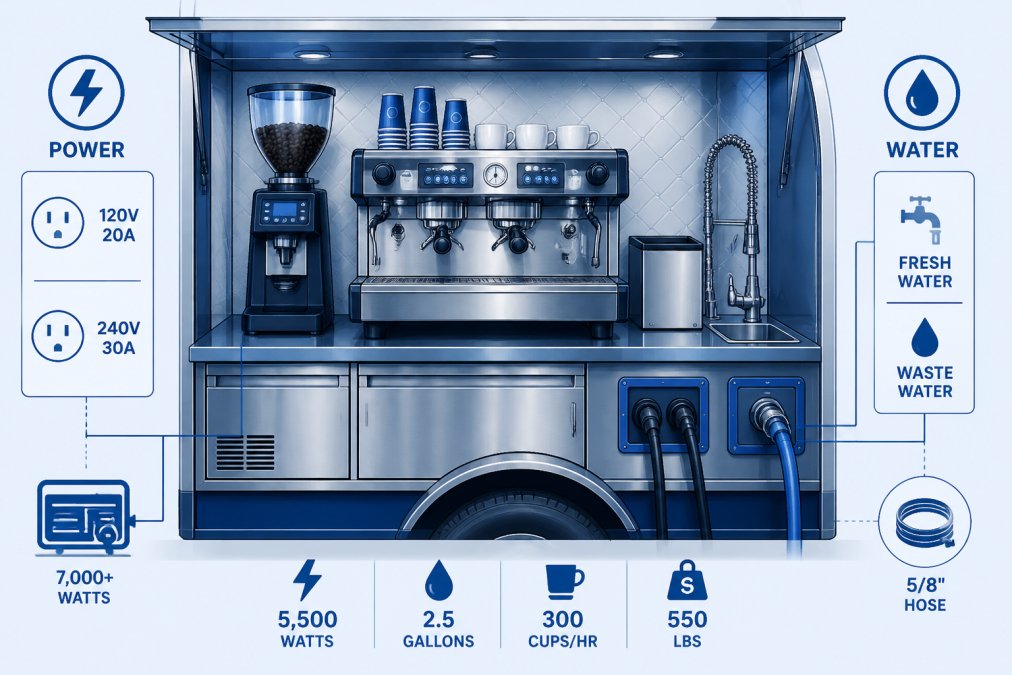
A commercial espresso machine draws significant power, typically 3,000-5,000 watts. A mobile trailer either brings its own generator or connects to shore power at your venue.
Generator option: The trailer includes an onboard generator (usually 7,500-10,000 watt capacity). Setup is self-contained, with no dependency on venue infrastructure. The tradeoff: generators are loud and produce exhaust.
Shore power option: If your venue has a 30-amp or 50-amp electrical outlet, the trailer connects directly. This eliminates generator noise and fuel concerns.
Most venues in South Florida can accommodate one or both options. The service provider discusses power logistics during the booking consultation.
Water Supply and Waste Management
A mobile trailer needs fresh water for espresso, steaming milk, and cleaning. Tanks typically hold 30-50 gallons, sufficient for 3-4 hours of service. Grey water drains into a separate tank, usually 40+ gallons, preventing environmental contamination and keeping the trailer compliant with health codes.
For venues without easy water access, experienced services like Colada Kulture Co. navigate these challenges routinely.
Booking Your Mobile Coffee Trailer: What to Expect
Availability and Lead Times
Most established services require 2-4 weeks’ notice for standard bookings. Peak season books faster. When you contact Colada Kulture Co., the conversation starts with date, guest count, venue location, and menu preferences. From inquiry to confirmation typically takes 3-5 business days.
Professional Barista Service and Quality Assurance
Professional baristas matter. A skilled barista pulls consistent espresso shots, steams milk to proper microfoam texture, and manages workflow during peak service. They can handle 100+ drinks per hour without quality degradation and engage with guests, remembering preferences and customizing drinks on the spot.
Quality assurance starts before your event. Reputable services maintain equipment meticulously, espresso machines are backflushed and descaled regularly, grinders are calibrated, and all surfaces are sanitized. During your event, the service monitors quality continuously and accommodates special requests.
| Service Model | Best For | Typical Duration | Guest Capacity |
|---|---|---|---|
| Mobile Trailer Rental | Weddings, corporate events, large private functions | 2-4 hours | 150-300+ guests |
| Mobile Cart Rental | Intimate gatherings, small corporate events | 1-3 hours | 30-100 guests |
| Full-Service Catering | Brand activations, product launches, experiential events | 2-6 hours | 50-500+ guests |
| Purchase (DIY/Business) | Regular operations, pop-ups, ongoing revenue | Unlimited | Varies by use |
Booking a mobile coffee trailer transforms how your guests experience your event. The logistics are manageable, power, water, and setup space are straightforward concerns. The real value lies in professional execution: trained baristas, quality equipment, and a service provider who understands your venue’s constraints and your event’s unique needs.
Colada Kulture Co. has executed this for over 35 weddings, corporate events, and private celebrations across South Florida. They specialize in the details that matter: custom drink menus reflecting your brand, professional baristas delivering consistency during peak service, and equipment that handles high-volume demand without compromise. Request a quote and discuss your specific venue logistics, that conversation clarifies what’s possible for your event.
Frequently Asked Questions
How much does it cost to rent a mobile coffee trailer for an event?
Rental pricing for a mobile coffee trailer depends on your guest count, event duration, location, drink customization, and the vendor's service area. Factors like weekend versus weekday rates, travel distance, and whether you need specialty beverages also affect the quote. Contact Colada Kulture Co. or similar vendors directly for a personalized quote based on your specific event needs. Most providers require advance booking, especially for peak seasons like spring and summer.
What permits are required to operate a mobile coffee trailer in the US?
Mobile coffee trailer operations require a food service license from your local health department, a business license from your city or county, and often a mobile food unit permit. Some jurisdictions require health inspections before operation. Power requirements and parking regulations vary by location. Contact your local health department and city planning office for specific requirements in your area, as regulations differ significantly between states and municipalities.
What is the difference between a mobile coffee cart and a mobile coffee trailer?
A mobile coffee cart is a compact, wheeled unit that typically serves 30-100 guests and fits in a standard parking space. A mobile coffee trailer is larger, towed by a vehicle, and handles 100+ guests with more equipment capacity. Trailers offer greater menu flexibility, higher volume capability, and more professional presentation. Carts are ideal for smaller events, farmers markets, and tight venues, while trailers suit weddings, corporate conferences, and large brand activations.
Can a mobile coffee trailer accommodate dietary restrictions like oat milk and specialty drinks?
Yes. Most professional mobile coffee catering services, including Colada Kulture Co., offer customizable menus featuring multiple milk alternatives like oat, almond, and whole milk, plus specialty drinks such as matcha lattes, cold brew, and seasonal beverages. Discuss your guest preferences and dietary needs during the booking process to ensure your baristas arrive fully stocked and prepared to serve everyone at your event.
This article was written using GrandRanker