Table of Contents
- Mobile Espresso Bar vs. Coffee Cart: Key Differences
- Footprint and Space Requirements
- Equipment and Power Requirements
- Service Capacity and Speed
- Mobile Coffee Cart Rental Prices and Cost Comparison
- Best Events for Mobile Coffee Bars
- Permitting, Insurance, and Logistics
- Conclusion
Last Updated: August 5, 2026
Mobile Espresso Bar vs. Coffee Cart: Key Differences
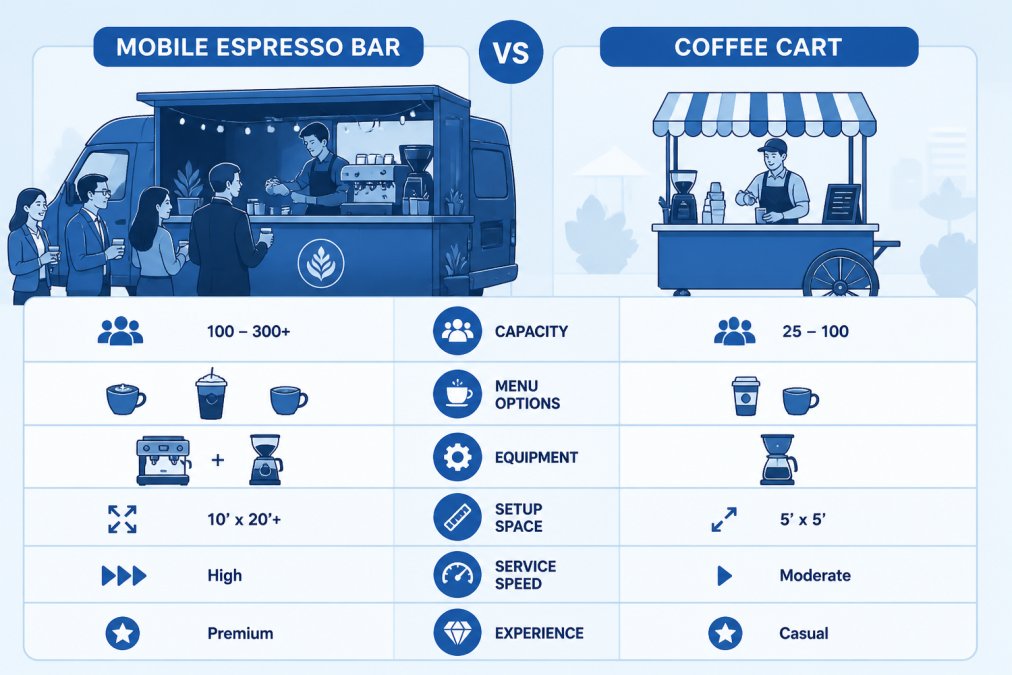
A mobile espresso bar and a coffee cart are fundamentally different service models. A mobile espresso bar is a fully equipped catering service with professional baristas who arrive at your venue, set up premium espresso machines, and serve specialty drinks throughout your event. A coffee cart is typically a smaller, self-contained unit that offers limited drink options with minimal setup requirements.
The difference matters because it shapes everything from service speed to drink complexity. An espresso bar can produce 50-500 drinks per hour, while a standard coffee cart might handle 30-100. For a wedding with 200 guests or a corporate product launch with hundreds of attendees, this capacity gap becomes critical.
At Colada Kulture Co., we operate mobile coffee bars, not carts, because our clients expect premium quality and the ability to serve large groups without bottlenecks. Our trailers include commercial-grade espresso machines, water filtration systems, and trained baristas who can craft everything from traditional cappuccinos to matcha lattes with latte art.
Equipment sophistication separates the two models most clearly. A mobile espresso bar includes professional-grade espresso machines (often from brands like La Marzocco or Rocket Espresso), commercial grinders, steam wands for milk preparation, and integrated water systems. A coffee cart typically has a basic espresso machine, limited milk options, and pre-made or instant drink components.
The experience your guests receive reflects this difference. With an espresso bar, they watch baristas craft their drinks in real time, see latte art, and enjoy personalized orders. A coffee cart offers convenience but lacks that engagement layer. For brand activations and weddings where the coffee experience itself is part of the event narrative, this distinction is everything.
Footprint and Space Requirements
The physical footprint of a mobile coffee bar versus a cart determines where and how it fits into your venue layout.
A standard mobile espresso bar occupies 10-14 feet of linear space if it’s a trailer setup, or 6-8 feet if it’s a cart-based system. A traditional coffee cart requires just 4-6 feet of counter space. For outdoor events with ample room, footprint matters less. For indoor venues, particularly high-rise office buildings or tight reception halls, it becomes a critical constraint.
Colada Kulture Co.’s mobile bars are designed for both scenarios. Our smaller cart configurations fit into tight indoor spaces while maintaining full espresso bar functionality. Our trailer options work best for outdoor events where guests can queue comfortably.
Height clearance is another footprint consideration most planners overlook. A mobile espresso bar trailer requires 9-10 feet of vertical clearance for safe operation and ventilation. A coffee cart needs only 7-8 feet. If your venue has low ceilings or overhead installations, this matters.
Load-in and load-out footprint is equally important. A mobile espresso bar trailer requires a 12-foot-wide loading dock or clear driveway access. A cart can be wheeled through narrower passages. For downtown Miami venues with restricted loading areas, this logistical detail can be the difference between a viable option and an impossible one.
Equipment and Power Requirements
Every mobile coffee bar has specific technical demands that your venue must accommodate.
A professional mobile espresso bar requires 30-50 amps of electrical power at 208-240 volts, depending on the equipment configuration. A coffee cart typically needs 15-20 amps at standard 120-volt service, making it more flexible for conventional venues.
Water requirements are equally critical. An espresso bar needs both incoming fresh water and drainage capacity, typically 10-15 gallons of water per hour during peak service. If your venue lacks nearby water access or adequate drainage, you’re looking at bringing water in tanks, which adds logistical complexity.
Colada Kulture Co. brings water filtration systems as part of our standard setup, which means we can work with most water sources. However, venues with no water access at all, such as rooftop terraces or certain outdoor pavilions, require advance planning and tank delivery.
Ventilation is non-negotiable for indoor espresso bars. The steam and heat from commercial espresso machines must vent somewhere. Without proper ventilation, you’ll trigger fire alarms or create an uncomfortable, humid environment. Most coffee carts have minimal ventilation needs.
Service Capacity and Speed
The ability to serve your guests quickly without creating bottlenecks separates a successful event experience from a frustrating one.
A mobile espresso bar can serve 50-500 drinks per hour depending on order complexity and barista count. A coffee cart typically handles 30-100 drinks per hour. For a 200-person wedding where guests expect drinks within 30 minutes, an espresso bar with two baristas can manage it comfortably. The same crowd at a single-cart setup creates a 45-minute wait.
The type of drinks offered affects speed. Simple drinks like Americanos take 30-45 seconds. Specialty drinks requiring milk steaming, such as cappuccinos and lattes, take 60-90 seconds per order. If your event emphasizes specialty beverages, you need sufficient barista capacity to prevent queues.
Colada Kulture Co. staffs our bars based on expected guest count and drink complexity. For a 150-person corporate event, we typically deploy two baristas. For 300+ guests or events featuring custom specialty drinks, we add a third barista to maintain flow and quality.
The queue experience matters psychologically. Guests will tolerate a 10-minute wait if the line moves visibly and the final product is exceptional. A professional espresso bar’s higher throughput combined with the visual theater of drink preparation keeps guests engaged even during waits.
Mobile Coffee Cart Rental Prices and Cost Comparison
Pricing for mobile coffee bars depends on guest count, event duration, drink complexity, venue location, and setup requirements.
Mobile coffee bar rental pricing typically reflects barista time, equipment deployment, and customization. For a 100-person event with standard drinks (coffee, lattes, cappuccinos), expect pricing that reflects these factors. For 300+ guests or events requiring specialty menu items (matcha lattes, cold brew cocktails, custom branding), pricing increases to account for additional barista capacity and preparation complexity.
The key cost drivers are:
- Barista staffing: Professional baristas command higher rates than general catering staff, reflecting their training and skill
- Equipment deployment: Bringing a full espresso bar trailer costs more than deploying a smaller cart
- Drink complexity: Events requesting specialty or custom drinks require more prep time and higher-skilled staff
- Venue logistics: Venues requiring special power setup, water delivery, or complex load-in/load-out add logistical costs
- Event duration: Longer events require extended barista time or additional staff
Traditional catering often appears cheaper at first glance. However, coffee from a caterer is typically pre-made, served at lower quality, and lacks the engagement factor of a live espresso bar.
For accurate pricing on Colada Kulture Co.’s mobile coffee bar services, request a quote based on your specific event details: guest count, venue, desired drinks, and event duration. A mobile espresso bar often becomes a focal point of the event, generating social media content and guest engagement that traditional catering doesn’t deliver.
Best Events for Mobile Coffee Bars
Mobile espresso bars excel at events where the coffee experience is central to the narrative, not just an afterthought.
Weddings are the clearest example. Guests expect a premium, personalized experience, and a mobile espresso bar with latte art and specialty drinks elevates the reception. The visual element of baristas crafting drinks becomes part of the event aesthetic.
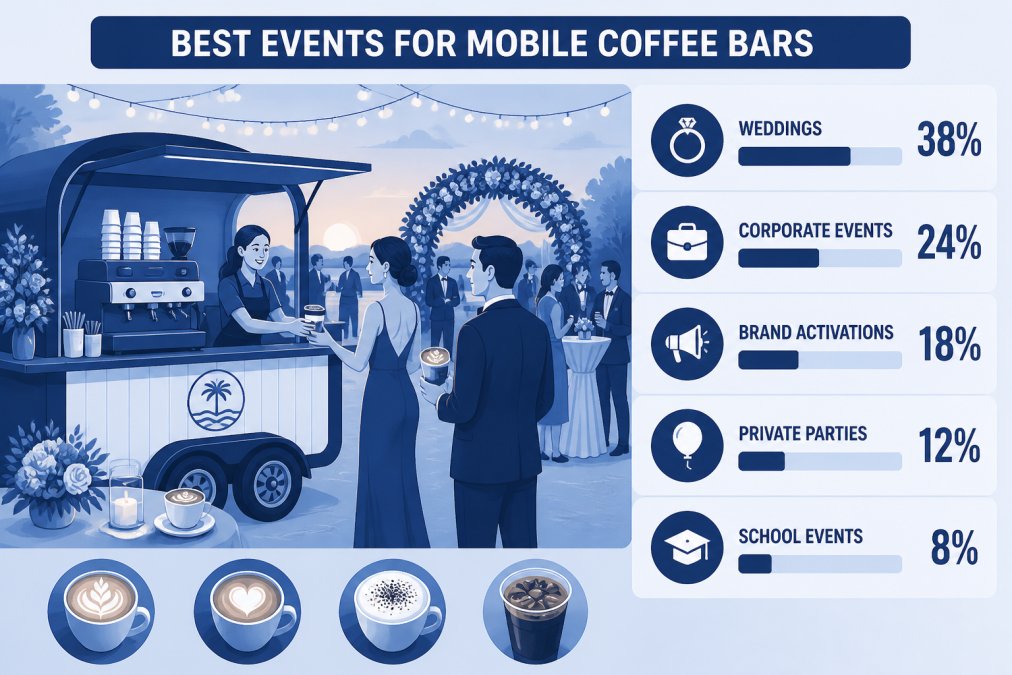
Corporate product launches and brand activations are equally strong fits. These events rely on creating memorable, shareable moments. A mobile espresso bar with custom branding, specialty drinks, and professional presentation becomes a marketing asset. Guests photograph their drinks, tag the brand on social media, and the coffee bar amplifies event reach.
Corporate wellness events and employee appreciation gatherings benefit from the engagement factor. A mobile espresso bar signals that the company values quality and thoughtfulness.
High-end networking events, private galas, and luxury celebrations are natural fits. These events attract guests with elevated expectations.
Outdoor events, festivals, farmers markets, and pop-up activations work well when weather is favorable and power/water access is available.
Events where a coffee cart makes more sense: small office meetings (under 50 people), casual company picnics where coffee is secondary, or budget-constrained events where basic coffee service suffices. If your event doesn’t center on the coffee experience and guests simply need caffeine between other activities, a cart or traditional catering may be sufficient.
The deciding factor: Does the coffee experience itself matter to your event narrative? If yes, a mobile espresso bar from Colada Kulture Co. is an investment in guest experience.
Permitting, Insurance, and Logistics
Permitting, insurance, and logistics are non-negotiable and often overlooked by event planners.
Mobile food service operations require health permits in most jurisdictions. In Miami-Dade County, a mobile espresso bar must obtain a Mobile Food Service License from the Department of Business and Professional Regulation. The requirements include health inspections, food handler certifications for all staff, and proof of a commissary (a licensed kitchen facility where the bar is stored and maintained).
Colada Kulture Co. maintains all required permits and certifications for South Florida operations. However, if your event is outside our service area, you’ll need to verify that any mobile coffee vendor holds current permits for your specific county or municipality.
Insurance requirements vary by venue. Most venues require vendors to carry general liability insurance (typically $1-2 million in coverage) and proof of that insurance before the event. Some venues also require liquor liability if the bar will serve alcohol-infused coffee drinks. Confirm your venue’s insurance requirements early.
Electrical and water logistics require advance coordination. If your venue’s electrical panel doesn’t support a 30-50 amp draw at the desired location, you may need to rent a temporary power distribution setup, which adds cost and complexity. Similarly, if water access is limited, you may need to arrange water delivery in advance.
Load-in and load-out timing must be coordinated with your venue and other vendors. A mobile espresso bar trailer requires 30-45 minutes to set up and connect utilities, and another 30 minutes to break down.
Parking and dock access are logistics details that sound simple but often aren’t. A mobile bar trailer requires a 12-foot-wide space with 9-10 feet of vertical clearance and adequate ground stability.
Weather contingencies are critical for outdoor events. A mobile espresso bar needs some weather protection, a tent or covered area. Without it, rain shuts down service immediately.
Choosing between a mobile espresso bar and traditional catering comes down to what your event requires and what experience you want to create. A mobile espresso bar delivers premium quality, guest engagement, and a focal point that guests remember. It requires more logistical planning, but for events where the coffee experience matters, it’s worth the coordination.
For corporate events, weddings, and brand activations in South Florida, Colada Kulture Co. handles the logistical complexity so you don’t have to. Our mobile bars include professional baristas, customizable menus ranging from espresso to matcha lattes, and flexible service options designed for your specific event. Request a quote to explore how a premium mobile coffee experience can elevate your celebration.
| Aspect | Mobile Espresso Bar | Coffee Cart | Traditional Catering |
|---|---|---|---|
| Service Capacity | 50-500 drinks/hour | 30-100 drinks/hour | 20-50 drinks/hour |
| Drink Complexity | Full specialty menu | Basic options | Limited, pre-made |
| Setup Time | 30-45 minutes | 15-20 minutes | Varies |
| Power Requirements | 30-50 amps, 208-240V | 15-20 amps, 120V | Minimal |
| Water Needs | 10-15 gal/hour | 5-8 gal/hour | None required |
| Guest Engagement | High (live preparation) | Medium | Low |
| Customization | Extensive | Limited | Moderate |
| Ideal Event Size | 100-500+ guests | 50-150 guests | Any size |
| Best For | Weddings, launches, galas | Small meetings, casual events | Budget-conscious events |
Frequently Asked Questions
What is the difference between a mobile coffee bar and traditional catering?
A mobile coffee bar is a dedicated beverage station with professional baristas preparing fresh espresso drinks on-site, while traditional catering typically includes pre-made beverages and food delivered to your event. Mobile coffee bars offer customization, latte art, and real-time drink preparation, creating an interactive experience. Traditional catering focuses on efficiency for larger guest counts but less personalization. For events prioritizing guest engagement and specialty drinks, mobile coffee bars excel; for high-volume, quick-service events, catering may be more practical.
How much does it cost to hire a mobile coffee bar for an event?
Mobile coffee bar pricing depends on event size, location, duration, drink complexity, and equipment type (cart vs. trailer). Pricing typically factors in barista labor, equipment setup, customization options, and travel distance. For an accurate quote tailored to your specific event, whether a 75-person office appreciation or a 200-guest wedding, contact Colada Kulture Co. directly. Request a quote on their website to get pricing based on your exact needs and venue.
What are the pros and cons of a mobile coffee bar vs. traditional catering?
Mobile coffee bars offer fresh preparation, menu customization, latte art, and guest engagement but require power/water access and more setup space. Traditional catering provides efficiency for large crowds, simpler logistics, and pre-planned quantities but less personalization and interactivity. Mobile bars work best for weddings, brand activations, and smaller corporate events; catering suits high-volume conferences and large receptions. Consider your venue's power capacity, guest count, and whether you want an experiential element when deciding.
Do I need a permit for a mobile coffee bar at a private event?
Permit requirements vary by location and event type. Private residential events (weddings, parties) typically require fewer permits than commercial or public events. However, even private events may need health permits, parking permits, or venue approval depending on your city and county regulations in Florida. Established mobile coffee services like Colada Kulture Co. handle permitting coordination with venues and local authorities. Always confirm permit requirements with your venue and local health department before booking.
This article was written using GrandRanker