Table of Contents
- Coffee Catering vs Standard Bar Service: Key Differences
- Feature and Service Comparison Table
- Mobile Espresso Bar Cost and Pricing Models
- Logistics, Setup, and Space Requirements
- How Much Coffee for 100 Guests and Service Capacity
- Coffee Catering for Weddings and Special Events
- Customization, Branding, and Guest Experience
- Insurance, Liability, and Operational Differences
Coffee Catering vs Standard Bar Service: Complete Comparison
Last Updated: August 3, 2026
When planning an event, choosing between coffee catering vs standard bar service fundamentally shapes the guest experience and your budget. The real difference lies in logistics, cost structure, engagement potential, and what kind of memory you’re creating for your guests.
Coffee Catering vs Standard Bar Service: Key Differences
Coffee catering brings a specialized, high-touch experience centered on freshly prepared beverages crafted on-site by trained baristas. Standard bar service typically offers a broader range of beverages, alcoholic and non-alcoholic, with less customization and lower operational complexity.
The core tension is this: coffee catering creates an engagement point and visual focal point at your event. Guests interact with the barista and watch their drink being made. Standard bar service is more passive, guests order, grab, and move on.
A professional barista can prepare 15-20 specialty drinks per hour. [A standard](/mobile-coffee-cart-power-requirements-guide/) bar with multiple tenders can handle 40-60 drinks per hour. For 200 guests expecting drinks within 90 minutes, this difference is critical.
What Coffee Catering Offers
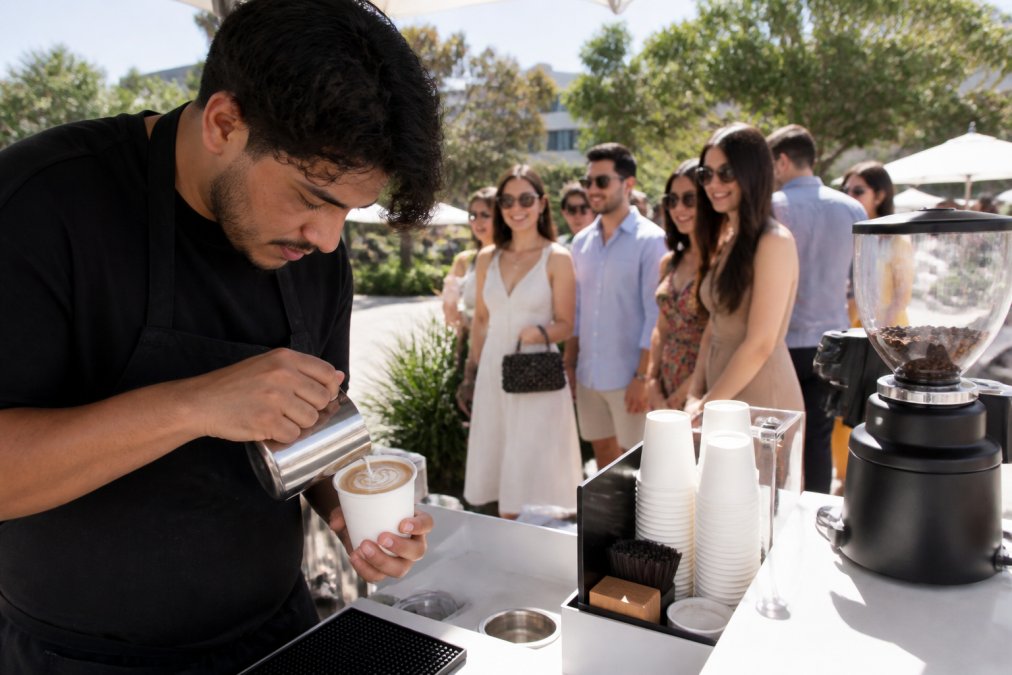
Coffee catering centers on freshly brewed, customized specialty drinks prepared in real-time. The barista becomes part of your event’s atmosphere, creating Instagram-worthy moments and personalized experiences.
Guests can request oat milk lattes, matcha drinks, cold brew with custom syrups, or whatever aligns with your brand or event theme. A mobile espresso bar requires counter space (typically 6-8 feet), a power outlet, and water access. Setup takes 30-45 minutes; breakdown takes similar time. Colada Kulture Co. specializes in mobile carts and trailers equipped with professional-grade espresso machines, milk steamers, and all infrastructure needed to deliver barista-quality drinks anywhere in South Florida.
What Standard Bar Service Offers
Standard bar service is the traditional approach: a physical bar setup with a bartender or two, spirits, mixers, beer, wine, and non-alcoholic options. This model excels when you need high volume and broad beverage variety. A well-staffed bar can serve 200+ guests comfortably over 3-4 hours.
Standard bar service integrates seamlessly with alcohol service. If your venue requires liquor liability insurance and professional bartenders, you’re already hiring trained staff. Adding spirits and beer is straightforward. Setup typically takes 1-2 hours and requires a full bar counter, shelving, ice, garnishes, and backup supplies.
Feature and Service Comparison Table
| Feature | Coffee Catering | Standard Bar Service |
|---|---|---|
| Drink Preparation | On-site, fresh, customizable | Pre-made or mixed by bartender |
| Setup Time | 30-45 minutes | 1-2 hours |
| Equipment Footprint | 6-8 feet counter space | 12-16 feet bar counter |
| Guest Throughput | 15-20 drinks/hour per barista | 40-60 drinks/hour per bartender |
| Alcohol Service | Non-alcoholic focus | Full alcohol service available |
| Customization | High | Moderate |
| Cost Model | Per-guest or package-based | Hourly staff + alcohol inventory |
| Visual Impact | High (interactive) | Moderate (traditional) |
| Best For | Weddings, corporate events, brand activations | Cocktail hours, receptions, large gatherings |
| Guest Engagement | High (interactive) | Moderate (transactional) |
Mobile Espresso Bar Cost and Pricing Models
Coffee catering typically uses per-guest pricing or package-based pricing with a minimum event spend. Standard bar service charges by the hour plus alcohol inventory. You pay for bartender time (typically $25-50 per hour per bartender) plus liquor, beer, wine, and mixers. A 3-hour event with two bartenders and full liquor selection often exceeds premium coffee catering costs.
A common mistake is underestimating bar inventory costs. For 100 guests at an open bar for 3 hours, alcohol spend is significant. Coffee catering eliminates this variable, you pay one flat fee.
Guest count is the primary cost driver. Event duration matters enormously; a 2-hour corporate event costs less than a 4-hour wedding reception. Menu complexity increases coffee catering costs; a simple menu of espresso, cappuccino, and cold brew costs less than one with matcha lattes, seasonal syrups, and pastries. Location and venue logistics affect both services.
Logistics, Setup, and Space Requirements
Coffee catering requires three things: counter space, power, and water. Counter space doesn’t need to be a full bar, a 6-8 foot table works. Power requirements are modest; a standard 110V outlet handles most mobile espresso setups. Setup typically takes 30-45 minutes.
Standard bar service needs 12-16 feet of counter space, preferably with shelving for bottle storage. Multiple electrical outlets and setup time of 1-2 hours are required. Coffee catering works in almost any venue because the footprint is minimal.
Coffee Catering Setup Needs
A mobile espresso bar is genuinely portable. The cart or trailer contains the espresso machine, grinder, water tank, cup storage, and syrup organization. The barista arrives 45 minutes before service to set up, position the cart, arrange cups and napkins, fill the water tank, and turn on the espresso machine (which needs 15-20 minutes to heat). Breakdown takes 20-30 minutes. This efficiency is why coffee catering works for outdoor venues, small spaces, rooftop events, or venues with limited infrastructure.
Standard Bar Service Setup Needs
A full bar requires 1-2 hours of setup. The bartender constructs the bar, stocks bottles, sets up glassware, arranges ice and garnish stations, and tests everything. Breakdown requires breaking down the bar, packing bottles, cleaning glassware, and removing equipment, 1-2 hours depending on complexity.
How Much Coffee for 100 Guests and Service Capacity
A professional barista can prepare 15-20 specialty drinks per hour. For 100 guests with a single barista, assume 60% will grab a coffee drink (60 people). At 15 drinks per hour, that’s 4 hours of service spread across a 3-4 hour event.
If you want faster service and shorter lines, add a second barista. Two baristas can handle 30-40 drinks per hour, so 60 guests takes 1.5-2 hours. Lines stay short, and the experience feels premium.
The guest experience hinges on wait time more than drink quality. A great drink with a 10-minute wait feels worse than a good drink with a 2-minute wait. Staffing appropriately is the single biggest factor in perceived service quality.
Coffee Catering for Weddings and Special Events
Weddings are where coffee catering shines. Practically, weddings have tight venue timelines. Coffee catering’s fast setup and breakdown fit this constraint perfectly.
Emotionally, a mobile espresso bar becomes a photo opportunity. Guests interact with the barista, customize their drinks, and capture the moment. The aesthetic of a beautifully designed coffee cart elevates the event’s visual presentation. Coffee catering also solves a real problem: not all wedding guests drink alcohol. A dedicated coffee station celebrates non-alcoholic options rather than treating them as an afterthought.
For smaller weddings (under 100 guests), a single barista is sufficient. For larger weddings (100-200 guests), two baristas ensure short lines and premium service.
When Standard Bar Service Works Better
Standard bar service is the right choice when you need broad beverage variety and high volume. A cocktail hour with 200 guests, where half want a cocktail and half want wine or beer, demands a full bar.
Standard bar service also works better for events where alcohol is central to the experience: wine tastings, craft cocktail receptions, or beer gardens. Events with very long durations (6+ hours) also favor standard bar service. If your venue has built-in bar infrastructure and you’re already hiring bartenders for alcohol service, adding beer and wine is simpler and cheaper than bringing in a separate coffee catering service.
Customization, Branding, and Guest Experience
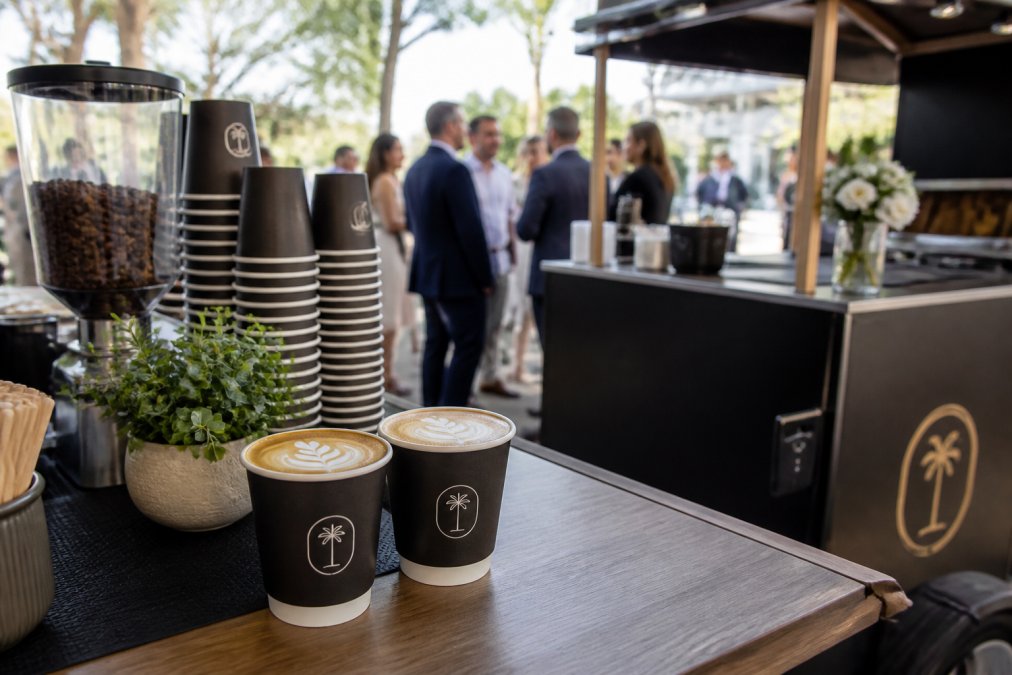
Customization is where coffee catering creates differentiation. You control the entire menu, every drink, every syrup, every option. A product launch can feature drinks matching the brand’s color palette. A wellness event can emphasize matcha and cold brew. A luxury wedding can offer rare single-origin espresso and specialty milk alternatives.
Branding is another differentiator. You can brand cups, napkins, signage, and the barista’s apron. Guests hold a branded cup, take a photo, and your brand gets organic social media visibility. Guest engagement is fundamentally different, at a coffee bar, guests interact with the barista and request customizations.
The menu flexibility is remarkable. You can offer espresso drinks (shots, Americanos, cappuccinos, lattes), milk alternatives (whole, oat, almond, coconut), flavored syrups (vanilla, caramel, hazelnut, seasonal options), matcha lattes, cold brew, iced coffee, and pastries. Offering whole milk, oat milk, almond milk, and coconut milk means guests with dietary restrictions all have options.
Bar Service Customization and Engagement
Standard bar service customization centers on the cocktail menu. The bartender can create signature cocktails for the event and respond to guest requests within available options. Engagement happens through the bartender’s personality and skill. A charismatic bartender creates conversation and memorable interactions. Branding with standard bar service is more limited, you can have branded napkins and glassware, but the bar itself is less customizable.
Insurance, Liability, and Operational Differences
Coffee catering is straightforward, the catering company carries general liability insurance covering on-site food and beverage service. Your event typically doesn’t require additional insurance beyond what the venue requires.
Standard bar service with alcohol is more complex. Most jurisdictions require bartenders to be licensed and trained in responsible alcohol service. The bar operator must carry liquor liability insurance, which covers injuries or damages caused by intoxicated guests. Your venue often requires proof of this insurance.
Coffee catering requires general liability insurance covering food and beverage service. The catering company carries this insurance, protecting against claims related to food safety, allergic reactions, or service-related injuries. Water and electrical safety are the only operational concerns. There’s no alcohol licensing requirement, no liquor liability insurance, and no regulatory oversight beyond basic food safety.
Standard bar service with alcohol introduces liability that coffee catering avoids. The bartender and establishment are legally responsible for serving responsibly and not over-serving intoxicated guests. Liquor liability insurance covers these risks but is expensive and requires proof of responsible service training. The bartender must be licensed and trained in many jurisdictions.
Frequently Asked Questions
What is the main difference between coffee catering and standard bar service?
Coffee catering focuses on freshly brewed specialty beverages prepared by professional baristas, emphasizing quality and customization. Standard bar service typically includes alcoholic and non-alcoholic drinks served from a mobile bar setup. Coffee catering works best for daytime events, corporate gatherings, and wellness-focused occasions, while bar service suits evening celebrations and alcohol-focused events. Each service requires different logistics, licensing, and staffing models.
How much coffee should I plan for 100 guests at my event?
For 100 guests, plan for 60-75 specialty coffee drinks if coffee catering is your primary beverage service. Guest throughput typically ranges from 15-25 drinks per hour per barista. A professional mobile espresso bar with one barista can serve 100 guests in 4-6 hours comfortably. Factors affecting quantity include event duration, time of day, weather, and whether alcohol or other beverages are available. Request a capacity assessment from your catering provider based on your specific event timeline.
Is coffee catering more cost-effective than standard bar service for weddings?
Cost depends on several factors including guest count, service duration, drink customization, and location. Coffee catering typically charges per-head pricing or flat rates based on setup time. Standard bar service often requires clients to supply alcohol due to licensing laws, which adds expense. For smaller weddings (under 100 guests) or daytime events, coffee catering often proves more economical. Request quotes from both service types for your specific event to compare total costs, including any additional fees for setup, breakdown, or specialty ingredients.
What are the logistics and power requirements for mobile espresso bar setup?
Mobile espresso bars require a dedicated power outlet (typically 110V or 220V depending on equipment) and counter space of 8-12 feet. Setup time ranges from 30-60 minutes, with breakdown taking 20-30 minutes. Standard bar service carts have similar footprints but may require different power specifications. Key logistics include delivery access, weather protection, water supply for espresso machines, and trash disposal. High-rise venues with loading dock restrictions or limited electrical access may require advance planning. Confirm your venue's power capacity and layout with your catering provider before booking.
Can you have both coffee catering and a standard bar at the same event?
Yes, many events successfully combine both services. Coffee catering works well for morning or early afternoon service, while a standard bar handles evening or alcohol-focused portions. This approach requires coordinated logistics, separate staffing, and adequate space for both setups. Insurance and licensing considerations differ for each service, so verify with your venue and service providers that dual setup is permitted. This combination is popular at corporate conferences, all-day celebrations, and upscale weddings seeking comprehensive beverage options throughout the event.
This article was written using GrandRanker