Table of Contents
- What Is a Mobile Coffee Activation?
- How a Mobile Coffee Cart Setup Works at Events
- Why a Branded Coffee Cart Beats Standard Catering
- Coffee Activation Ideas That Attract a Crowd
- How Long Should a Brand Activation Last?
- How to Measure Mobile Coffee Activation Success
- Frequently Asked Questions
Last Updated: October 8, 2026
What Is a Mobile Coffee Activation?
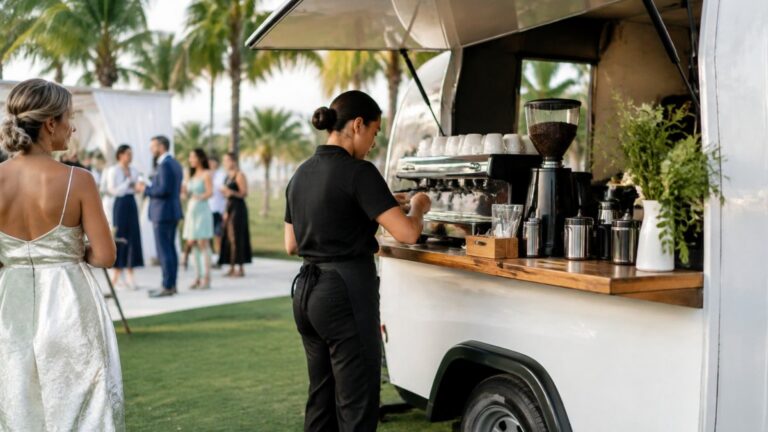
A mobile coffee activation is a branded, interactive coffee experience built to promote a product, service, or company at an event. A mobile coffee cart activation turns a simple drink service into a marketing moment. Guests order a fresh espresso or matcha latte, watch a barista work, and walk away holding a cup with your logo on it.
That last part matters. At Colada Kulture Co., we build these setups for product launches, conferences, and weddings across South Florida. The goal is never just caffeine. It is a photo, a conversation, and a memory tied to your brand.
So how does this differ from plain coffee catering? Keep reading. The distinction decides whether you get a vendor or a campaign.
Mobile Coffee Activation vs. Coffee Catering
Coffee catering serves drinks. A mobile coffee activation serves drinks and a purpose.
Standard catering is transactional. You book a cart, guests get coffee, the vendor leaves. Nobody remembers who poured it.
An activation adds three things:
- Branding on the cart, cups, and menu
- Interaction through latte art, custom orders, and barista chat
- Measurement so you can track samples served and engagement
Think of it this way. Catering fills a cup. An activation fills a room with people talking about your brand.
How a Mobile Coffee Cart Setup Works at Events
A mobile coffee cart setup runs on five basics: equipment, power, water, space, and staffing. Get those right and service flows smoothly. Get them wrong and you have a line of 200 guests staring at a dead espresso machine.
Here is what a typical setup includes:
- The cart or trailer holds the espresso machine, grinder, and supplies
- Power comes from a standard outlet or a quiet generator
- Water is carried in onboard tanks or tapped from the venue
- A service area of roughly 10 by 10 feet gives baristas room to work
- Staffing of one to two baristas per cart keeps the line moving
Equipment, Power, and Service Area Needs
Most venues need advance coordination. High-rise offices, for example, often have strict power rules and tight loading dock access. Send your vendor the venue specs early. A cart that fits a hotel ballroom may not fit a freight elevator.
Check local rules too. Many areas require a permit or health department approval before a cart can serve food or drinks. The U.S. Food and Drug Administration food safety guidance outlines the standards that local health departments build on, so confirm requirements with your city before event day.
Venue-Specific Logistics: Power, Water, and Footprint
The single biggest cause of a stalled activation is a mismatch between the cart and the venue. Before you book, walk the space and answer these questions:
- Power: Does the venue supply a dedicated 20-amp circuit near the service area, or will you need a generator? Espresso machines and grinders draw heavy loads, and sharing a circuit with AV or catering equipment is a common way to trip a breaker mid-service.
- Water: Will the cart run from onboard tanks or a venue tap? Tank capacity limits how many drinks you can pour before a refill, so match tank size to guest count.
- Footprint: Measure the doorway, elevator, and hallway the cart must pass through, not just the service area. A 10 by 10 foot footprint is a working minimum, but the cart still has to get there.
- Flooring and drainage: Historic buildings, carpeted ballrooms, and outdoor turf each create different spill and cleanup concerns.
- Noise and ventilation: Indoor espresso grinding is loud and produces steam; confirm the venue allows it near sessions or speakers.
Contingency Planning: Weather, Backup, and Backup Again
Outdoor activations need a weather plan that goes beyond a tent. Wind can topple an unweighted canopy, rain can flood a generator, and heat can slow baristas and spoil milk. Build in:
- A covered, weighted setup with a secondary indoor location identified in advance
- A backup power source (a second circuit or a generator) in case the primary fails
- Extra milk, cups, and ice so a restock delay does not stop service
- A named point of contact at the venue who can unlock doors, reset breakers, or approve a location change
Skipping the venue walkthrough is the most common mistake we see. A cart that cannot reach the service area, or cannot draw enough power, turns into a very expensive table decoration.
What Drives the Cost of a Setup
Budget conversations go smoother when you know the cost drivers rather than a single flat number. Most vendors price on:
- Service duration (a two-hour window costs less than a full show day)
- Guest count, which sets milk, cup, and labor volume
- Staffing, since a second barista roughly doubles labor
- Travel distance to the venue
- Customization, including cart wraps, printed cups, and branded sleeves
- Equipment needs, such as a generator or extra tanks when the venue falls short
Ask for a line-item quote so you can see which drivers you can trim and which are fixed. A shorter window or a simpler menu often saves more than cutting staff, which risks the line backing up.
Why a Branded Coffee Cart Beats Standard Catering
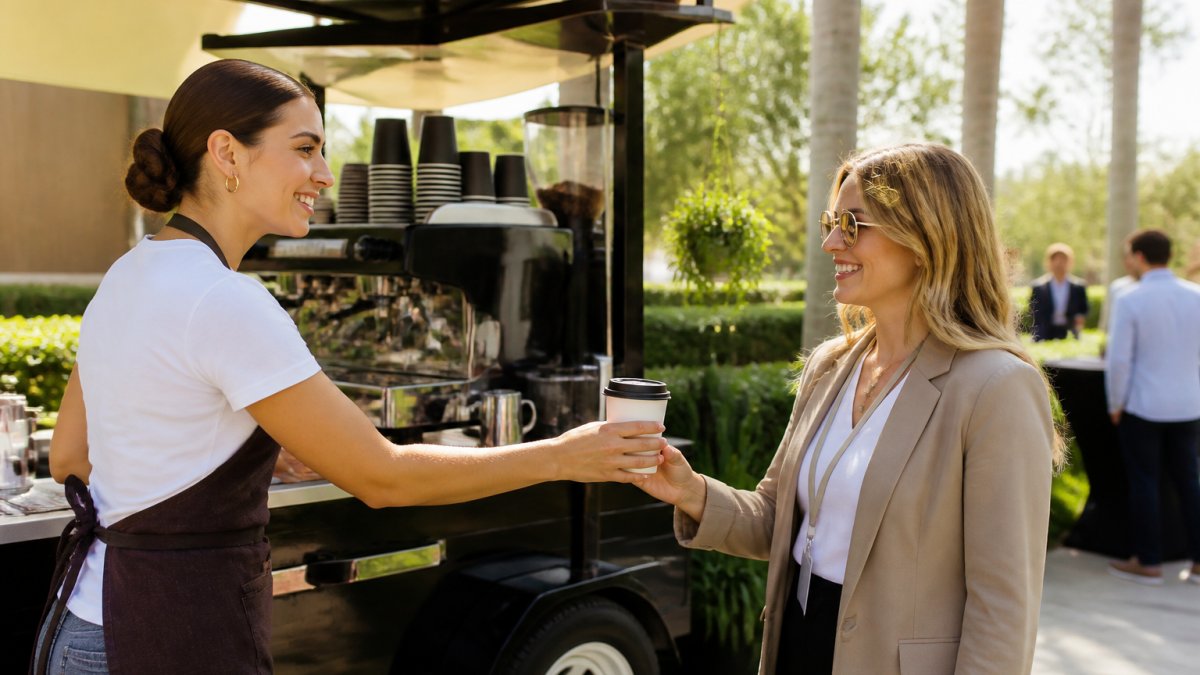
A branded coffee cart wins because it turns a routine service into a shareable moment. Guests post photos of a beautiful cart and a custom cup. That is free reach you cannot buy with a plain urn of coffee.
Custom Branding for Carts, Cups, and Menus
Custom branding shows up in more places than people expect. A well-built activation covers:
- The cart itself, wrapped or painted in your colors
- Cups and sleeves printed with your logo
- The menu board styled to match your campaign
- Barista aprons and signage
- Napkins, stirrers, and small details guests actually touch
Every one of those items is a chance for a guest to see your name again.
Put your campaign hashtag or QR code on the cup sleeve, not the cup. Guests keep sleeves on the table longer, and the code stays readable after the drink is gone.
Coffee Activation Ideas That Attract a Crowd
The strongest coffee activation ideas give guests something to do, not just something to drink. Interaction is what pulls people in from across the room.
Try these:
- Signature drinks named after your product or campaign
- Latte art with your logo stenciled on the foam
- A build-your-own cold brew bar with flavored syrups
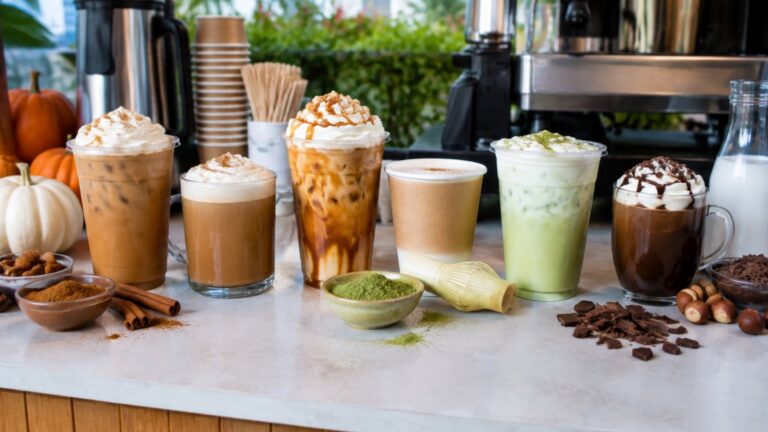
- Matcha and tea options for guests who skip espresso
- A “guess the roast” tasting game with a small prize
- Photo moments with a styled cart backdrop
The best activations mix hot and iced drinks, plus non-coffee options. A coffee menu with espresso, cold brew, matcha, and tea keeps every guest covered.
How Long Should a Brand Activation Last?
A brand activation should run two to four hours for most events. That window covers the morning rush, a mid-day lull, and a second wave without overstaffing the cart.
Timing depends on your crowd:
| Event Type | Suggested Duration | Why |
|---|---|---|
| Morning conference | 2-3 hours | Catches arrival and first break |
| Product launch | 3-4 hours | Covers the full guest flow |
| Trade show booth | Full show hours | Drives repeat foot traffic |
| Wedding reception | 2-3 hours | Fits the cocktail and dinner window |
Longer events may need a second barista or a refill break. Plan for a short pause to restock milk and cups so service never stops cold.
How to Measure Mobile Coffee Activation Success
Measure a mobile coffee activation with numbers you can report back to your team. Drinks served is the easy one. The useful metrics go deeper.
Track these:
- Samples served to gauge total reach
- Dwell time to see how long guests stayed at the cart
- Social posts and hashtag use for earned reach
- Leads or signups collected at the cart
- Foot traffic pulled to your booth or space
Set your targets before the event, not after. A simple goal like “500 drinks and 100 signups” gives your team something concrete to hit.
The activations that get renewed are the ones with a report. If you cannot show what the cart did for the brand, you cannot justify booking it again.
The U.S. Small Business Administration marketing guide recommends tying every campaign to a clear goal and reviewing results afterward. Do the same here, and your next activation gets sharper.
Planning a mobile coffee activation means juggling permits, power, staffing, and branding all at once. That is a lot to manage alone. Colada Kulture Co. handles the whole setup for you, from custom-branded carts and cups to a full menu of espresso, matcha, and cold brew served by trained baristas. With over 35 weddings, corporate events, and private celebrations behind us, we know how to keep the line moving and the drinks fresh. Get started with Colada Kulture Co. and turn your next event into a branded experience guests actually remember.
Frequently Asked Questions
What is a mobile coffee activation?
A mobile coffee activation is a branded, on-site coffee experience built around a mobile cart or trailer. Unlike standard coffee catering, it combines espresso drinks, custom branding, and barista interaction to create a memorable brand moment. Guests order specialty drinks, watch latte art being poured, and engage directly with your brand. The goal is not just serving coffee but generating conversation, social shares, and lasting brand recall at product launches, trade shows, and corporate events.
How much does a mobile coffee activation cost?
Pricing depends on guest count, event duration, menu complexity, staffing, and travel distance. Colada Kulture Co. provides quotes tailored to each event; request a quote with your date, venue, and headcount for accurate pricing.
How long should a brand activation last?
Most mobile coffee activations run 2 to 4 hours for corporate events and wedding receptions, while trade shows and product launches may run 6 to 8 hours with barista shift changes. Peak traffic typically hits in the first 90 minutes. If your event runs longer, schedule two service windows (morning and afternoon) rather than one continuous block. This keeps lines short, drinks fresh, and baristas energized.
How do you measure the success of a coffee brand activation?
Track samples served, dwell time at the cart, social media mentions with your event hashtag, and lead capture rates if you are collecting contact information. Compare foot traffic at your booth before and after the activation. Post-event surveys asking guests to recall your brand also reveal awareness lift. Set specific targets before the event so you can judge results against goals rather than gut feeling.