Table of Contents
- Why Planners Are Moving Away From Standard Event Catering
- Food Truck Catering for Events: High Impact, Low Logistics
- DIY Event Food Stations: Control the Menu, Control the Budget
- Affordable Wedding Catering Alternatives That Still Feel Premium
- Mobile Coffee Cart Catering: The Beverage-First Option
- How to Choose the Right Catering Alternative for Your Event
- Conclusion: Matching the Format to the Guest Experience
- Frequently Asked Questions
Last Updated: October 8, 2026
Why Planners Are Moving Away From Standard Event Catering
Alternatives to standard event catering have moved from novelty to default for planners who want control over budget, timing, and guest experience.
At Colada Kulture Co., we work alongside couples and corporate teams rebuilding their event food plan from scratch.
The shift is practical, not ideological. Buffet and plated service still work for certain events, but when a venue has limited kitchen access, the guest list has mixed dietary needs, or a brand wants its food moment to be shareable, a single-service caterer is often the wrong tool.
Food Truck Catering for Events: High Impact, Low Logistics
Food truck catering for events delivers restaurant-quality food with a fraction of the on-site infrastructure a traditional caterer needs. The truck brings its own kitchen, so no commercial kitchen is required.
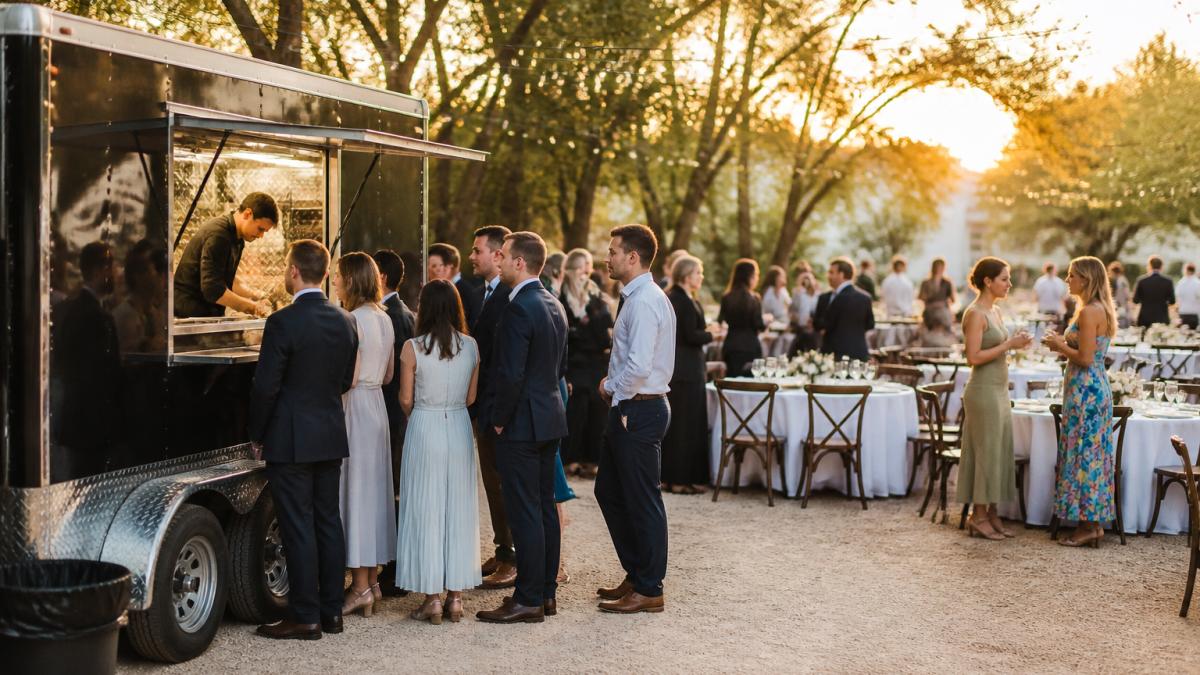
The trade-off is throughput. A single truck serves a limited number of guests per hour, so a 200-person reception may need two trucks or a staggered service window. Many planners pair one savory truck with a dessert or beverage vendor to keep lines moving.
What Food Trucks Need From Your Venue
Most food trucks need a flat, stable parking surface, roughly 20 to 30 feet of clearance, and a standard power hookup or their own generator. Confirm three things before booking:
- Permits: Many municipalities require a mobile food vendor permit for private events. Check with your local health department.
- Space: Trucks cannot navigate tight loading docks or steep ramps.
- Timing: Trucks need 30 to 60 minutes for setup before service begins.
Booking a food truck without confirming your venue’s generator policy is the most common planning mistake. If the venue does not allow fuel generators, the truck may arrive unable to cook.
DIY Event Food Stations: Control the Menu, Control the Budget
DIY event food stations let hosts build a menu from scratch, often at the lowest cost per guest. A grazing table, build-your-own taco bar, or charcuterie spread can be assembled with rented equipment and a small prep team.
The catch is labor. Self-serve setups still need someone to restock, monitor temperatures, and clear plates, or stations look picked-over within 30 minutes.
What Actually Drives the Cost
DIY is not automatically cheap. The savings come from replacing kitchen labor with your own time and rentals, and the cost drivers are predictable:
- Ingredient volume and waste. Self-serve guests take more than plated guests, and anything not held at temperature gets discarded. Overbuying protein and underbuying filler is the classic budget miss.
- Rentals. Chafing dishes, sterno fuel, ice baths, risers, linens, and serving utensils add up fast. Weekend pickup windows can force a multi-day charge.
- Staffing. Even a self-serve station needs an attendant. Budget for one attendant per two stations, plus a runner if you are hosting more than about 100 guests.
DIY trades money for planning hours. If your time is free and your guest count is modest, the trade is favorable. For a large group with a tight run of show, the labor saved by hiring a caterer may be worth more than the food savings.
Matching Stations to Guest Count and Dietary Needs
Station count should scale with headcount, not ambition. A common pattern is one primary savory station per 50 to 75 guests, plus a separate beverage and dessert station so those lines do not compete with the main food line.
Dietary needs are easier to handle at stations than at a plated dinner, because guests self-select. Label everything clearly and separate utensils to avoid cross-contact. Practical moves:
- Give each major restriction its own labeled zone rather than scattering options.
- Keep a dedicated allergen-free station with its own utensils and serving spoons.
- Offer at least one substantial vegan and one gluten-free option that is not just a side dish.
Accessibility matters too. Lower at least one station to seated height, leave paths at least 36 inches wide for wheelchairs and walkers, and avoid grass or uneven pavement.
Staffing and Food Safety for Self-Serve Setups
The USDA guidance on food safety at events recommends keeping hot foods above 140°F and cold foods below 40°F, and discarding perishable items left out longer than two hours.
Temperature control is the part DIY hosts underestimate. Mechanisms that work:
- Use a calibrated probe thermometer and log readings every 30 minutes.
- Replenish in small batches so food spends less time in the danger zone.
- Never combine a fresh tray with an old one; discard the old and start clean.
A practical staffing rule: one attendant per two stations to restock, answer questions, and keep the line moving. For events over roughly 150 guests, add a dedicated runner to shuttle trays from a back-of-house cooler or warming area.
Self-serve stations fail for two reasons: no one is assigned to restock, and no one is assigned to check temperatures. Name both roles before the event starts.
| Service Style | Typical Cost Driver | Staffing Need | Best For |
|---|---|---|---|
| Food truck | Truck count and hours | 1-2 per truck | Casual, high-energy events |
| DIY food stations | Ingredient volume and rentals | 1 attendant per 2 stations | Budget-conscious hosts |
| Plated meals | Kitchen access and servers | 1 server per 10 guests | Formal seated dinners |
| Drop-off catering | Menu tier and delivery | Minimal | Small offices, meetings |
| Mobile coffee cart | Guest count and hours | 1-2 baristas | Beverage-focused moments |
Affordable Wedding Catering Alternatives That Still Feel Premium
Affordable wedding catering alternatives work best when they concentrate spend on one memorable element instead of spreading it thin. A taco bar, wood-fired pizza truck, or dessert-focused spread can cost less than a plated dinner while generating more guest conversation. The premium feel comes from presentation and pacing, not price: good lighting, clean signage, and a staff member explaining the options.
Skip the full open bar and invest in a signature beverage station instead. A focused, well-executed drink moment often reads as more upscale than a generic bar, and it costs less to run.
Mobile Coffee Cart Catering: The Beverage-First Option
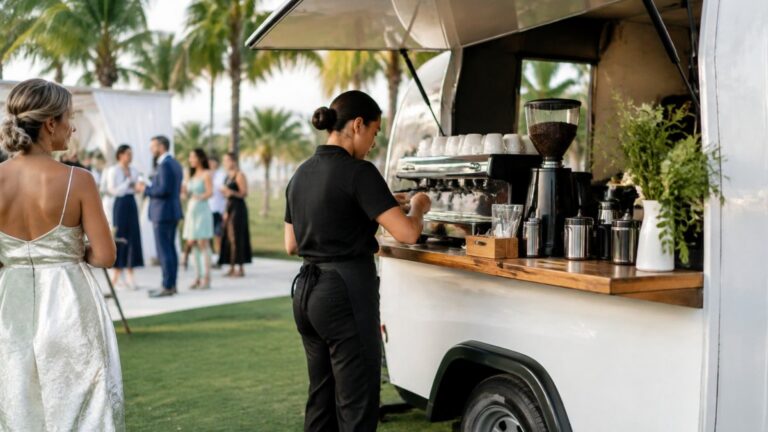
Mobile coffee cart catering is the strongest choice when the beverage is the experience, not an afterthought.
This is where Colada Kulture Co. fits. We provide mobile coffee cart and trailer options with a wide drink selection including espresso, matcha, and seasonal flavors, plus whole, oat, and almond milk options.
For corporate teams, a branded coffee cart doubles as a photo moment and an employee appreciation gesture.
Corporate events, wedding receptions, and brand activations where the beverage moment should carry the guest experience rather than sit behind it.
How to Choose the Right Catering Alternative for Your Event
Choosing between catering alternatives comes down to four variables: guest count, venue constraints, budget per guest, and the experience you want guests to remember. Work through them in that order, because each narrows the field before you call vendors.
1. Count Your Guests, Then Set Service Points
Guest count determines how many service points you need, not just how much food to order. Under 75, a single vendor usually suffices. Between 75 and 150, plan for two service points so lines do not stall.
Throughput is the number that matters. A single food truck, coffee cart, or buffet line can only serve so many guests per hour.
2. Audit Your Venue Before You Book Anything
Venue constraints eliminate more options than budget does. Confirm these before signing a vendor contract:
- Power. Does the venue allow fuel generators, or must vendors use house power? A food truck that cannot run its generator may arrive unable to cook.
- Water and drainage. Mobile vendors often need a potable water source and a place to dump gray water.
- Access and surface. Trucks and trailers need a flat, stable surface and roughly 20 to 30 feet of clearance. Tight loading docks, steep ramps, and soft grass are deal-breakers.
3. Set a Per-Guest Budget and Decide What It Covers
Set a per-guest number, then decide whether it covers food, beverage, or both. Splitting the two is often smartest, because beverage costs scale differently and a focused beverage moment can carry more guest memory per dollar than an extra entrée.
Cost drivers vary by format, but the same categories show up across all of them: staffing, rentals, delivery, menu complexity, and service duration.
4. Map Dietary Needs and Accessibility Early
Collect restrictions at RSVP, not at the door, and confirm each vendor can handle them before you book. Ask specifically how they prevent cross-contact, not just whether they offer a gluten-free or vegan option. Accessibility is part of the same conversation: confirm service points are reachable on firm, level surfaces, at least one station is at seated height, and paths are wide enough for wheelchairs and walkers.
5. Check Service Timing Against Your Run of Show
Match vendor service windows to your run of show, and build in buffer. Vendors need setup time before service and teardown time after, and those windows often overlap with your ceremony, toasts, or keynote. A few timing rules that prevent problems:
- Confirm setup start time in writing, and when the venue opens for vendor access.
- Ask how the vendor handles replenishment so food does not run out mid-line.
- Set a hard service end time and confirm the teardown window so it does not collide with your program.
Side-by-Side Decision Framework
Use this to shortlist formats before you contact vendors. Ratings are relative, not absolute.
| Format | Relative Cost | Staffing | Formality | Setup Needs | Best-Fit Events |
|---|---|---|---|---|---|
| Food truck | Moderate | 1-2 per truck | Casual | Flat surface, power or generator, permit | Casual receptions, brand activations |
| DIY food stations | Low to moderate | 1 attendant per 2 stations | Flexible | Rentals, power for chafing, ice, space | Budget-conscious hosts, flexible venues |
| Plated meals | High | 1 server per 10 guests | Formal | Commercial kitchen, seating, serviceware | Formal seated dinners, galas |
| Drop-off catering | Low | Minimal | Casual | Table space, holding equipment | Small offices, meetings, daytime events |
| Mobile coffee cart | Low to moderate | 1-2 baristas | Flexible | Level surface, power or generator | Beverage-focused moments, corporate events |
For a deeper look at planning timelines, the event planning resources from the U.S. Small Business Administration offer useful checklists for corporate hosts. Wedding planners may find the CDC’s guidance on safer event food handling helpful for large gatherings.
Conclusion: Matching the Format to the Guest Experience
The hardest part of moving away from standard event catering is not finding alternatives. It is matching the format to the moment you want guests to remember.
If your event lives or dies on the beverage experience, Colada Kulture Co. builds mobile coffee cart and trailer setups with customizable packages, a drink menu spanning espresso, matcha, and seasonal flavors, and whole, oat, and almond milk options.
Request a quote from Colada Kulture Co. and build a beverage moment your guests talk about long after the last cup.
Frequently Asked Questions
What are some alternatives to traditional event catering?
Common alternatives include food truck catering, DIY food stations, drop-off catering from local restaurants, mobile coffee cart catering, and hybrid setups that combine a small plated service with self-serve elements. Each option changes the cost structure, staffing needs, and guest experience. Food trucks and drop-off catering reduce labor costs, while DIY stations give you full control over the menu. Mobile coffee carts work well as a beverage add-on or a standalone experience for shorter events like corporate mixers or wedding cocktail hours.
How much food should I plan for an event with nontraditional catering?
For food truck catering, plan on guests ordering one to two items each, and ask the vendor for a per-hour serving estimate based on your guest count. For DIY food stations, a general rule is 1.5 servings per guest per station, with more for main courses and fewer for sides. If you are adding a mobile coffee cart, one drink per guest per hour is a reasonable baseline for a two-hour window. Always confirm headcount minimums with each vendor before finalizing your budget.
Can a coffee cart replace traditional event catering?
A mobile coffee cart works best as a complement to food, not a full replacement, unless your event is short and beverage-focused, like a morning corporate mixer or a post-dinner reception. For weddings and longer events, pair a coffee cart with food stations or a food truck so guests have both savory and beverage options. Colada Kulture Co. offers customizable packages that include pastries and cold brew, which can bridge the gap for lighter events.
How do I choose the right catering alternative for my event?
Start with three factors: guest count, venue constraints, and service time. Food trucks need outdoor space and power access. DIY stations require setup and cleanup labor from you or your team. Drop-off catering suits venues with limited kitchen access. Mobile coffee cart catering fits venues with strict power or loading dock rules because many carts run on battery or standard outlets. Match the format to your venue first, then compare cost per guest across two or three options before committing.