Table of Contents
- What Specialty Coffee Service Includes (And Why It Beats a Thermos)
- Event Coffee Bar Menu: Espresso, Matcha, and Custom Branding
- Coffee Catering Cost: What Drives Your Quote Up or Down
- Coffee Catering Checklist: What to Confirm Before You Book
- Coffee Catering for Weddings: Timing, Logistics, and Guest Flow
- Choosing a Specialty Coffee Service Provider: Questions That Matter
- Conclusion: Making Specialty Coffee Service Work for Your Event
- Frequently Asked Questions
Last Updated: October 13, 2026
What Specialty Coffee Service Includes (And Why It Beats a Thermos)
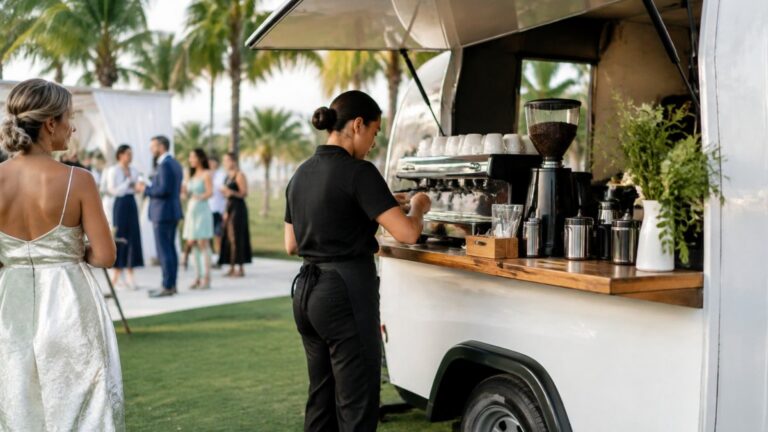
Specialty coffee service is a staffed, on-site coffee catering operation where trained baristas prepare espresso drinks, matcha, and cold brew to order using commercial-grade equipment. At Colada Kulture Co., we run mobile coffee carts and trailers for weddings, corporate gatherings, and brand activations, the difference between that and a thermos is the difference between a beverage station and an experience.
A thermos holds temperature for a while and then stops. Specialty coffee service builds each drink the moment it is ordered: espresso pulled fresh, milk steamed to order, matcha whisked on the spot.
What a full setup typically includes:
- A mobile cart or trailer with commercial espresso equipment
- Trained baristas staffing the bar for your event window
- A customizable drink menu spanning espresso, matcha, seasonal flavors, and cold brew
- Milk options including whole, oat, and almond
- Optional add-ons such as pastries
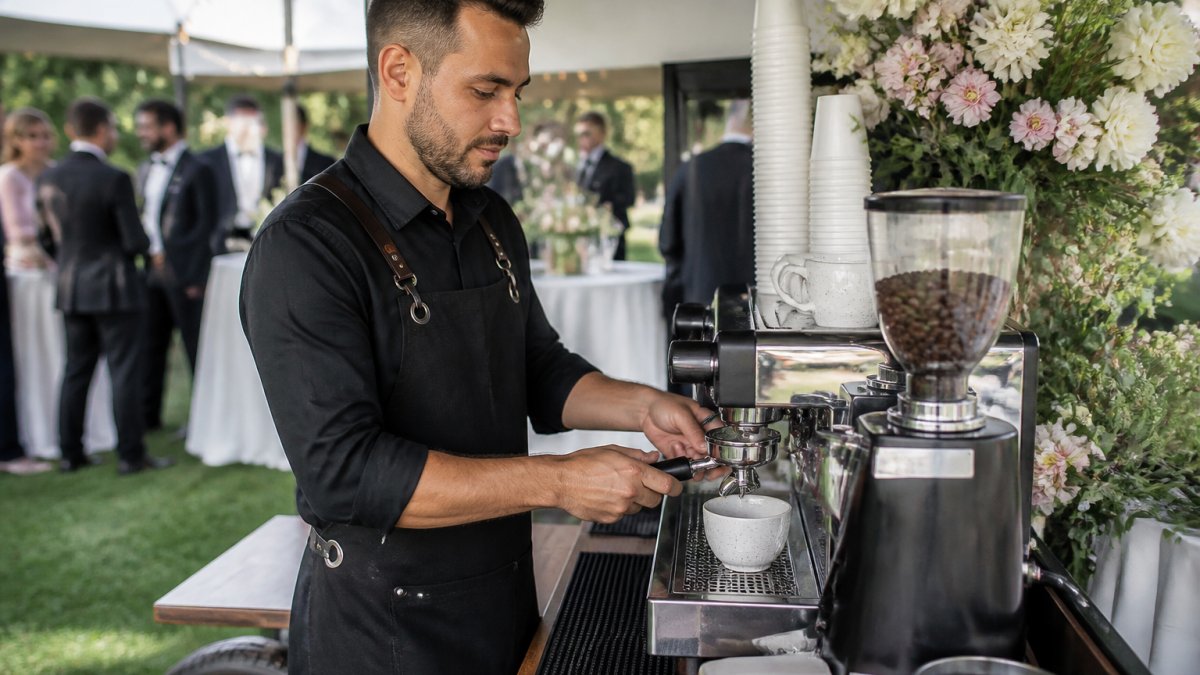
The core value of specialty coffee service is made-to-order preparation with a person behind the bar. Everything else, the menu, the branding, the milk options, is built on top of that.
Event Coffee Bar Menu: Espresso, Matcha, and Custom Branding
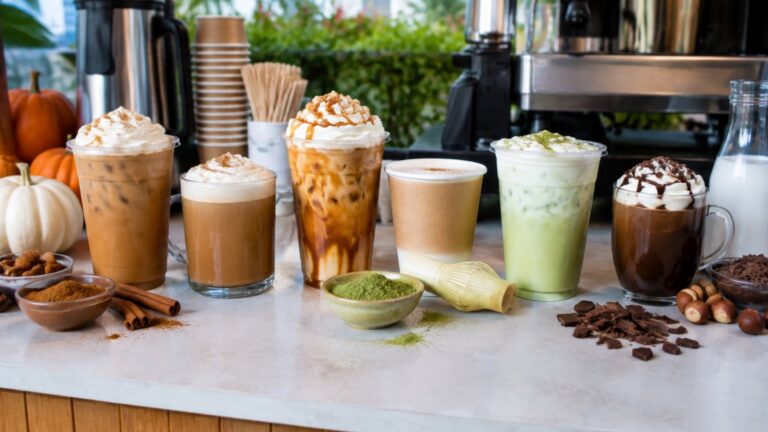
The strongest event coffee bar menus pair a dependable espresso core with two or three signature drinks that match the occasion. Espresso, cappuccino, and lattes cover most guests; matcha and cold brew capture non-coffee drinkers.
For brand activations and product launches, the menu is also a marketing surface. Custom branding can extend to the cart itself, cup sleeves, and drink names tied to your campaign. A latte named after your product gets photographed and posted far more often than a generic cup.
A practical menu structure we use:
- Espresso-based core: espresso, americano, cappuccino, latte
- Non-coffee options: matcha lattes, hot chocolate, chai
- Cold options: iced lattes, cold brew, iced matcha
- Seasonal or signature drinks tied to your event theme
- Milk alternatives: whole, oat, and almond
Customization matters most when your guest list is mixed: a corporate appreciation event and a luxury wedding rarely want the same drink list.
Coffee Catering Cost: What Drives Your Quote Up or Down
Coffee catering cost depends on guest count, service hours, menu complexity, and travel distance, not a flat per-cup rate.
Here is how a quote actually gets built, so you can pressure-test any proposal you receive.
Equipment capacity sets the ceiling. A single-group espresso machine and a dual-boiler, multi-group machine produce very different volumes per hour.
Consumables scale with the menu, not the guest count. Milk, oat and almond alternatives, matcha powder, syrups, cold brew concentrate, cups, lids, sleeves, and napkins all carry per-drink costs.
Site logistics add setup labor you do not see. Loading dock access, freight elevator reservations, distance from the vehicle to the setup location, stair carries, and power availability all translate into setup time.
Branding and customization carry design and production lead time. Custom cup sleeves, cart wraps, signage, and named drinks require artwork, proofs, and often a print-vendor minimum.
Travel and mileage. Distance from the provider’s base to your venue affects both fuel and crew time.
Because every event is different, we quote per event rather than publishing a rate card. Ask for your quote itemized by labor, equipment, consumables, duration, logistics, branding, and travel.
The most expensive quote is rarely the one with the highest per-guest number. Late arrivals, understaffed bars, and cold machines cost you guest goodwill, and that is not refundable. The cheapest quote is often the one that underbid labor and equipment capacity, and you find out at peak hour.
Coffee Catering Checklist: What to Confirm Before You Book
A coffee catering checklist keeps a good quote from turning into a bad event day. Confirm these items in writing before you sign, the details skipped in the sales conversation surface on site.
- Exact arrival and setup time, plus how early the bar opens
- Number of baristas staffing the bar for your guest count
- Full drink menu, including milk alternatives and any signature drinks
- Power requirements and whether the venue can meet them
- Loading dock access, elevator reservations, and cart path to the setup location
- Setup footprint and whether it fits the venue’s floor plan
- Service window start and end times, and the cost of extending
- Branding deliverables: cart wrap, cup sleeves, signage
- Breakdown and cleanup responsibilities
- References from comparable events you can actually call
That last item is the one planners skip and regret. Ask for references from events the same size and type as yours, then call one.
Coffee Catering for Weddings: Timing, Logistics, and Guest Flow
Coffee catering for weddings succeeds or fails on timing. The bar should open when guests need it, not when it is convenient to set up, almost always the cocktail hour or the start of dancing.
Wedding guest flow follows a predictable pattern: guests arrive and head for the bar, they eat, they dance, and mid-reception the coffee bar becomes the thing people gravitate toward, especially if the venue is warm or the night is long.
A few logistics that matter more at weddings than at corporate events:
- Venue restrictions: historic and waterfront venues often limit power draw and setup locations
- Aesthetic fit: the cart should look like it belongs in your photos, not like it was dropped in
- Late-night demand: an espresso bar at 9 p.m. outperforms one at 5 p.m.
- Guest count spikes: vow to staff for your peak, not your average
We have served over 35 weddings, corporate events, and private celebrations, and the pattern holds: smooth events are the ones where logistics were confirmed weeks out, not the morning of.
Choosing a Specialty Coffee Service Provider: Questions That Matter
Can you handle our venue’s logistics? High-rise offices with strict power requirements and limited loading dock access are a real test.
Can you staff for our peak volume? A line of 200 guests moves fast or it does not, and that is a staffing decision made before the event.
Can you customize the menu? If you need oat milk, almond milk, matcha lattes, and a signature drink for your brand activation, the answer should be yes without hesitation.
Can you provide references? Ask for contactable references from events like yours, same size, venue type, and menu complexity. Then actually call one.
What happens if equipment fails? This separates prepared providers from optimistic ones. A good answer includes a backup machine, a backup power source, or a documented drip or pour-over fallback.
What is your cancellation and rescheduling policy? Event dates move. Ask what happens if you reschedule, what the deposit refund schedule looks like, and whether the deposit is transferable to a new date.
What is your insurance and permitting situation? Mobile coffee carts and trailers often need a health department permit, a business license, and liability insurance.
Who is actually on site? Some providers sell the event and then subcontract the staffing.
| What to Evaluate | What to Ask | Why It Matters |
|---|---|---|
| Venue logistics | Power needs, loading access, setup footprint, elevator windows | Prevents day-of setup failures |
| Staffing capacity | Baristas per guest count, drinks-per-hour target | Keeps lines moving at peak |
| Menu flexibility | Milk alternatives, matcha, signature drinks, customization cutoff | Serves a mixed guest list |
| Proof | Contactable references from similar events | Replaces promises with evidence |
| Equipment readiness | Machine type, backup plan, power redundancy | Avoids cold or stalled service |
| Contract terms | Deposit, cancellation, rescheduling, overtime rate | Protects you if plans change |
| Compliance | Health permit, business license, liability insurance | Keeps your venue and company covered |
| Staffing model | Direct employees vs. subcontractors, on-site lead | Determines accountability on event day |
Red flags to watch for:
- A quote that does not itemize labor, equipment, consumables, and travel
- No written contract, or a contract that does not mention setup time, service window, or breakdown
- No references, or references who cannot be contacted
- Vague answers about equipment capacity or backup plans
- No proof of insurance or health permit
- A price that is dramatically lower than every other quote, usually a sign of underbid labor or undersized equipment
Ask a prospective provider what happens if their espresso machine fails mid-event. The good ones have an answer ready, because they have planned for it. The ones who pause are the ones who have never had it happen, yet.
Beuly Suhr, Luis Gonzalez, Vince Gonzalez, and Kimberly are among the clients who have worked with us, and we are happy to connect you with references from events that match yours in size and setting.
Conclusion: Making Specialty Coffee Service Work for Your Event
The gap between a forgettable beverage station and a coffee bar guests talk about comes down to planning: confirming logistics early, staffing for your peak, and choosing a menu that fits your crowd. That planning decides how the day actually goes.
At Colada Kulture Co., we handle that planning with you. Our mobile coffee cart and trailer options adapt to everything from a high-rise office to an outdoor reception, our customizable catering packages include espresso, matcha, seasonal flavors, and whole, oat, and almond milk, and our professional baristas prepare every drink fresh during your event window.
Get started with Colada Kulture Co. and give your guests a coffee experience they will remember long after the last cup.
Frequently Asked Questions
What is a specialty coffee service for events?
A specialty coffee service brings a mobile cart or trailer with professional baristas, commercial espresso machines, and freshly roasted beans directly to your venue. Unlike a thermos of drip coffee, it includes made-to-order drinks like lattes, cappuccinos, cold brew, and matcha. The service handles setup, milk alternatives, and cleanup. For corporate events, it creates an interactive station where guests customize their drinks, turning a coffee break into a memorable experience.
How do I choose a coffee catering service for an event?
Start by confirming the provider’s service area and whether they have worked at your venue before. Ask about barista-to-guest ratios, equipment power needs, and setup time. Request references from events similar to yours, such as weddings or product launches. Check if they offer customizable menus and branded cups. Finally, review the coffee catering checklist with them to ensure nothing is missed on event day.
How many baristas do I need for my event?
A common guideline is one barista per 50 to 75 guests during peak service windows. For a 200-guest wedding with a two-hour coffee service, two to three baristas keep lines moving. For smaller corporate gatherings of 75 people, one or two baristas are sufficient. The exact number depends on your event coffee bar menu complexity: a simple drip and cold brew setup needs fewer staff than a full espresso and matcha bar.
How much coffee should I plan for per guest?
Plan for 1.5 to 2 drinks per guest if coffee is a main beverage option, or 1 drink per guest if it is a supplement to a full bar. For a 100-person event, that means 150 to 200 servings. Cold brew and iced drinks often see higher consumption at daytime events. Confirm your coffee catering cost includes enough milk, alternative milks, and cups to cover that volume without running short.
What should I include in an event coffee bar menu?
A balanced event coffee bar menu includes espresso drinks (latte, cappuccino, americano), cold brew or iced coffee, a matcha option, and at least one seasonal specialty drink. Offer whole, oat, and almond milk. For brand activations, add a custom-named signature drink. Keep the menu to six to eight core items so baristas can work quickly and guests are not overwhelmed by choices.
How far in advance should I book event coffee catering?
Book four to six weeks ahead for most events. Peak wedding season and holiday corporate parties often require two to three months of lead time. If your date falls on a popular weekend, secure your provider as soon as your venue is confirmed. Early booking also gives you time to finalize your coffee catering checklist and customize the menu without rush fees.
What questions should I ask a coffee caterer before booking?
Ask about their service area, setup requirements (power, space, water), barista-to-guest ratio, and what happens if equipment fails. Request a sample menu and confirm whether milk alternatives and custom branding are included. Ask for references from events like yours. Finally, clarify the coffee catering cost breakdown: travel fees, staffing, rentals, and gratuity. A transparent provider will answer all of these before you sign.