Table of Contents
- How Much Coffee to Serve at a Wedding: The Short Answer
- How Much Coffee to Make for 100 People
- Coffee-to-Water Ratios and Equipment Capacity
- Coffee at the Wedding Reception: Timing and Service Length
- Wedding Coffee Bar Setup: Regular, Decaf, and Flavor Options
- Mobile Espresso Bar for Weddings: When It Beats Bulk Brewing
- Complete Coffee Supply and Service Checklist
- Conclusion: Plan for 60%, Brew for 70%
- Frequently Asked Questions
Last Updated: October 12, 2026
How Much Coffee to Serve at a Wedding: The Short Answer
Plan for about 60% of your guests to drink coffee, and brew enough for 70%. For a 100-guest wedding, that means roughly 60 to 70 cups, or about 5 to 6 gallons of brewed coffee. That math holds whether you’re hosting 50 people or 200.
At Colada Kulture Co., we’ve catered over 35 weddings and private celebrations, and the same question comes up every time: how much coffee to serve at a wedding without running dry or pouring half of it down the drain. This guide gives you the numbers, the ratios, and the setup steps to get it right.
Here’s the short version before we dig in:
- Guest count × 0.6 = coffee drinkers
- Coffee drinkers × 1.5 cups = total cups needed
- Total cups ÷ 12 = gallons to brew (a standard cup is 6 oz)
That’s your starting point. The rest of this guide shows you how to adjust for timing, guest demographics, and service style.
The 60% Rule: How Many Guests Actually Drink Coffee
Not every guest drinks coffee. Evening receptions tend to run lower, around 50%. Morning or brunch weddings push higher, closer to 75%.
The 60% rule is a safe middle ground for most receptions. It assumes a mixed crowd with a dessert course and a coffee station open for at least two hours.
Here’s how to adjust:
- Brunch or morning wedding: plan for 70-75% of guests
- Afternoon reception: plan for 55-65%
- Evening reception with dancing: plan for 45-55%
- Winter or cold-weather event: add 10% to any estimate
Cold nights push coffee demand up. Warm evenings push it down toward iced drinks and cocktails.
Cups Per Person by Reception Time
Most coffee drinkers have one cup with dessert and a second later in the evening. So one coffee drinker equals roughly 1.5 cups across the reception.
- Short reception (2-3 hours): 1 cup per coffee drinker
- Standard reception (4-5 hours): 1.5 cups per coffee drinker
- Long reception (6+ hours): 2 cups per coffee drinker
If you’re serving espresso drinks instead of drip, expect fewer cups per person. A double espresso or latte satisfies more than a 6 oz drip cup.
How Much Coffee to Make for 100 People
For 100 guests, brew enough for 60 to 70 cups. That’s about 5 to 6 gallons of finished coffee. If your reception runs long or skews older, push toward 70. If it’s a young evening crowd, 55 to 60 cups is plenty.
Here’s the math in one table:
| Guest Count | Coffee Drinkers (60%) | Cups Needed (1.5x) | Gallons to Brew |
|---|---|---|---|
| 50 | 30 | 45 | 3.75 |
| 100 | 60 | 90 | 7.5 |
| 150 | 90 | 135 | 11.25 |
| 200 | 120 | 180 | 15 |
A note on that table: those gallon figures assume 12 cups per gallon at 6 oz each. Many caterers round up to the nearest urn size, which is why a 100-guest wedding often lands on a 60-cup urn plus a backup batch.
Worked Example: 100 Guests, Evening Reception
Let’s walk through a real scenario. You’re hosting 100 guests at a 6 p.m. reception. Dinner ends at 8, dessert is served at 8:30, and the bar closes at 11.
- Coffee drinkers: 100 × 0.5 (evening) = 50
- Cups needed: 50 × 1.5 = 75
- Gallons: 75 ÷ 12 = 6.25
- Round up: brew 7 gallons, or about 84 cups
That gives you a 10-cup buffer. If 10 extra guests grab coffee after dinner, you’re covered. If not, you have leftovers for the vendor meal or the morning-after brunch.
Brew in two batches. Serve the first 60% at dessert, then brew the rest an hour later. Fresh coffee beats a full urn that’s been sitting for three hours.
Coffee-to-Water Ratios and Equipment Capacity
The standard ratio for drip coffee is 1 to 2 tablespoons of ground coffee per 6 oz of water. For a 60-cup urn, that’s roughly 1 to 1.5 pounds of grounds. Use a coarse grind for urns and a medium grind for standard brewers.
Getting the ratio wrong is the fastest way to ruin a coffee bar. Weak coffee gets dumped. Overly strong coffee gets cut with too much cream.
Here’s the cheat sheet:
- Drip brewer: 1 tbsp grounds per 6 oz water
- Coffee urn: 1.5 tbsp grounds per 6 oz water (urns brew slower)
- French press: 2 tbsp grounds per 6 oz water
- Espresso: 18-20 grams grounds per 2 oz shot
Buy about 1 pound of ground coffee for every 40 to 50 cups you plan to serve. That accounts for the ratio and a small margin.
How Many Urns or Brewers You Actually Need
One 60-cup urn handles a 100-guest wedding if you brew in two batches. For 150+ guests, run two urns in parallel or rent a 100-cup model.
Capacity planning:
- Under 75 guests: one 60-cup urn
- 75-150 guests: one 60-cup urn plus a 30-cup backup, or two 60-cup urns
- 150-250 guests: two 60-cup urns or one 100-cup urn plus a traveler
- 250+ guests: three 60-cup urns, or hire a coffee cart with on-site brewing
Check your venue’s power setup before you commit. Most 60-cup urns pull 1,500 watts and need a dedicated 20-amp circuit. Older venues and high-rise offices often can’t handle two urns on the same line.
FDA Food Code guidance on holding temperatures for hot beverages
Coffee at the Wedding Reception: Timing and Service Length
Open the coffee station when dessert hits the table, not before. Coffee at the wedding reception works best as a dessert companion, then again in the final 90 minutes as guests wind down.
Service length matters more than guest count for some weddings. A 2-hour coffee window serves fewer cups than a 4-hour window, even with the same headcount.
Timing guide:
- Cocktail hour: skip coffee, or offer a signature iced coffee
- Dinner service: hold coffee until dessert
- Dessert course: open the coffee bar, serve 60% of your total
- Post-dinner (final 90 minutes): brew the remaining 40%
- Last call: close the station 30 minutes before the bar closes
If you’re serving espresso drinks, expect a longer line per guest. A drip pour takes 10 seconds. A latte takes 45 to 60 seconds. Factor that into your service window.
Wedding Coffee Bar Setup: Regular, Decaf, and Flavor Options
Split your brew 70/30 between regular and decaf. Most guests want regular, but a decaf option keeps the coffee bar open for guests who skip caffeine after dinner.
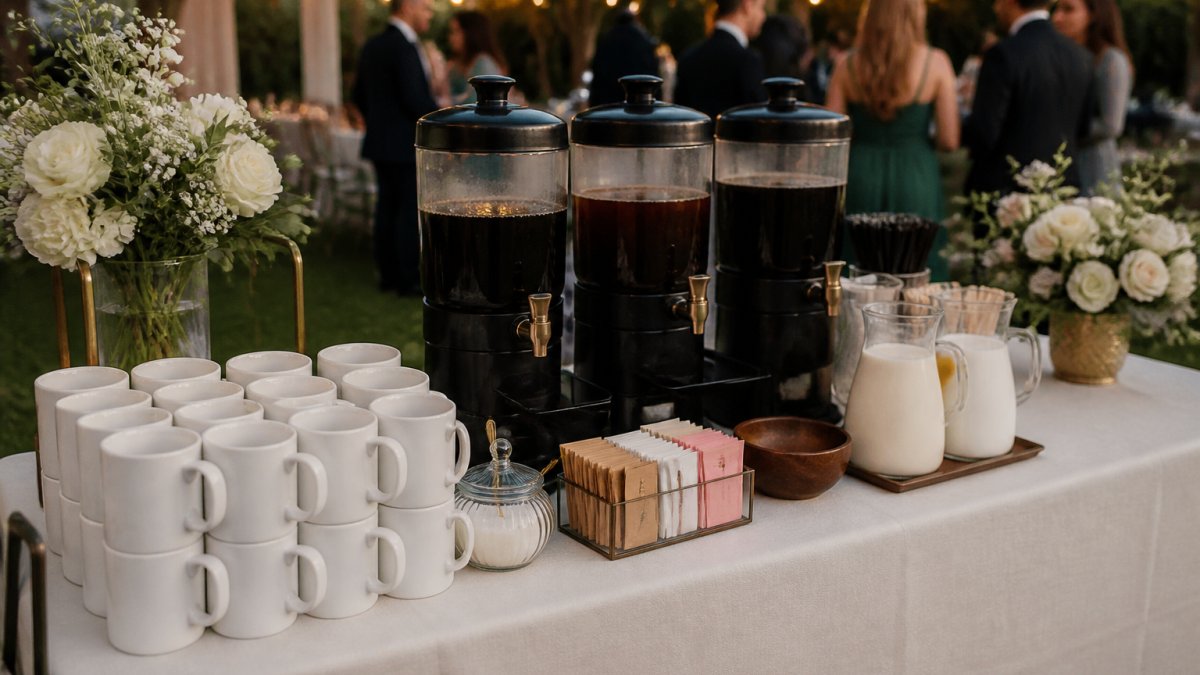
Stock the bar with these basics:
- Regular coffee (70% of total volume)
- Decaf coffee (30%)
- Whole milk, oat milk, almond milk
- Sugar, raw sugar, honey, and a sugar substitute
- Cinnamon, cocoa powder, and one or two flavored syrups
- Stirrers, napkins, and small spoons
Flavor syrups are cheap insurance. Vanilla, caramel, and hazelnut cover 90% of guest preferences. Add a seasonal option (pumpkin spice in fall, peppermint in winter) if your wedding date lines up.
Self-Service vs. Staffed Coffee Service
Self-service works for casual receptions under 100 guests. Staffed service is worth the upgrade for weddings over 100, evening receptions, and any event where you want the coffee to feel like part of the experience.
| Factor | Self-Service | Staffed Service |
|---|---|---|
| Best for | Under 100 guests, casual | 100+ guests, formal |
| Setup | Urn, cups, condiments | Barista, cart, full menu |
| Wait time | 2-3 min per guest | Under 1 min per guest |
| Cleanup | You handle | Vendor handles |
| Menu range | Drip, decaf, condiments | Espresso, lattes, matcha, iced drinks |
| Guest experience | Functional | Memorable, photo-worthy |
CDC guidance on food safety at catered events
Mobile Espresso Bar for Weddings: When It Beats Bulk Brewing
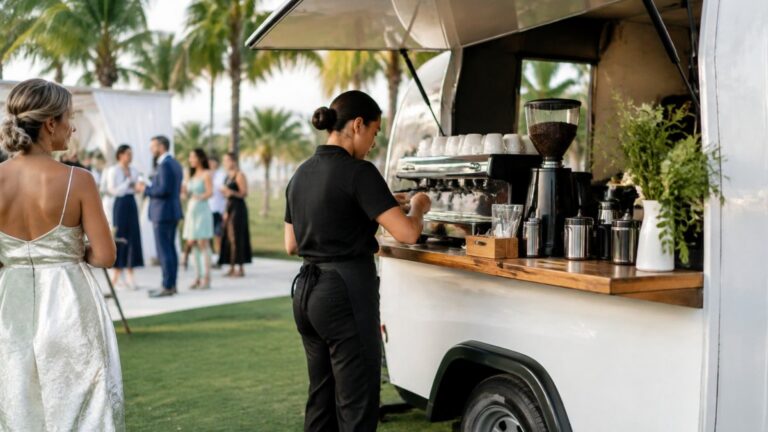
A mobile espresso bar for weddings beats bulk brewing when you want the coffee to be an experience, not just a beverage. Espresso carts serve fresh drinks on demand, handle custom menus, and give guests something to photograph.
Bulk brewing wins on cost per guest. Espresso service wins on quality, variety, and the memory your guests take home.
Choose a mobile espresso bar when:
- Your guest count is 75 or higher
- You want a photo-friendly coffee moment
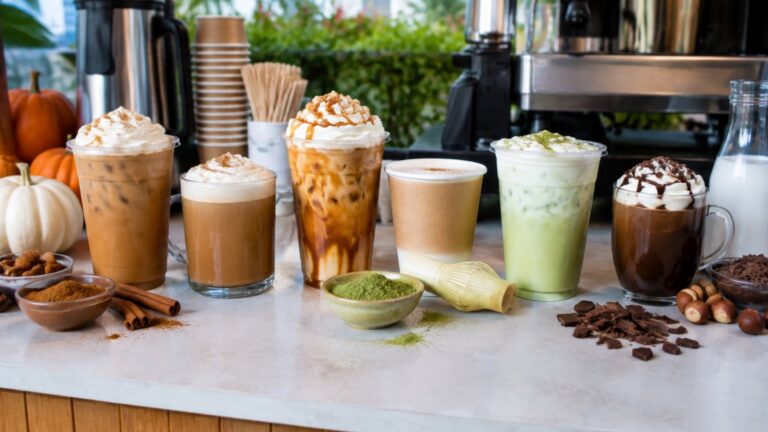
- Guests have varied preferences (matcha, oat milk lattes, iced drinks)
- You want staffed service without hiring a separate caterer
Choose bulk brewing when:
- Your guest count is under 60
- You want the lowest cost per guest
- Coffee is a minor part of the reception
- Your venue has limited space or power
At Colada Kulture Co., we run mobile espresso carts and trailers across South Florida. Our baristas serve espresso, matcha, and seasonal drinks with whole, oat, and almond milk, and we build the menu around your wedding. We’ve served over 35 weddings and private celebrations, so we know how to keep a line of guests moving without slowing the night down.
Complete Coffee Supply and Service Checklist
Use this checklist to lock in every detail before the wedding day.
Guest math
- Final guest count confirmed
- Coffee drinker percentage set (50-75% based on time of day)
- Cups per person set (1 to 2 based on reception length)
- Total cups and gallons calculated
Equipment
- Urns or brewers reserved
- Power requirements checked with venue
- Backup brewer or traveler confirmed
- Cups, lids, stirrers, napkins ordered
Supplies
- Ground coffee (regular and decaf)
- Milk, oat milk, almond milk
- Sugar, honey, sugar substitute
- Flavor syrups
- Cocoa powder and cinnamon
Service
- Coffee bar location chosen
- Open and close times set
- Staff assigned (self-serve or barista)
- Cleanup plan confirmed with venue
Timing
- First batch scheduled for dessert
- Second batch scheduled for final 90 minutes
- Last call set 30 minutes before bar close
Print this list. Run through it 48 hours before the wedding. It’s the difference between a smooth coffee service and a frantic call to a backup vendor.
Conclusion: Plan for 60%, Brew for 70%
The safest rule for how much coffee to serve at a wedding is simple: plan for 60% of guests to drink coffee, and brew for 70%. That buffer covers latecomers, second cups, and the guest who always asks for one more.
Get the guest count right, match your brew volume to your reception length, and choose a service style that fits your crowd. Drip brewing works for small, casual weddings. A staffed mobile espresso bar turns coffee into a moment your guests remember.
If you want coffee service that looks as good as it tastes, Colada Kulture Co. builds custom mobile espresso bars for weddings across South Florida. Our carts and trailers come with trained baristas, a full drink menu, and milk options that cover every guest. Get started with Colada Kulture Co. and give your reception a coffee bar your guests will talk about long after the last dance.
Frequently Asked Questions
What percentage of wedding guests will drink coffee?
Plan for 60% of your guest count to drink coffee at an evening reception, and closer to 40% for a daytime event. That 60% figure assumes a mix of regular and decaf drinkers. If your reception runs past 9 p.m. or includes a dessert course, push your estimate toward 65%. Always brew for 70% so you never run out during the final hour of service.
How much coffee should I make for 100 wedding guests?
For 100 guests at an evening reception, plan on 60 coffee drinkers having roughly 1.5 cups each, which is about 90 servings.
Is it better to serve brewed coffee or espresso at a wedding?
Brewed coffee works well for large guest counts because urns hold volume and guests serve themselves quickly. A mobile espresso bar for weddings suits smaller or luxury receptions where guests expect cappuccinos, lattes, and matcha. Many couples do both: a self-serve urn for the crowd and a staffed espresso cart for the head table and cocktail hour.
When should coffee be served at a wedding reception?
Serve coffee with dessert, usually 60 to 90 minutes before the reception ends. If you have a late-night crowd, keep a station open until the last 30 minutes. Coffee service that starts too early sits untouched and goes cold. Coordinate with your caterer so the coffee bar opens right as cake is cut, then stays staffed through the final send-off.