Table of Contents
- Why Espresso Service Elevates an Outdoor Wedding
- Planning Your Outdoor Wedding Coffee Bar Setup
- Selecting Espresso Bar Equipment for Events
- Crafting an Espresso Drink Menu for Weddings
- Calculating Beverage Quantities for 200 Wedding Guests
- Timing and Service Flow During Reception
- Food Safety and Outdoor Beverage Handling
- Your Pre-Wedding Espresso Service Checklist
- Frequently Asked Questions
Last Updated: October 17, 2026
Why Espresso Service Elevates an Outdoor Wedding
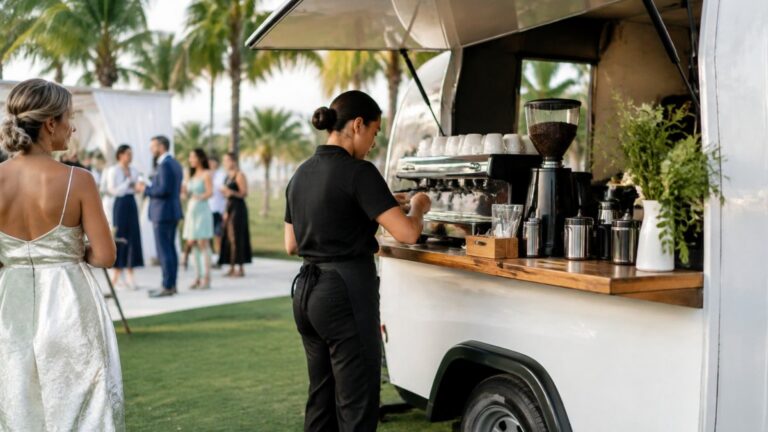
The right espresso service at outdoor weddings can change an event’s energy: guests may linger longer and the coffee bar can become a natural gathering point instead of just another catering station.
Espresso drinks feel personal, a cappuccino is different from a latte, and a shot with a biscotti is a moment, not just a beverage.
This guide covers equipment selection, menu planning, guest counts, timing, and the operational details that separate smooth service from chaos.
Planning Your Outdoor Wedding Coffee Bar Setup
A successful outdoor wedding coffee bar starts with infrastructure: power, water, and weather protection.
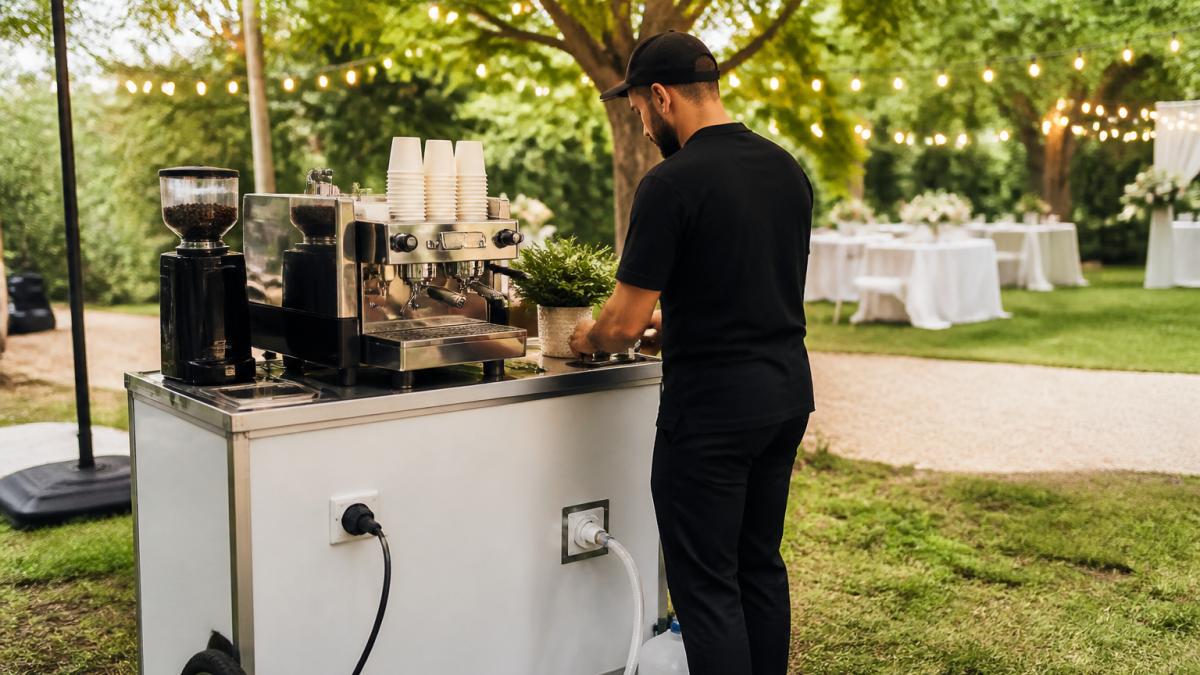
Most venues don’t advertise what they can actually support, that promised electricity might be 50 feet away, a single outlet shared with the DJ, or prone to going out in rain.
Visit your venue in person: identify where the coffee bar will sit, check outlet locations, ask about water access, and understand what weather protection exists.
Power and Water Infrastructure
Most wedding venues have limited outdoor power, standard outlets provide 15 amps at 120 volts, or 1,800 watts, so you’ll likely need a generator.
Rent a quiet generator rated for at least 5,000 watts. Position it upwind so noise doesn’t carry toward guests.
Water access is equally critical: you need fresh water for the boiler and for cleaning throughout service, not just at setup.
If the venue has an outdoor spigot, confirm it works before the wedding day; otherwise bring water in large containers, a 5-gallon jug supplies about 40 drinks.
Weather Protection and Contingency
A pop-up tent or canopy is essential. Size it for your espresso bar plus space for guests to queue. A 10-by-10-foot tent is minimum. A 10-by-20-foot tent is better.
Position the tent so afternoon sun doesn’t hit the machine directly, heat stresses equipment and makes the station uncomfortable for your barista.
Cold weather slows espresso service. Machines take longer to heat. Milk froths differently. Cold mornings mean guests want hot drinks. Plan for longer lines during early service.
Selecting Espresso Bar Equipment for Events
The right equipment makes the difference between smooth service and frustration, you’re buying a tool that works for hours under pressure, not a home machine.
Espresso Machine Capacity and Throughput
Espresso machines for events come in two categories: single-group and two-group.
A single-group machine pulls one shot at a time, producing about 15-20 drinks per hour, for 200 guests, that means a 40-minute line guests won’t wait in.
A two-group machine pulls two shots simultaneously. It produces 30-40 drinks per hour.
Throughput depends on drink complexity. A straight espresso takes 30 seconds. A cappuccino takes 2-3 minutes because the barista froths milk.
Capacity also matters: the machine’s tank or water connection must keep pace with demand, a 15-liter tank refills every 60-80 drinks, so expect multiple refills during service.
Grinders, Cups, and Serving Essentials
A quality grinder is non-negotiable, pre-ground coffee oxidizes and tastes bitter, so grind beans fresh for each drink.
Rent or buy a commercial-grade grinder rated for event use. Burr grinders (not blade grinders) produce consistent particle size.
Cups matter more than people think.
Cold drinks need clear cups so guests see the color and layers. Plastic cups work, but glass or clear plastic looks better in photos.
Stock 30% more cups than your guest count. Guests lose cups. Spills happen. Running out of cups mid-service is embarrassing.
Other essentials:
- Espresso tamper (to pack grounds into the portafilter)
- Milk pitcher for frothing (stainless steel, 12-ounce minimum)
- Thermometer for milk temperature (optimal: 150-155°F)
- Knock box for used grounds
- Cleaning brushes and cloths
- Backup portafilters (the part that holds grounds)
Crafting an Espresso Drink Menu for Weddings
Your menu should be simple, guests want to order quickly and move on, not study options.
A strong menu has 4-6 options maximum. Offer a signature drink that reflects your brand or the couple’s style.
Classic Espresso Drinks and Seasonal Options
Espresso drinks for weddings typically include:
- Espresso: Single or double shot, black. Fast to serve. Appeals to coffee purists.
- Cappuccino: Espresso with steamed milk and foam. The most popular choice.
- Latte: Espresso with steamed milk, minimal foam. Smoother and creamier than cappuccino.
- Americano: Espresso with hot water. Similar strength to drip coffee. Good for guests who want volume.
- Cold Brew: Pre-made, served over ice. Essential for afternoon service when guests want cold drinks.
- Signature Drink: A custom option tied to the couple’s style. Example: “The Bride’s Latte” with vanilla and a sprinkle of edible glitter.
Offer milk options: whole milk, oat milk, almond milk. Many guests have preferences or dietary needs.
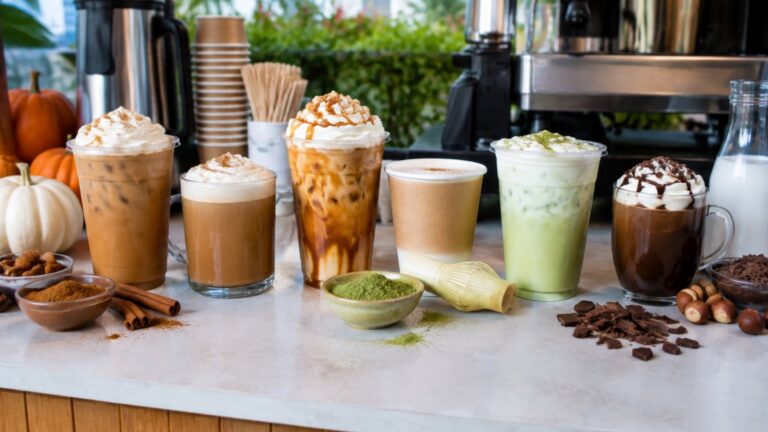
Seasonal variations work well. Summer weddings can feature iced lattes or cold brew with flavor shots. Winter weddings can offer spiced lattes or drinks with cinnamon.
Keep it simple during service. Too many options create bottlenecks. If you offer 10 drinks, your barista spends time explaining options instead of making drinks.
Pairing Espresso with Desserts and Pastries
Coffee pairs naturally with sweets. An espresso and a macaron is a moment. A cappuccino and a cookie feels intentional.
Coordinate timing with your pastry vendor so fresh pastries are available when the coffee bar opens.
Classic pairings:
- Espresso + biscotti (Italian almond cookies)
- Cappuccino + croissant
- Latte + chocolate chip cookie
- Cold brew + brownie or chocolate cake
Avoid heavy desserts that compete with coffee flavor. A rich chocolate cake overpowers an espresso. A delicate macaron complements it.
Personalized pastries add memorability. Custom macarons with the couple’s initials or wedding colors make great photo moments.
Calculating Beverage Quantities for 200 Wedding Guests
Getting quantities right prevents running out of coffee halfway through service or wasting supplies.
Guest Count and Service Buffer
Not all 200 guests will order espresso drinks, plan for 50-70% to order from the coffee bar.
For 200 guests, expect 100-140 drink orders.
A 4-hour reception gives you time to serve that volume; if service is compressed into 2 hours, you need faster throughput or a second barista.
Build in a 10% buffer. Stock supplies for 110-155 drinks. This covers spills, remakes, and the unexpected guest who orders two drinks.
Cold Brew and Hot Coffee Options
Afternoon service shifts toward cold drinks. Morning or early-evening receptions skew hot.
For a 4 p.m. reception (afternoon):
- 60% cold drinks (iced lattes, cold brew)
- 40% hot drinks (cappuccino, latte)
For an 8 p.m. reception (evening):
- 70% hot drinks
- 30% cold drinks
Cold brew is essential. It’s pre-made, so your barista doesn’t brew it during service. You reduce wait times and simplify the menu.
Prepare cold brew the day before. Steep coarse-ground coffee in cold water for 12-24 hours. Strain and refrigerate. One batch (using 1 pound of coffee) makes about 30-40 servings.
For hot coffee, an alternative to espresso drinks is a simple drip coffee station. Some guests prefer regular coffee. A thermal carafe with drip coffee takes pressure off the espresso machine.
Timing and Service Flow During Reception
Service timing determines whether the coffee bar feels like a natural part of the event or an afterthought.
Cocktail Hour and Late-Night Service
Most couples open the coffee bar during cocktail hour (first 60 minutes after the ceremony). This gives guests something to do while mingling.
Cocktail hour is high-volume, high-speed service. Guests want drinks quickly. Lines form fast. Have your barista ready to work steadily.
Late-night service (after dinner, during dancing) is different. Fewer guests order coffee. Those who do linger. Some want an espresso for energy.
A smart approach: run the coffee bar hard during cocktail hour. Scale back during dinner.
This rhythm prevents overproduction early and gives your barista a break during the meal.
Managing Queue and Staffing
One barista can handle 20-25 drinks per hour comfortably.
If you expect 50+ drinks in a single hour (cocktail hour rush), hire two baristas. They work together, pull shots simultaneously, and keep lines moving.
Position the coffee bar to funnel guests into a single line. A queue that branches into multiple lines confuses people and creates bottlenecks.
Use a simple ordering system. Guests order, pay (if applicable), then move to the pickup area.
Train your barista on the menu beforehand. They should know drink recipes cold. No improvising during service.
Food Safety and Outdoor Beverage Handling
Outdoor settings create real food safety challenges: temperature fluctuations, dust, insects, and contamination risks.
Keep milk refrigerated until service.
Wash hands frequently. Provide hand sanitizer at the coffee bar. A small sink or hand-washing station is ideal.
Use fresh water only. Don’t use water from outdoor spigots unless you’ve tested it beforehand. Bring bottled water for drinking and coffee prep.
Keep the coffee bar clean. Wipe the espresso machine regularly. Replace towels and cleaning cloths frequently. Visible cleanliness builds guest confidence.
Cover unused cups and supplies. Dust and insects settle on exposed items. A simple plastic cover protects them.
Your Pre-Wedding Espresso Service Checklist
Use this checklist 2 weeks before your wedding to confirm everything is in place.
Venue and Infrastructure:
- Visit venue. Confirm outdoor power location and capacity.
- Confirm water access (spigot or bring containers).
- Secure generator rental (5,000+ watts). Test it.
- Rent or purchase weather protection (tent, canopy, tarps).
- Confirm electrical cord length and gauge.
Equipment:
- Reserve espresso machine (single or two-group).
- Reserve commercial grinder.
- Confirm delivery date and setup time.
- Order cups (30% more than guest count).
- Order milk, beans, and supplies.
- Confirm backup equipment (portafilters, tamper, pitcher).
Staffing and Service:
- Hire barista(s). Confirm availability.
- Provide menu and training.
- Confirm service timing (cocktail hour, late-night).
- Arrange payment method (cash, card, or complimentary).
Beverages and Supplies:
- Order cold brew ingredients. Prepare 24 hours before.
- Confirm milk options (whole, oat, almond).
- Order pastries or coordinate with dessert vendor.
- Stock cleaning supplies (brushes, towels, sanitizer).
Day-Of Logistics:
- Confirm delivery and setup time with equipment vendor.
- Test all equipment 1 hour before service starts.
- Stock ice, cups, napkins, and supplies.
- Position signage so guests know where the coffee bar is.
- Brief barista on guest count, timing, and menu.
At Colada Kulture Co., we’ve handled the complexity so couples can focus on the celebration.
The investment in a professional espresso bar pays dividends in guest experience and event photos. When you serve quality espresso drinks with care, guests remember it.
Request a quote from Colada Kulture Co. today and let us handle the espresso service while you celebrate.
Frequently Asked Questions
How many espresso drinks should you plan for at a wedding?
Plan for 50-70% of your total guest count to order coffee beverages. For 200 guests, expect 100-140 drink orders. Add a 10% buffer for repeat orders and staff consumption. Consider that some guests skip coffee entirely, while others order multiple drinks during different service windows (cocktail hour, dessert time, late-night service). Espresso-based drinks typically account for 60-70% of coffee bar orders at weddings.
What espresso bar equipment do you need for an outdoor wedding?
You’ll need a commercial espresso machine (ideally 2-group or higher for throughput), a quality grinder, a water system with filtration, cups and saucers, milk frothers, and serving utensils. For outdoor settings, add a portable power generator (at least 5,000 watts), extension cords, a water supply tank or connection, weather protection (canopy or tent), and waste management. Mobile espresso bars often come equipped; verify capacity matches your guest count before booking.
How do you keep an espresso bar running without reliable outdoor power?
Rent or bring a portable generator rated for your espresso machine’s wattage (typically 3,000-5,000 watts for commercial machines). Position it upwind to minimize noise. Confirm generator fuel supply for your event duration. Have a backup power plan: some venues offer electrical hookups near the reception area. Test the generator and espresso machine together before the wedding day. If power is unavailable, consider cold brew or pour-over service as alternatives.
When should espresso be served during a wedding reception?
Serve espresso during the cocktail hour (if held outdoors), after the main course, and during dessert service. Many couples also offer late-night espresso shots or espresso martinis as the reception winds down. This timing aligns with natural guest energy dips and pairs espresso with food service. Confirm timing with your caterer and venue coordinator to avoid conflicts with other beverage stations or toasts.