Last Updated: October 24, 2026
Quick Summary
Interactive food stations are worth it for corporate events because they turn catering into part of the program, giving guests a reason to move, mingle, and stay engaged through the whole reception. They replace the fixed plate with a live, participatory experience where guests customize their own plates on the spot.
- Plan one live chef-attended station per roughly 75 to 100 guests, paired with faster self-serve options.
- For a 150-guest reception replacing a seated dinner, plan three to five stations.
- Allow two to three cocktail hour bites per guest in the first hour, then one to two per hour.
- Separate beverage and food lines so neither bottlenecks the other.
- Label allergens at each station and confirm allergen protocols with the caterer in writing before the event.
Table of Contents
- Why Interactive Food Stations Beat a Seated Dinner
- Corporate Event Food Station Ideas That Fit Your Agenda
- Live Action Stations for Events: Chef-Attended Cooking That Draws a Crowd
- Interactive Beverage Stations for Events, From Coffee Carts to Cocktail Bars
- Event Food Station Setup: Space, Power, and Equipment
- Budget Ranges, Capacity Planning, and Dietary Accommodations
- Book a Coffee Station That Keeps Your Corporate Event Moving
- Frequently Asked Questions
Why Interactive Food Stations Beat a Seated Dinner
Interactive food stations for corporate events turn catering into part of the program instead of an interruption to it. At Colada Kulture Co., we have watched this shift play out across corporate gatherings.
Interactive food stations are self-serve or chef-attended setups where guests customize their own plates on the spot. The format replaces the fixed plate with a live, participatory experience.
What Counts as an Interactive Station
An interactive station is any food or beverage setup where the guest participates in assembling or ordering the final item. That includes chef-attended carving and sushi counters, build-your-own taco and dessert bars, and made-to-order beverage carts. The common thread is choice plus movement. If a guest stands, points, and watches their plate come together, it counts.
Corporate Event Food Station Ideas That Fit Your Agenda
The best corporate event food station ideas match the pace of your schedule and the objective of the gathering. A networking mixer needs quick, one-hand bites. A product launch needs a station that doubles as a photo backdrop. A full-day conference needs stations that reset energy between sessions without derailing the agenda. Here is the practical split we use when planning with clients, organized by the corporate event types planners actually book.
Match the Station to the Event Type
- Conferences and multi-day summits: Prioritize speed and repeat visits. A barista-led coffee cart at arrival and breaks, plus one or two grab-and-go stations (parfait cups, breakfast burritos, wrapped sandwiches), keeps attendees fed between sessions without long lines. Avoid chef-attended cooking during tight 15-minute breaks.
- Client receptions and networking hours: Favor stations that create conversation and dwell time. A handroll bar, a carving station, or a build-your-own taco bar gives guests a reason to stand, talk, and return. One live station as the focal point plus two self-serve stations is a common pattern.
- Team celebrations and milestone events: Lean into fun and customization. Build-your-own dessert bars, loaded fries or nacho stations, and a branded cocktail or mocktail bar give employees choice and photo moments.
Cocktail Hour and Appetizer Stations
Cocktail hour rewards speed over spectacle. Small bites and grab-and-go appetizers keep a standing crowd fed without a queue, while a dedicated cocktail station or bar cart gives people a natural gathering point. Passed appetizers work well alongside one or two stationary stations so guests always have somewhere to land. Plan roughly two to three bites per guest for the first hour and one to two per guest per hour after that, and keep at least one station self-serve so the line never stalls when a server is refilling.
Live Chef and Cuisine-Specific Stations
Action stations are the crowd-drawers: a sushi or handroll bar, a fajita station, a carving board, a pasta station, or a made-to-order stir-fry setup. Cuisine-specific stations work because guests can see and smell the food before they commit, and the chef becomes a host. The trade-off is throughput, a chef-attended station typically serves fewer guests per minute than a self-serve bar, so pair one live station with faster self-serve options and plan one live station per roughly 75 to 100 guests.
Build-Your-Own and Customizable Stations
A build-your-own station hands guests control of the menu, which is exactly what picky eaters and dietary needs require. Taco bars, burrata or charcuterie stations, baked potato bars, and customizable dessert setups let people skip what they cannot eat and load up on what they love. Build-your-own formats also reduce plated service labor and make allergen labeling simpler because components are served separately.
Dessert and Late-Night Stations
A dessert station placed near the exit keeps guests lingering a little longer instead of funneling straight to the door. Mini desserts, a sundae or gelato bar, and a late-night snack station (sliders, pretzel bites, cookies and milk) extend the event without requiring a second seated course. For evening receptions, a late-night station timed about 90 minutes after dinner service is a common pattern.
Beverage and Interactive Bar Stations
Beverage stations solve a problem food cannot: they give guests a reason to return to the same spot all night. A mobile espresso cart, a matcha bar, a margarita or mocktail bar, or a branded cocktail station each creates a repeatable touchpoint and a natural conversation starter. If you are weighing espresso bar formats for a conference, our guide to mobile espresso bars for corporate conferences breaks down the options.
Themed Concepts and Alternatives to a Seated Dinner
A light theme, a regional cuisine night, a local-favorites station, or a seasonal menu, gives the catering a narrative without requiring costumes or props. Themed stations are also the strongest alternative to a traditional buffet or seated dinner: they spread the crowd across multiple points, shorten waits, and let guests eat on their own schedule. When replacing a seated dinner, plan three to five stations for a reception of 150 guests and confirm the venue can support the electrical and ventilation load each one needs.
When in doubt, build the station plan around the agenda first and the menu second. A station that looks impressive but stalls the line during a 15-minute break will hurt the event more than a simpler setup that keeps people moving.
Live Action Stations for Events: Chef-Attended Cooking That Draws a Crowd
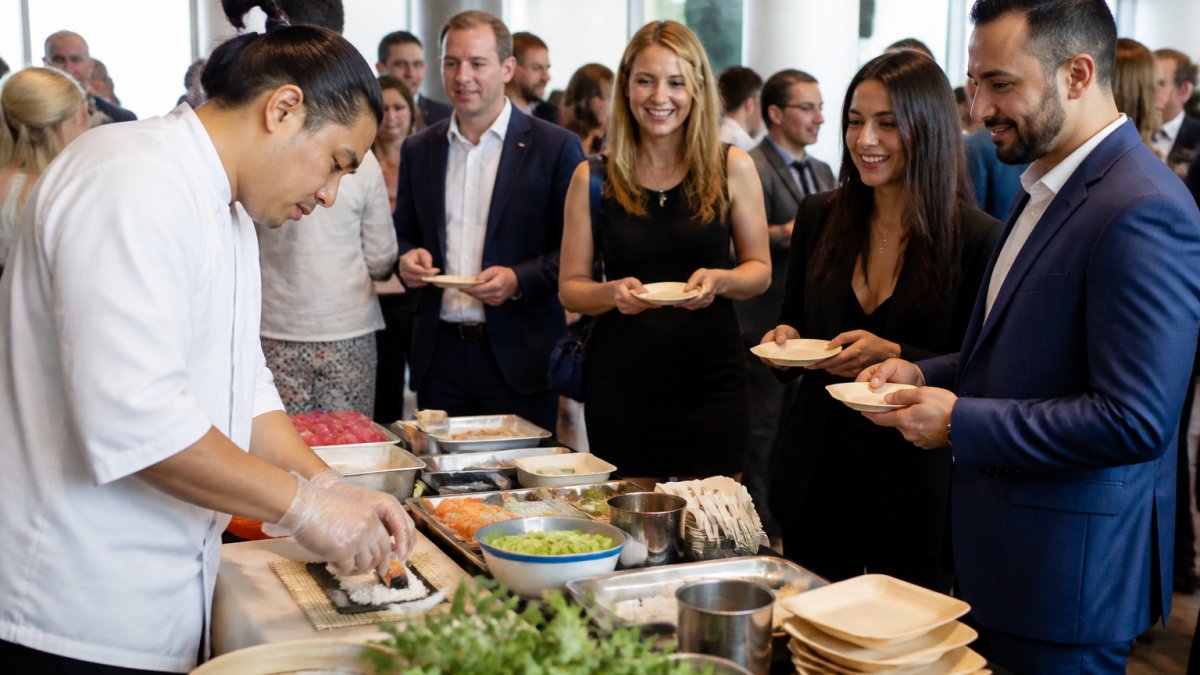
Live action stations for events put a chef in front of the crowd, and that visible preparation is the draw.
The trade-off is throughput. Chef-attended stations serve fewer guests per minute than a self-serve setup, so plan one live station per roughly 75 to 100 guests and pair it with faster self-serve options.
Interactive Beverage Stations for Events, From Coffee Carts to Cocktail Bars
Interactive beverage stations for events solve a problem food cannot: they give guests a reason to return to the same spot all night.
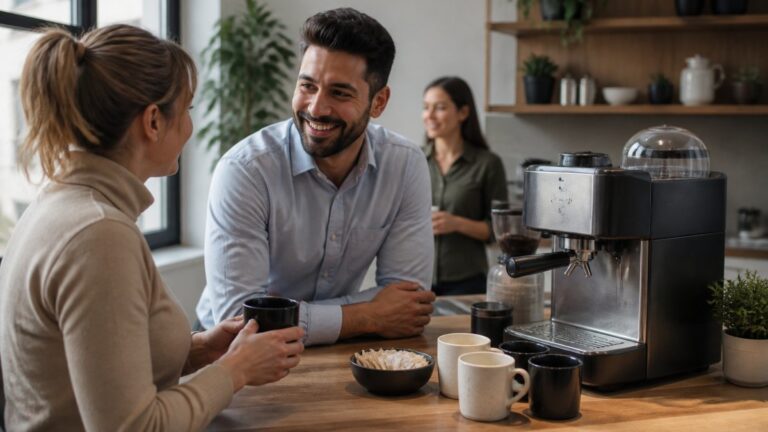
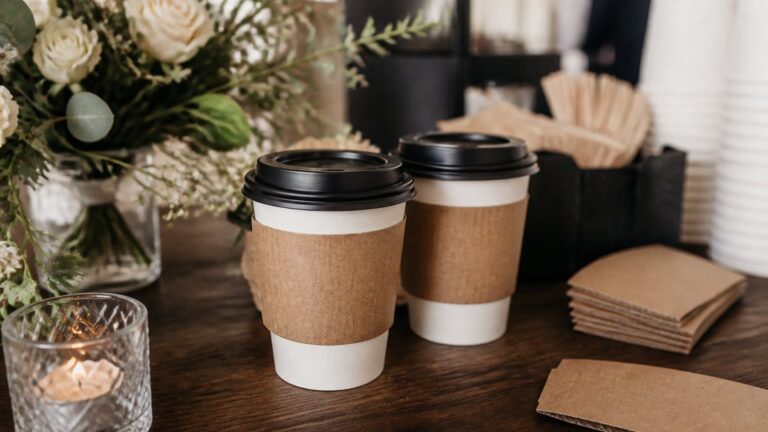
If you are weighing espresso bar formats for a conference, our guide to mobile espresso bars for corporate conferences breaks down the options. The drink station also doubles as branding: a custom menu and cup sleeves turn a coffee break into a social-media moment.
Event Food Station Setup: Space, Power, and Equipment
Event food station setup succeeds or fails on logistics, not menu creativity. Each station needs a clear footprint for the line, a landing area for guests to finish their plate, and enough power for any heated or refrigerated equipment. Venues with strict power rules or limited loading dock access need those constraints mapped before the menu is finalized.
- Space: allow a queue lane plus a side table so guests do not bottleneck the station.
- Power: confirm outlet locations and circuit capacity with the venue, especially for coffee and cooking equipment.
- Flow: separate beverage and food lines so both keep moving.
For the technical side of cart power, our mobile coffee cart power requirements guide covers what venues typically require.
Budget Ranges, Capacity Planning, and Dietary Accommodations
Most station roundups stop at the idea and skip the math. This section covers the three planning questions corporate clients ask us most: what it costs, how many stations you need, and how to feed guests with dietary restrictions without a separate menu.
Budget Ranges and Cost Drivers
Stations and buffets are generally priced per person, and station formats often run higher than a standard buffet because of the labor and live preparation involved (Evolved Events Catering’s guide to build-your-own stations). Rather than quote a single number, budget around the drivers that move the price:
- Menu and ingredients: premium proteins, sushi-grade fish, and specialty coffee drinks cost more per guest than taco or pasta stations.
- Service level: chef-attended and barista-led stations carry labor costs that self-serve stations do not.
- Guest count: per-person pricing usually drops at higher counts, but staffing and equipment minimums can offset the savings on small events.
A practical approach is to set a per-person target, then ask each vendor to break the quote into food, labor, rentals, and fees so you can compare like for like. Request a quote rather than budgeting from a generic figure, pricing varies too much by market and menu to rely on a single benchmark.
Capacity, Throughput, and Queue Planning
Capacity is the number most planners underestimate. A chef-attended station typically serves fewer guests per minute than a self-serve bar, so set a throughput target per station and match station count to guest count. A common planning pattern is one live station per roughly 75 to 100 guests, paired with faster self-serve stations to absorb the overflow. For a reception of 150 guests, three to five stations is a typical range; for a conference break serving 300, two or three high-speed self-serve stations plus a beverage cart usually move the line faster than one elaborate chef station.
Queue reduction tactics that work:
- Separate beverage and food lines so neither bottlenecks the other.
- Place the highest-demand station away from the entrance to spread foot traffic.
- Pre-plate or pre-portion the fastest-moving items during peak arrival windows.
Dietary Accommodations and Allergen Management
Plan dietary accommodations at the station itself rather than as a separate plate. Label allergens clearly at each station, keep serving utensils dedicated to each item, and give guests a build-your-own option so vegetarian, vegan, gluten-free, and other restrictions never mean an empty plate. For beverage stations, offer whole, oat, and almond milk so dairy-free guests are covered without a special request.
Confirm allergen protocols with the caterer in writing before the event. Cross-contact during live cooking is the most common source of guest complaints at chef-attended stations.
For agenda-friendly formats, these coffee break ideas for professional conferences show how to time stations around sessions.
Here are the planning numbers and cost drivers the article gives for station catering.
| Item | Value | Note |
|---|---|---|
| Live station per guest count | One per roughly 75 to 100 guests | Pair with faster self-serve stations |
| Stations for 150-guest reception | Three to five stations | Typical range when replacing seated dinner |
| Conference break for 300 | Two or three self-serve stations plus beverage cart | Moves line faster than one chef station |
| Cocktail hour bites | Two to three per guest first hour | One to two per guest per hour after |
| Late-night station timing | About 90 minutes after dinner service | Common pattern for evening receptions |
| Pricing basis | Per person | Station formats often run higher than standard buffet |
| Cost drivers | Menu, service level, guest count, rentals, duration | Ask vendors to break quotes into food, labor, rentals, fees |
Book a Coffee Station That Keeps Your Corporate Event Moving
A beverage station is the one setup that keeps working from the first arrival to the last goodbye. If you are deciding whether a cart is worth the investment, our breakdown of whether a mobile coffee cart is worth it for corporate events helps you weigh it, and our complete guide to hiring a mobile coffee cart walks through planning and booking.
Frequently Asked Questions
What are interactive food stations at an event?
Interactive food stations are self-serve or chef-staffed setups where guests customize their plate instead of taking a pre-plated meal. Examples include taco bars, sushi and handroll bars, carving stations, and build-your-own dessert tables. The format works well for corporate events because guests choose what they eat, stations double as conversation spaces, and service can run alongside a cocktail hour or replace a seated dinner entirely.
How many food stations do you need for a corporate event?
Plan on one station per 50 to 75 guests for a full meal, and two to three stations for a cocktail-style reception. Fewer stations mean longer lines, especially during the first 20 minutes of service. Mix one chef-attended station with one grab-and-go option so guests who want to keep networking are not stuck waiting behind a made-to-order line.
Are food stations better than a buffet for a corporate event?
Stations usually beat a buffet for corporate events because they spread guests across the room, shorten waits, and give people something to do besides stand in a single line. If your goal is networking and guest engagement rather than simply feeding a room, stations earn the extra spend.
How do you keep lines moving at interactive food stations?
Place stations at least 10 feet apart, print the menu at each one so guests decide before they reach the front, and staff the busiest station with two servers. Pre-batch ingredients for made-to-order items and offer a grab-and-go tray of small bites nearby. For beverage stations, a dedicated barista working a two-group espresso machine can serve roughly 60 to 80 drinks per hour when the menu is kept tight.
Your next corporate event deserves a beverage station guests actually remember. Get started with Colada Kulture Co. and give your attendees freshly prepared espresso, matcha, and seasonal drinks served by professional baristas who keep the line moving.