Table of Contents
- Why Coffee Service Lines Break Down at High-Attendance Events
- Event Coffee Station Setup: Map Flow Before You Place a Single Cart
- Coffee Catering Staffing: How Many Baristas for Your Guest Count
- Coffee Menu Ideas for Events That Keep the Line Moving
- Reducing Coffee Service Wait Time With Queue Psychology and Data
- Sustainability and Waste Management at the Beverage Station
- Conclusion
- Frequently Asked Questions
Last Updated: October 19, 2026
Why Coffee Service Lines Break Down at High-Attendance Events
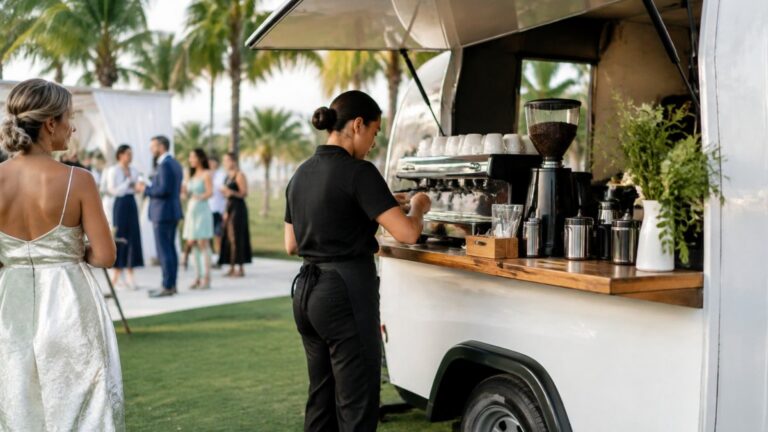
Coffee service lines at high-attendance events fail for one simple reason: planners treat coffee as a side detail, then watch a 200-person queue form the moment the keynote ends. At Colada Kulture Co., we have served over 35 weddings, corporate events, and private celebrations, and the pattern is always the same.
Here is the core problem. A single espresso bar with one barista can serve roughly one guest every 60 to 90 seconds when drinks are customized. Multiply that across a room of 300 attendees arriving at once, and you have a wait that stretches past 30 minutes.
Below, we break down exactly how to manage coffee service lines at high-attendance events, from station setup to staffing ratios to queue psychology. These are the operational details most catering guides skip.
The single biggest lever for reducing coffee service wait time is lane splitting: separating drip and iced coffee from espresso-based drinks so simple orders never wait behind complex ones.
Event Coffee Station Setup: Map Flow Before You Place a Single Cart
Map attendee flow before you place a single cart. The most common mistake in event coffee station setup is choosing the prettiest corner instead of the path people actually walk.
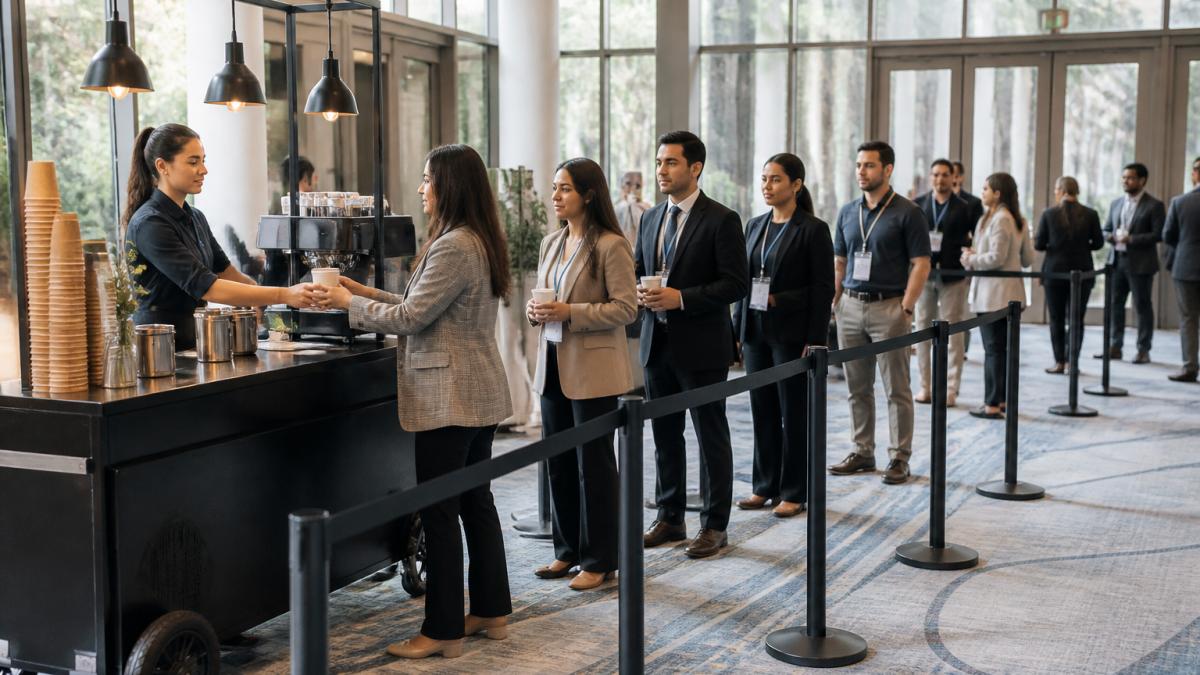
Start with foot traffic. Watch where guests enter, where they sit, and where they exit. The Event Safety Alliance guidance on crowd flow stresses keeping service areas clear of exit routes and choke points, and coffee stations are no exception.
Lane Splitting: Drip and Iced vs. Espresso
Split every station into two lanes. Lane one handles drip coffee, iced coffee, and cold brew: fast pours that take seconds. Lane two handles espresso, matcha, and specialty drinks that need a machine and a skilled hand.
This one decision cuts average wait time more than any other change. A guest who just wants black coffee should never stand behind twelve lattes.
Power, Water, and Venue Access Requirements
Confirm your event infrastructure before the day of. Espresso machines pull serious wattage, and most venues have strict rules about which circuits you can use.
- Dedicated 20-amp circuits for espresso equipment
- A water source within hose distance, or a self-contained tank
- Loading dock access and freight elevator clearance for cart or trailer delivery
Ask your venue for their power and water specs in writing. High-rise offices and hotels often limit loading dock access to specific windows, so book your setup time early.
Coffee Catering Staffing: How Many Baristas for Your Guest Count
Staff for peak hour, not average attendance. Coffee catering staffing is where most events underprepare, and the result is a line that never recovers once it forms.
A practical starting framework for barista staffing:
| Guest Count | Baristas | Stations | Notes |
|---|---|---|---|
| Up to 75 | 1-2 | 1 | Single cart, simple menu |
| 75-150 | 2-3 | 1-2 | Add a dedicated drip lane |
| 150-300 | 3-4 | 2 | Lane splitting essential |
| 300-500 | 4-6 | 2-3 | Staggered service windows |
| 500+ | 6+ | 3+ | Distributed stations, pre-batched drinks |
These are planning estimates, not fixed rules. A menu heavy on custom espresso drinks needs more hands than one built around drip and iced coffee. For a deeper look at ratio planning, Filter & Shot Coffee’s event staffing guide covers events from 50 to 1,000 guests.
The most common staffing mistake is scheduling baristas for the whole event at average volume. Peak hour is the only number that matters. If 60% of guests arrive in a 20-minute window, staff for that window or the line will not clear.
Coffee Menu Ideas for Events That Keep the Line Moving
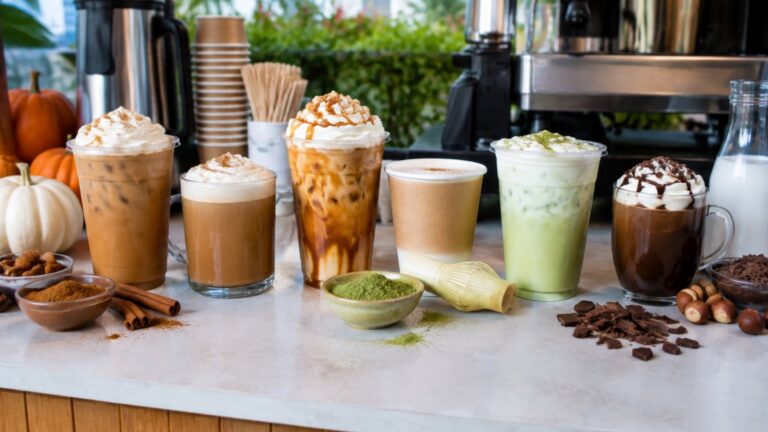
A shorter menu moves faster. The best coffee menu ideas for events are deliberately limited: two or three espresso drinks, one drip option, one iced option, and one signature drink. Every additional customization adds seconds to each order, and seconds compound across hundreds of guests.
Customizing the Menu for Brand Activations and Weddings
Customization should live in the brand, not the build. For a brand activation, put your logo on the cup, name a signature latte after the product, and offer a branded cold brew.
For weddings, a curated signature drink plus a full milk bar (whole, oat, and almond) gives guests a premium feel without slowing the line. Couples often want matcha and seasonal flavors on the menu.
Pre-batch your most-ordered iced drinks before doors open. Cold brew and iced lattes can be poured and finished in seconds when the base is ready, which keeps the espresso lane clear for hot orders.
Reducing Coffee Service Wait Time With Queue Psychology and Data
Perceived wait matters as much as actual wait. Queue psychology research popularized by MIT’s Richard Larson and later applied in theme-park and airport settings shows that unoccupied time feels longer than occupied time, and that an unexplained wait feels longer than a explained one. At a high-attendance event, that means the difference between a 12-minute line guests shrug off and a 12-minute line guests tweet about is mostly design, not speed.
The mechanics that actually change perceived wait
- Single serpentine line vs. multiple short lines. A single serpentine line feeding multiple baristas is fairer and feels faster because guests see constant movement; multiple parallel lines create “line envy” when one lane stalls. Use stanchions to force one serpentine queue that splits into drip and espresso lanes only at the front.
- Menu placement at the point of join, not the counter. Guests who read the menu while waiting order 10-20 seconds faster once they reach the barista. Post the full menu, including milk options and sizes, on a standing sign at the back of the queue.
- Visible progress markers. Tape markers on the floor every few feet, or a simple “about 4 minutes from here” sign, convert an open-ended wait into a bounded one. Bounded waits are tolerated far better than unbounded ones.
Measuring throughput instead of guessing
You cannot optimize what you do not count. A simple, low-tech measurement routine beats a dashboard nobody reads:
- Count cups per 15-minute block. Assign one staffer to tally drinks served on a clipboard or a shared spreadsheet. After the event, plot cups against session times.
- Log queue length at the 5-minute mark of each block. Two numbers, cups served and people in line, tell you whether the bottleneck is barista speed or order complexity.
- Note the stall points. If the espresso lane backs up every time a session ends, the fix is a second espresso lane or a pre-batched signature drink, not more baristas on the same machine.
- Compare cup count to attendance. If you served 40% of attendees in the first hour, you under-staffed the opening; if you served 80% in the last 30 minutes, you opened the station too late.
Using foot-traffic data to pre-position stations
Real-time foot traffic and heat mapping, from venue Wi-Fi access-point counts, badge-scan data, or a simple walk-through with a clicker, show where guests actually congregate, which is rarely where planners assume. A common pattern: the highest-traffic corridor is the one between the main session room and the restrooms, not the lobby. Place a satellite drip-and-iced station there and the main espresso bar’s queue drops noticeably.
Run a 15-minute “queue audit” at the midpoint of your event: count the line, time three orders end-to-end, and check whether the bottleneck is the machine, the menu, or the payment step. Fix the slowest step first, adding baristas to a payment bottleneck makes the line longer, not shorter.
Sustainability and Waste Management at the Beverage Station
Waste management is part of service flow, not an afterthought. A cluttered station with overflowing bins slows baristas, creates slip hazards, and looks bad in every photo guests post. At high-attendance events the volume is the problem: a 500-guest event with a typical two-cup average generates roughly 1,000 cups, lids, sleeves, and stirrers in a few hours, plus milk cartons, grounds, and liquid waste.
Right-size the cup order
Most planners over-order cups by 20-30% “just in case,” which is both a cost and a waste problem. A workable planning rule is one cup per expected drink plus a 10% buffer, with a separate count for iced cups (usually 30-40% of total at warm-weather or afternoon events). Track actual cup counts against attendance after each event and adjust the next order, two events of data beat any rule of thumb.
Build a three-stream station
Place clearly labeled bins within arm’s reach of the barista, not across the room:
- Liquid waste, a dedicated bucket or bus tub for dumped ice, cold brew, and milk. Liquid in a regular trash bag is the number-one cause of leaks and cleanup charges.
- Compostables, cups, sleeves, stirrers, and grounds, if the venue has a compost hauler. Confirm with the venue in writing; many municipal compost programs do not accept coated cups.
- Recyclables and landfill, lids and any non-compostable packaging.
A barista who has to walk to a bin loses 5-10 seconds per drink; a bin at the station pays for itself in throughput alone.
Choose materials that survive the venue
Compostable cups only help if the venue’s waste stream actually accepts them. Ask three questions before ordering: Does the venue compost on site or haul to a commercial facility? Do their bins accept coated or lined cups? What is the local rule on liquid in compost? If the answer is unclear, a recyclable or reusable option is the safer sustainability claim.
Reusables and incentives that actually work
A reusable-cup discount only moves behavior if guests know about it before they arrive. Announce it in the event app or pre-event email, post it at the station, and keep the swap simple, a token or a sticker is faster than a barista doing math at the register. For corporate events, a branded reusable cup doubles as a takeaway and cuts cup volume noticeably; for weddings, a rental cup service with a return bin at the exit is increasingly common and avoids the landfill entirely.
Close the loop with grounds and milk
Spent espresso grounds are heavy and wet; bag them separately and offer them to a local garden program or the venue’s landscaping team. Milk cartons should be rinsed and flattened only if the venue’s recycling stream accepts them, otherwise they belong in landfill. Track grounds weight alongside cup count; it is an easy, visible sustainability metric for a post-event report.
The most common sustainability failure at high-attendance events is a compostable cup paired with a landfill-only venue. That is not sustainability, it is a green label on a landfill cup, and it can undermine the brand story you are trying to tell. Confirm the waste stream before you order.
Conclusion
Managing coffee service lines at high-attendance events comes down to flow, staffing, and a menu built for speed. Get those right and coffee becomes the moment guests remember, not the line they complain about. Colada Kulture Co. handles the logistics for you with mobile coffee cart and trailer options, customizable menus including espresso, matcha, and seasonal flavors, and professional baristas who keep the line moving even at peak hour.
Frequently Asked Questions
How do you keep coffee lines moving at a large event?
Split service into two lanes: one for drip and iced coffee, one for espresso drinks. Place stations near attendee traffic flow but out of doorways, and size each station for peak demand rather than average attendance. Pre-batch drip and iced coffee so baristas only pour, and keep milk, cups, and lids restocked before the rush starts. Distributing stations and staggering break schedules spreads demand so no single coffee service line absorbs the full crowd at once.
How many baristas are needed to serve a large crowd?
Staffing depends on guest count, drink complexity, and service window length. Espresso drinks take longer per order than drip or iced coffee, so a menu heavy on lattes needs more baristas than a batch-brew setup. As a starting point, plan coffee catering staffing around peak-hour throughput rather than total attendance, and confirm the ratio with your vendor.
What coffee menu is fastest to serve at an event?
Batch-brewed drip coffee, cold brew, and iced coffee move fastest because they are poured, not built. A short espresso menu (espresso, americano, latte, cappuccino) with one or two seasonal specialties keeps lines moving without boring guests. Limit customizations like extra shots and milk swaps to a printed options list so baristas do not field questions at the counter. Fewer choices per order means faster coffee service wait time for everyone.
Should an event have separate lines for espresso and drip coffee?
Yes, when attendance is high. A dedicated drip-and-iced lane lets guests who want a quick black coffee self-select out of the espresso queue, which is where bottlenecks form. Mark each lane with clear directional signage so guests choose before they reach the counter. For smaller events under roughly 75 guests, a single combined station usually works fine. For conferences and galas, lane splitting is one of the simplest ways to cut coffee service wait time.