Last Updated: November 2, 2026
Quick Summary
Host sustainable coffee catering in Florida by screening vendors with a checklist before booking: ask about responsibly sourced beans, reusable cups by default, and a written setup and cleanup plan. Plan roughly one to two drinks per guest, order slightly under your guess, and confirm unused beans and milk can be returned.
- Ask each vendor to explain every line of its quote before you sign anything.
- For 50 guests, plan about 100 drinks for a morning conference and 50 for an evening gala.
- Over-ordering milk and pastries just in case is the most common source of preventable waste.
- Spent grounds can go to a local community garden or compost drop-off if bagged separately.
- Confirm the destination for compostable cups and lids, since composting facilities vary.
Table of Contents
- Start With a Sustainable Catering Checklist Before You Book
- How Much Coffee for 50 Guests? Portion Planning That Cuts Waste
- Low-Waste Coffee Service: Cups, Milk, and Station Setup
- Coffee Catering for Corporate Events: Keep It Green and On Brand
- Frequently Asked Questions
Start With a Sustainable Catering Checklist Before You Book
Sustainable coffee catering in Florida starts before the first espresso pulls. Build a short checklist to screen every vendor.
The planners who get the greenest results ask the same questions early.
- Ask where the beans come from and whether they are responsibly sourced
- Confirm the vendor uses reusable cups and mugs by default
- Ask how they handle milk, syrups, and leftover supplies
- Get the setup and cleanup plan in writing
- Confirm power and water needs for your venue
- Ask what happens to surplus drinks and food
Before you sign anything, ask each vendor to explain every line of its quote so your budget holds no surprises.
How Much Coffee for 50 Guests? Portion Planning That Cuts Waste
Plan on roughly one to two drinks per guest for a 50-person event, then adjust for weather and time of day: a morning conference skews higher, a short reception lower.
Use this simple formula:
| Event Type | Drinks Per Guest | Total for 50 |
|---|---|---|
| Morning conference | 2 | 100 |
| Afternoon reception | 1.5 | 75 |
| Evening gala | 1 | 50 |
Order slightly under your guess, not over. A barista can always make one more drink, but untouched cups go straight in the bin.
Estimate the inputs, not just the cups. Drinks drive milk, water, and grounds, where most waste hides. Ask the vendor how much milk, water, and coffee they expect to use for your guest count, and confirm that unused beans and milk can be returned.
Adjust for heat and timing. Summer heat pushes guests toward iced drinks and water, raising cup counts but lowering milk use per drink; a shaded station and visible water pitcher cut bottled-water demand. Build in a storm contingency: a pop-up canopy, a covered backup location, and a plan to move indoors within minutes. If a storm shuts the event down early, a vendor with a written surplus plan can pack unopened milk and supplies for return instead of dumping them.
Track waste to improve the next event. Weigh or count what comes back: full cups discarded, milk jugs opened but unused, and bags of grounds. A simple diversion metric, pounds composted or recycled divided by total pounds of waste, gives you a number to beat next time.
Watch out: over-ordering milk and pastries “just in case” is the most common source of preventable waste at coffee events, and unused open milk cannot be donated, so run short and send a runner for more.
For larger crowds, this planning guide for quality coffee at large events walks through scaling without the waste.
Low-Waste Coffee Service: Cups, Milk, and Station Setup
Reusable cups and mugs are often one of the biggest waste cuts at a coffee station, and the cup is only one of many waste streams a coffee bar generates.
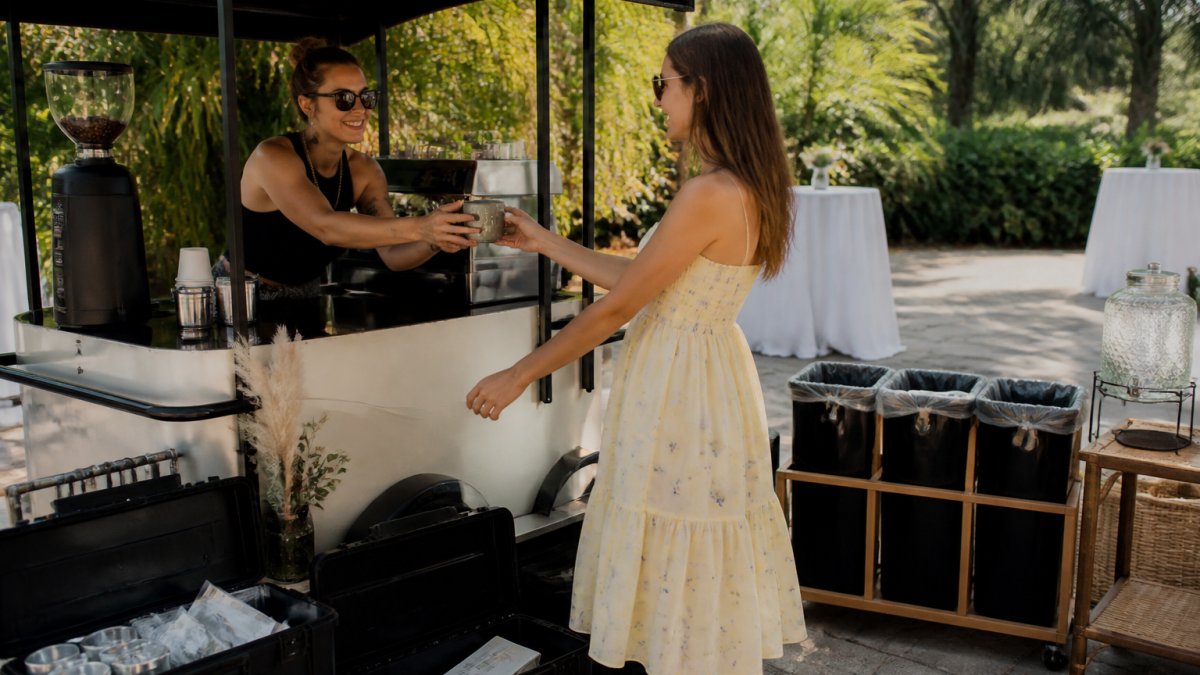
Map every waste stream before you set up. A typical espresso and drip setup produces spent grounds, paper filters, pods, cups, lids, sleeves, stirrers, straws, napkins, milk jugs, syrup bottles, and rinse water. Walk the vendor through each one and get a written answer for where it goes. Grounds and filters are the easiest win: spent grounds can go to a local community garden or compost drop-off, but only if someone bags them separately.
Build the station around these habits:
- Real cups first. Ask whether the vendor can offer ceramic mugs and reusable cups as the default.
- Milk in pitchers. Ask whether the vendor pours from pitchers instead of single-serve cartons to cut packaging.
- Pods only if you must. If the vendor uses single-serve pods, ask whether they offer a compostable or refillable option.
- Clear, staffed bins. Label recycling, compost, and landfill bins with words and pictures, and place them within sight of the station.
Ask the vendor whether it keeps wooden stirrers and paper straws on hand instead of single-use plastics. In heat and humidity, milk and dairy alternatives need to stay on ice or in a cooler between pours, a warm pitcher is both a food-safety problem and a waste problem when it gets dumped.
Confirm the destination for compostable cups and lids before you promise guests they will be composted, since composting facilities vary.
For a deeper look, read this guide to sustainable coffee catering for green conferences.
Coffee Catering for Corporate Events: Keep It Green and On Brand
Coffee catering for corporate events works best when the sustainability story matches your brand. A branded cup or custom menu tells guests you thought about more than caffeine.
Ask your vendor to:
- Customize the menu with oat, almond, and whole milk options
- Offer plant-based and seasonal drinks
The U.S. Environmental Protection Agency’s guidance on reducing wasted food is a solid reference for handling surplus responsibly. Keeping unopened supplies out of the waste stream and composting grounds can keep your event footprint down. To carry that same approach into day-to-day operations, see how to implement a sustainable office coffee program.
Frequently Asked Questions
How much coffee should I plan for 50 guests?
Plan on roughly one to two drinks per guest, so about 50 to 100 cups for a 50-person event. Guests at a coffee catering station often order an espresso drink and later return for an iced option, especially in warm weather. Confirm your final guest count with your caterer a week out, and ask whether they build in a buffer. A vendor that tracks past events can help you avoid both running short and pouring leftover coffee down the drain.
How can I reduce waste at a coffee catering event?
The biggest wins come from reusable cups and mugs, bulk milk instead of single-serve pods, and a refill station for water. Ask your caterer whether it can skip plastic stirrers in favor of wooden or metal spoons. Portion planning matters too: confirm guest count and drink estimates in advance so less coffee is brewed and discarded. A short attendee note asking guests to bring or reuse a cup also helps.
What sustainable options should I ask a coffee caterer about?
Ask about responsibly sourced or fair-trade beans, and whether the cart can run on standard venue power to avoid generator emissions. Also ask how they handle leftover milk and grounds. A caterer who can answer these questions clearly, and who has references from similar events, is usually set up to run a low-waste service.
Planning a green event takes more than good intentions, and the details add up fast. Colada Kulture Co. handles the hard parts for you: a mobile cart or trailer that fits your venue, a customizable menu with espresso, matcha, and seasonal flavors, and whole, oat, and almond milk options built in. Our trained baristas serve fresh drinks fast, even with a long line. Get started with Colada Kulture Co. and host a coffee station your guests remember for all the right reasons.