Table of Contents
- What Is a Coffee Cart and Why It Works for Events
- Coffee Cart Equipment List: What You Actually Need
- Mobile Food Vendor Permits and Health Department Compliance
- Coffee Cart Profit Margins and Pricing Strategy
- Customization, Branding, and Load-In Logistics
- Maintenance, Troubleshooting, and Barista Workflow
- Turn-Key Solutions vs. Building Your Own Coffee Cart
- Conclusion
Last Updated: August 10, 2026
What Is a Coffee Cart and Why It Works for Events
A coffee cart is a mobile beverage service unit that brings specialty espresso drinks, cold brew, and complementary beverages directly to events, venues, and corporate gatherings. Unlike a fixed café, a coffee cart operates on wheels or as a compact trailer, designed for flexibility and quick deployment at weddings, product launches, conferences, and private celebrations.
What makes a coffee cart different from hiring a catering company is the experience it creates. Guests don’t just receive a drink, they watch skilled baristas craft it in real time. The visual element, the aroma of fresh espresso, and the personalized interaction create a memorable touchpoint that photographs well for social media and leaves a lasting impression on attendees.
For event planners in South Florida, a coffee cart solves a specific problem: how to elevate the beverage experience without the overhead of a full kitchen or fixed location. Corporate teams use them for employee appreciation events. Couples integrate them into wedding receptions for a unique, Instagram-worthy moment. Marketing agencies deploy them at brand activations to drive engagement and social sharing.
At Colada Kulture Co., we’ve seen firsthand how the right mobile coffee experience can become the highlight of an event. The key isn’t just the equipment, it’s the operational workflow, the ability to customize the menu, and the reliability to deliver under pressure.
Coffee Cart Equipment List: What You Actually Need
Running a functional coffee cart requires more than throwing an espresso machine on a cart. The equipment must work together as a system: power supply, water delivery, brewing precision, and point-of-sale integration all need to function seamlessly during service.
Espresso Machine and Grinder Setup
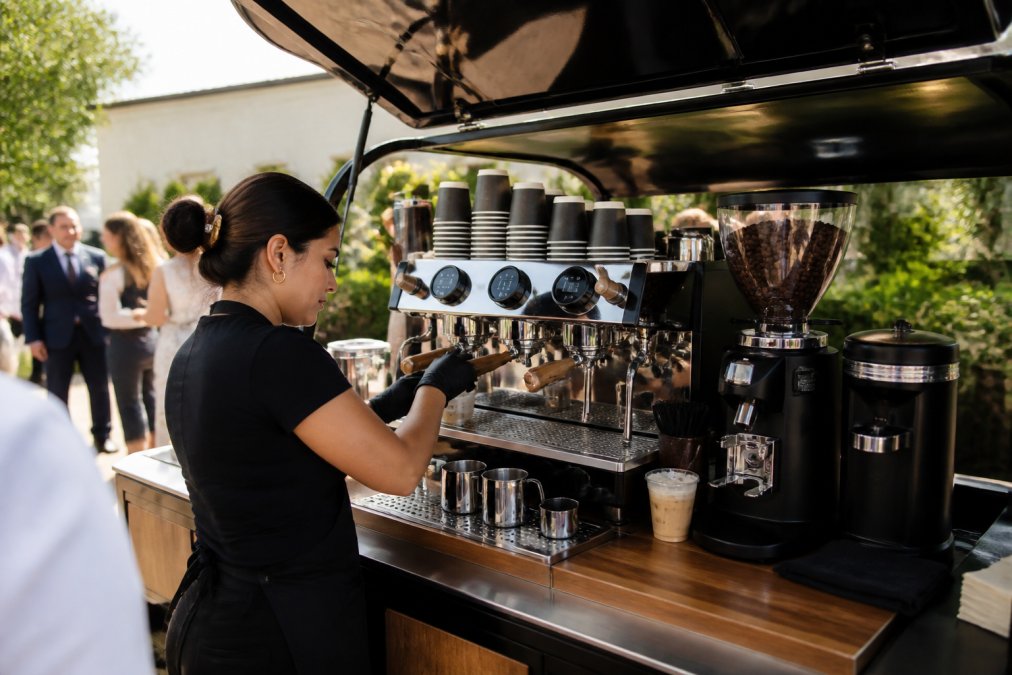
The espresso machine is the centerpiece of any coffee cart operation. A commercial-grade dual boiler machine allows simultaneous espresso extraction and milk steaming, which is essential when you’re serving 50+ people in an hour. Single boiler machines create workflow bottlenecks, you wait for the boiler to switch between functions, which slows everything down.
Grinder calibration matters more than most people realize. A burr grinder (not blade) maintains consistent particle size, which directly impacts extraction time and flavor consistency. If your grind is off, every shot tastes different. For mobile operations, a commercial grinder with digital timer settings ensures repeatability even when multiple baristas are working the cart.
Machine durability is non-negotiable. Commercial-grade espresso machines are built for high-volume use and can handle 200+ extractions per day without degradation. Consumer-grade machines overheat and fail under sustained demand. The investment in proper equipment pays for itself through reliability and the absence of mid-event breakdowns.
Power and Water Integration Systems
Power requirements are the first logistics hurdle. Most mobile espresso machines draw 15-20 amps, which means you need either a 240V dedicated circuit or a heavy-duty generator. Venue hookups vary wildly, some have readily available electrical access, others require you to run extension cords across loading areas. Understanding your venue’s power infrastructure before arrival prevents last-minute scrambling.
Water filtration is equally critical. Unfiltered tap water contains minerals that scale espresso machines, degrading performance over time and affecting taste. A portable filtration system removes sediment and reduces mineral content, protecting equipment and ensuring consistent shot quality throughout the event.
Load-in logistics depend on whether your cart is self-contained or venue-dependent. Self-contained carts carry their own water reservoir and battery backup, offering maximum flexibility. Venue-dependent setups require coordination with the venue’s utilities. Either way, your workflow should account for setup time, equipment testing, and breakdown, typically 30-45 minutes for load-in and 45-60 minutes for load-out.
Point of Sale and Workflow Efficiency
A reliable point-of-sale system tracks orders, payments, and inventory in real time. For mobile operations, a tablet-based POS system (not a laptop) offers flexibility and durability. The system should sync with your inventory, flag when you’re running low on supplies, and provide data on which drinks sold best, information that helps you plan future events.
Workflow efficiency determines how many customers you can serve without creating a bottleneck. The barista should be able to take orders, ring them up, and hand off drinks without constantly moving back and forth. A well-designed cart positions the grinder, espresso machine, milk steamer, and payment terminal in a logical sequence that minimizes wasted motion.
Many event planners underestimate the speed requirement. At a 200-person corporate event, you might have 150+ people wanting coffee in a 90-minute window. That’s roughly one drink every 36 seconds. Slow service frustrates guests and creates a negative impression of the brand activation. Professional baristas working an optimized workflow can achieve this pace consistently.
Mobile Food Vendor Permits and Health Department Compliance
Operating a mobile coffee cart without proper permits exposes you to fines, shutdown orders, and liability issues. The regulatory landscape varies significantly by state and county, but the core requirements remain consistent: licensing, food safety certification, and venue approval.
State and Local Licensing Requirements
Florida requires mobile food vendors to obtain a Mobile Food Unit License from the Department of Business and Professional Regulation (DBPR). This license confirms that your cart meets health and safety standards. The application process typically includes an inspection of your equipment, water system, waste management, and food storage.
At the county level, Miami-Dade County and Broward County each maintain separate mobile vendor regulations. Some venues require additional permits before you can operate on their property. A wedding venue might have its own food service requirements; a corporate office building might require proof of insurance and background checks. Always verify permit requirements with the specific venue before committing to an event.
Health Department inspections focus on three areas: equipment sanitation, water system integrity, and waste disposal. Your espresso machine and grinder must be cleanable and free of mold or bacterial growth. Your water system must be properly filtered and free of contamination. Your waste (used grounds, milk rinse water) must be disposed of safely, not poured into storm drains.
Insurance and Liability Coverage
General liability insurance protects you if a guest is injured or property is damaged. This typically costs between 300-600 annually for a mobile food operation, depending on your coverage limits and claims history. Most venues require proof of liability insurance before allowing you to operate.
Product liability insurance covers incidents where your drinks cause illness or injury. While rare, a guest with a severe dairy allergy who didn’t disclose it could claim injury from a milk-based drink. Having proper insurance protects both you and the venue from litigation.
Workers’ compensation insurance is required if you employ baristas. Even if you operate solo, carrying this coverage protects you if a team member is injured during setup or service. The cost is typically a percentage of payroll, usually 2-5% depending on risk classification.
Coffee Cart Profit Margins and Pricing Strategy
Profit margins on specialty coffee are healthy if you control costs and manage waste. A specialty drink that costs 2-3 to produce and sells for 7-9 generates 60-70% gross margin. The key is volume, you need to serve enough drinks to cover your fixed costs (equipment, permits, insurance, transportation) and generate profit.
Pricing strategy depends on your market positioning and venue type. A luxury wedding in Miami commands premium pricing, guests expect to pay 8-10 for a specialty drink and view it as part of the event experience. A corporate office appreciation event might tolerate 6-7 pricing. A public festival or street event requires competitive pricing, often 5-6 to match other vendors.
Volume forecasting is critical. A 100-person corporate event might generate 60-80 drink sales (not everyone drinks coffee). A 200-person wedding might generate 120-150 sales. Understanding your conversion rate helps you stock the right amount of supplies and staff appropriately.
Operational costs beyond ingredients include barista labor, transportation, equipment maintenance, and utilities. If you’re paying a barista 20-25 per hour and running a two-hour event, that’s 40-50 in labor alone. Combined with supplies and overhead, your break-even point on a small event is typically 200-300 in total sales.
Customization, Branding, and Load-In Logistics
Custom Fabrication and Signage
A branded coffee cart becomes a mobile billboard for your event or business. Custom wraps, signage, and color schemes turn a generic cart into a recognizable asset that guests photograph and share on social media. Professional custom fabrication ensures your branding is weather-resistant and maintains visual impact over time.
Signage should include your business name, menu highlights, and any social media handles. QR codes linking to your Instagram or website encourage guest engagement and post-event follow-up. The visual presentation matters as much as the coffee itself, a beautifully branded cart attracts attention and creates perceived value.
At Colada Kulture Co., custom branding is part of our service. We work with event planners to ensure the cart’s aesthetic matches the event’s tone, whether that’s elegant and sophisticated for a luxury wedding or vibrant and energetic for a brand activation.
Handling Venue Requirements and Utility Hookups
Every venue has unique constraints. A rooftop venue might have weight restrictions on the cart. A downtown office building might have limited loading dock access. A beachfront wedding might require weatherproofing for salt spray. Understanding these constraints before the event prevents costly surprises on the day.
Utility hookups vary by venue. Some provide 240V power and water access; others expect you to bring your own. A self-contained cart with a battery backup and water reservoir offers maximum flexibility but adds weight and complexity. Venue-dependent setups are lighter and cheaper but require advance coordination.
Load-in timing is critical. Arriving too early ties up your resources; arriving too late creates stress. Most venues allow 30-45 minutes for setup before guests arrive. This window includes equipment testing, supply staging, and workflow verification. Professional event teams arrive early enough to troubleshoot issues without rushing.
Maintenance, Troubleshooting, and Barista Workflow
Equipment maintenance prevents failures during events. Daily cleaning after each service removes espresso residue, milk buildup, and mineral deposits. Weekly descaling of the espresso machine removes internal scale that degrades performance. Monthly inspections catch wear on seals, gaskets, and electrical components before they fail.
Common troubleshooting issues include uneven espresso extraction (usually a grind calibration problem), weak milk foam (typically a water temperature or steam wand issue), and slow water flow (often mineral buildup in the filtration system). A trained barista recognizes these symptoms and can address them quickly without shutting down service.
Barista workflow efficiency comes from practice and standardization. Every drink should follow the same sequence: grind, tamp, extract, steam, pour, label, hand to customer. This repetition builds muscle memory and speed. During high-volume periods, a second barista handling milk steaming while the first focuses on espresso extraction can nearly double throughput.
Communication between barista and event coordinator prevents chaos. If you’re running low on supplies, the coordinator should know. If a guest has a dietary restriction, it needs to reach the barista before the drink is made. A simple radio or text-based system keeps everyone aligned.
Turn-Key Solutions vs. Building Your Own Coffee Cart
A turn-key solution means purchasing or renting a fully assembled, ready-to-operate cart. The advantage is speed to market, you can start taking events within weeks rather than months. The disadvantage is cost and less customization. A professional turn-key cart typically runs 15,000-30,000 depending on equipment quality.
Building your own cart offers more control and lower upfront cost. You source individual components, assemble them, and customize the layout to your workflow. The downside is time investment, technical knowledge requirements, and the risk of incompatibilities between components. A poorly assembled cart creates operational headaches that undermine profitability.
For most event professionals, a turn-key solution from a reputable vendor makes sense. The cost difference is recouped through reliability, warranty support, and faster time to revenue. Colada Kulture Co. operates premium mobile carts that have been optimized through hundreds of events, we’ve solved the problems that DIY builders encounter.
Renting a cart is another option if you’re testing the market or handling occasional events. Rental costs typically run 300-600 per event, which is viable if you’re charging premium pricing and expecting high volume. However, rented carts are often generic and lack your branding, which reduces the marketing benefit.
Starting a mobile coffee cart business requires careful attention to equipment quality, regulatory compliance, and operational workflow. The difference between a successful coffee cart operation and a frustrating one comes down to preparation: understanding your venue’s constraints, maintaining your equipment, training your barista team, and building a system that delivers consistent quality under pressure.
If you’re planning an event in South Florida and want a premium mobile coffee experience that impresses guests and generates social media buzz, Colada Kulture Co. specializes in custom-branded coffee carts that deliver exceptional quality and seamless service. Our professional baristas, commercial-grade equipment, and attention to detail transform your event’s beverage service into a memorable experience. Request a quote to see how we can elevate your next celebration.
Frequently Asked Questions
What permits and licenses do I need to operate a coffee cart in the US?
You'll need a food service license, mobile food vendor permit, and health department approval from your state and local jurisdiction. Requirements vary by location, but most states require commissary kitchen access, food handler certification, and proof of liability insurance. Contact your county health department and city business licensing office for specific regulations in your area. Some jurisdictions require separate permits for water hookups and waste disposal.
What are the essential pieces of equipment for a coffee cart?
A commercial-grade espresso machine, grinder for calibration, water filtration system, and integrated power system are non-negotiable. You'll also need milk steamers, POS system, cup dispensers, and storage for supplies. For mobile operations, ensure your equipment fits your cart or trailer and can handle frequent setup and breakdown. Battery-operated backup systems help at venues with limited utility hookups.
Is a coffee cart a profitable business model?
Yes, coffee carts generate strong margins because coffee has low cost of goods sold and commands premium pricing at events. Profit margins typically range from 60-80% per drink, depending on your startup costs, location, and volume. Success depends on event frequency, customer acquisition, and operational efficiency. Corporate events and weddings often generate higher revenue than street locations due to larger guest counts and willingness to pay premium prices for specialty beverages.
How much does it cost to start a mobile coffee cart?
Startup costs vary widely based on whether you build from scratch or use a turn-key solution. A basic cart with used equipment may cost $5,000-$15,000, while a fully equipped, branded mobile unit can run $20,000-$50,000+. Factor in permits, licensing, initial inventory, insurance, and vehicle modifications. Pricing depends on quality, customization level, and whether you include water and power integration systems. Request a quote from vendors to understand your specific investment.
This article was written using GrandRanker