Table of Contents
- Why Coffee Cart Catering Transforms Event Experiences
- Mobile Coffee Cart Power Requirements Guide
- Coffee Cart vs. Traditional Catering: What Sets Mobile Service Apart
- Cost of Coffee Catering for Weddings and Corporate Events
- Customizing Your Specialty Coffee Menu
- Networking and Guest Engagement at Your Event
- Sustainability and Waste Management Considerations
- Insurance, Liability, and Technical Site Requirements
Last Updated: August 24, 2026
Why Coffee Cart Catering Transforms Event Experiences
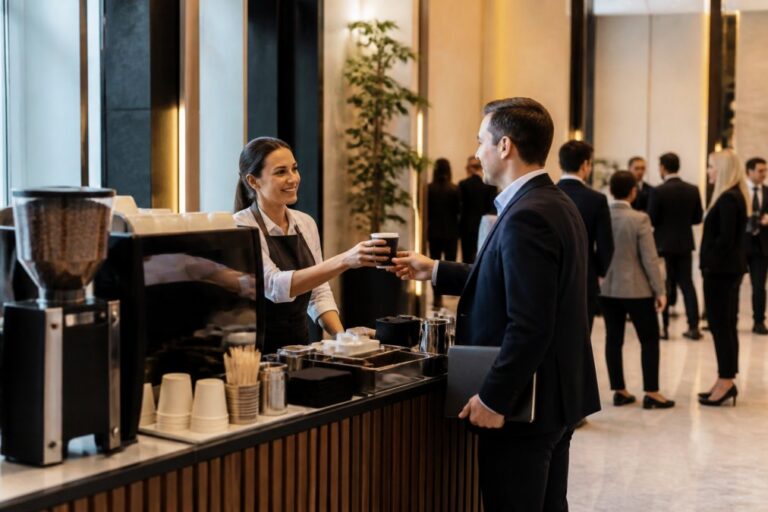
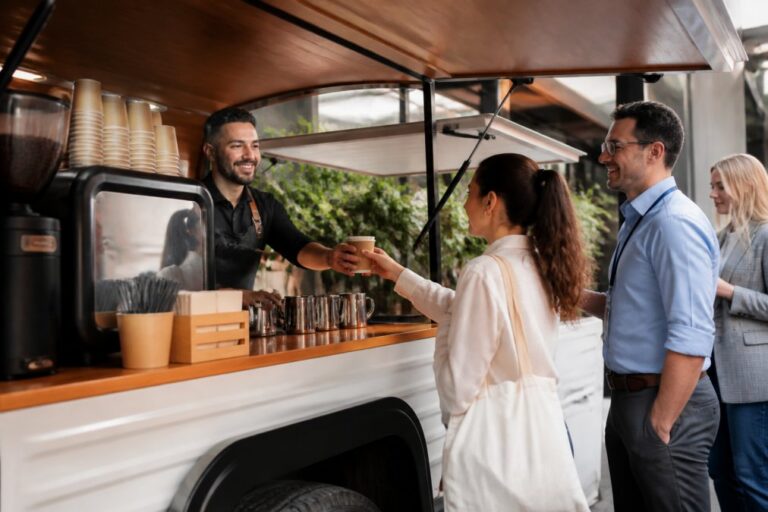
Coffee cart catering has become a standout choice for events across all sizes. At Colada Kulture Co., we’ve seen firsthand how a mobile espresso bar changes event energy, turning a standard refreshment break into a memorable moment guests anticipate. A coffee cart isn’t hidden in a back room, it’s a visible, operational focal point where guests watch their drinks being made, interact with skilled baristas, and experience genuine personalization that pre-made beverage stations can’t replicate.
The practical advantages are substantial. Coffee carts require minimal setup space, operate independently of venue infrastructure in most cases, and deliver quality that impresses discerning guests. For corporate events, weddings, brand activations, and private celebrations, coffee cart catering solves a genuine problem: offering something memorable without overwhelming venue logistics or budget. Guests have a dedicated activity and gathering point, the barista becomes a natural conversation starter, and customization options ensure nearly every attendee finds something they genuinely want.
Mobile Coffee Cart Power Requirements Guide
Operating a mobile coffee cart requires reliable power. A professional espresso machine, grinder, and water heating system demand consistent power delivery; any fluctuation affects shot quality and speed.
Generator Specifications for On-Site Setup
Most mobile coffee carts operate effectively with a 2200-watt inverter generator (honda.com). This capacity handles a single-group espresso machine, grinder, water heater, and point-of-sale system simultaneously without strain. The Honda EU2200i is popular because its inverter technology maintains stable power to sensitive electronics and operates quietly (48-57 dB) (honda.com).
For larger setups or dual-group machines, two 2200-watt generators running in tandem deliver 4400 watts and handle higher-demand equipment without compromising power stability. Eco-throttle systems adjust engine speed based on actual power draw, extending runtime and reducing fuel waste, critical for events lasting six hours or longer.
Water Access and Logistics
A mobile coffee cart requires access to both incoming fresh water and outgoing waste water. Incoming water must be potable and ideally filtered to protect espresso machine components. Outgoing water from rinsing, steam wand purging, and cup rinsing needs a drain or waste tank.
Many venues provide outdoor water access, but specifics vary widely. You’ll need food-grade hoses and quick-connect fittings; some setups use portable water tanks filled beforehand, eliminating venue dependency but adding weight. A cart with a 15-20 gallon waste tank typically runs a full four-hour event without dumping. High-volume events (150+ guests) may require larger capacity or more frequent dumps.
Coffee Cart vs. Traditional Catering: What Sets Mobile Service Apart
Traditional catering typically means beverages prepared off-site and delivered in bulk thermal dispensers with limited customization. Mobile coffee cart catering inverts this: beverages made to order, fresh pastries available throughout, and direct guest-barista interaction.
Guest engagement differs dramatically. With traditional catering, attendees select from what’s available and move on. With a coffee cart, there’s a natural pause point where they watch their drink being made, ask questions, and often chat with the barista. This creates a social anchor that increases dwell time and connection opportunities.
Operational flexibility favors mobile catering. You can position the cart in high-traffic areas, move it between spaces, and adjust service based on real-time demand. Quality consistency also diverges: a coffee cart maintains espresso shot quality throughout the event, while thermal dispensers gradually cool and degrade.
Cost structure depends on event size and duration. Small events (under 75 guests, 2 hours) often favor mobile catering for quality and customization. Large corporate events with 300+ attendees might find traditional catering more economical for high volume. The inflection point typically sits around 150 guests over 3-4 hours.
Cost of Coffee Catering for Weddings and Corporate Events
Understanding what drives coffee catering costs helps you evaluate value rather than just comparing quotes. The variables are guest count, service duration, menu complexity, travel distance, and custom branding or special requests.
What Affects Pricing
Guest count is the primary driver. More guests mean higher ingredient costs, faster-paced service requiring more skill, and potentially additional staffing. Most vendors price on a per-guest basis for base service, with hour-based rates for extended events.
Service duration extends beyond event runtime. Setup and breakdown time matter. A venue with easy access costs less to operate than a high-rise with loading dock restrictions and narrow hallways. Menu complexity also affects pricing: a simple menu costs less than one including matcha lattes, specialty syrups, and latte art with logos. Custom branding, logo-printed cups, branded cart wraps, and specialized pastry selections layer on additional costs requiring advance ordering and extra planning.
ROI for Corporate Events
For corporate events, coffee cart catering delivers measurable returns. Attendees spend more time at the refreshment area, increasing networking interactions. A centrally positioned cart becomes a natural gathering point for conversations.
For product launches and corporate activations, a professionally executed coffee experience with branded elements creates memorable brand association. Attendees photograph custom cups and branded experiences, generating free social media content that extends your event’s reach. Employee appreciation events see higher satisfaction scores when coffee service feels premium, signaling that the company values the event and its employees. The operational benefit also carries ROI: the barista manages the beverage station while your team focuses on other event elements.
Customizing Your Specialty Coffee Menu
A mobile coffee cart’s strength lies in its flexibility to adapt the menu to your event, audience, and brand identity. The foundation typically includes espresso-based drinks: lattes, cappuccinos, americanos, macchiatos, and cortados. Milk options, whole, oat, almond, coconut, accommodate dietary preferences. Specialty additions transform the menu from functional to memorable: matcha lattes appeal to wellness-focused attendees, seasonal flavors create timeliness, and cold brew serves guests preferring iced drinks.
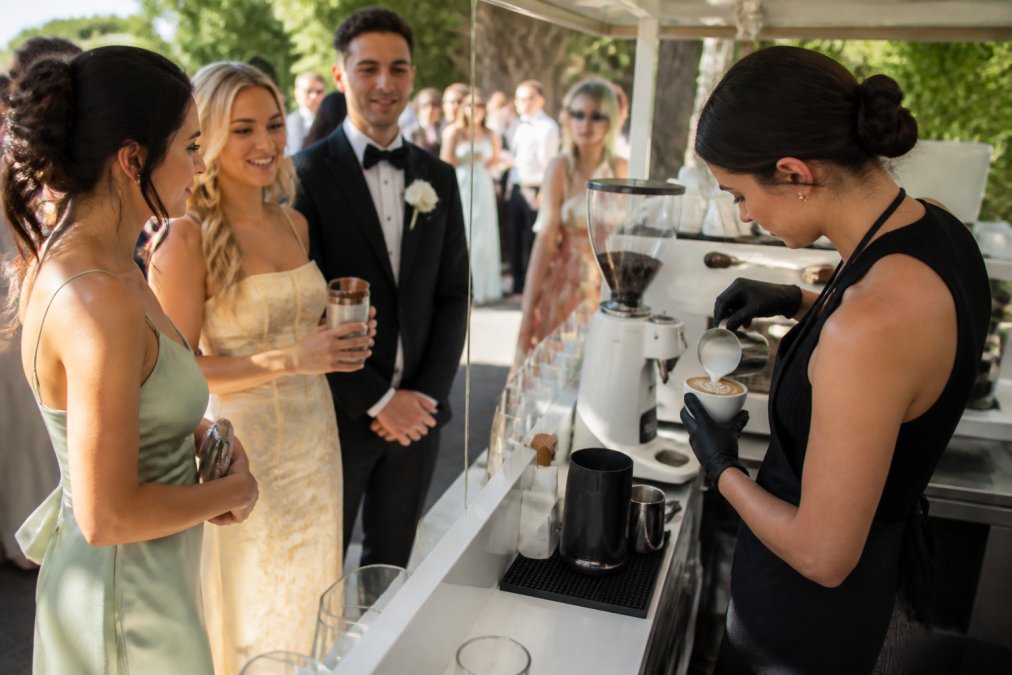
For brand activations, latte art printing with logos creates an Instagram-worthy moment that generates significant social media engagement. The menu should match your event’s vibe: a corporate wellness event might emphasize matcha and cold brew, a wedding could feature signature drinks named after the couple, a product launch might showcase a limited-edition flavor tied to the product. Fresh pastries from a local bakery paired with quality coffee elevate the entire offering and communicate care.
Networking and Guest Engagement at Your Event
A coffee cart becomes a natural hub for attendee interaction when positioned strategically. People gather to get beverages, the barista creates a conversation bridge, and customization extends the interaction. For networking-focused events, place the cart in a central, high-traffic area rather than against a wall to encourage natural congregation.
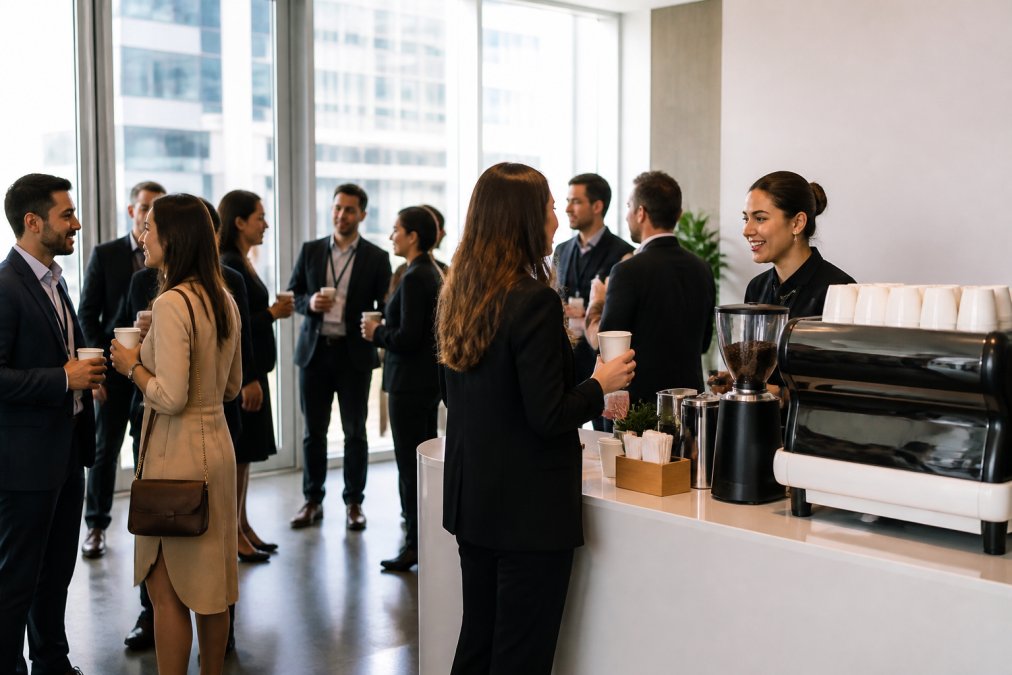
A skilled, friendly barista becomes a conversation facilitator, greeting attendees warmly and creating a welcoming atmosphere. For corporate events, position coffee service during natural break points, mid-morning, mid-afternoon, to create structured pause points where attendees expect to gather. Custom cups or branded elements amplify engagement further: attendees holding branded cups become mobile advertisements, photographing their drinks and extending the experience into social media and word-of-mouth.
Sustainability and Waste Management Considerations
Operating a mobile coffee cart responsibly requires attention to waste streams. Compostable or recyclable cups reduce environmental impact compared to standard disposable cups, and guests increasingly prefer this option. Used coffee grounds can be donated to local gardeners or composting facilities rather than discarded.
Minimizing excess by accurately forecasting demand reduces waste. Some carts use portion-control pumps to prevent over-pouring. Water usage also deserves attention: efficient practices like rinsing cups in batches and using spray bottles strategically reduce overall consumption. For events in water-scarce regions or venues with usage restrictions, this efficiency matters operationally and ethically. Vendors who optimize packaging and reuse materials demonstrate environmental responsibility that conscientious event planners value.
Insurance, Liability, and Technical Site Requirements
Operating a mobile coffee cart at someone else’s venue requires clear understanding of insurance, liability, and site-specific requirements. Most venues require vendors to carry general liability insurance covering bodily injury and property damage, typically $1 million in coverage (sba.gov). Your vendor should provide a Certificate of Insurance naming the venue as an additional insured before the event date.
A technical site visit identifies power access, water availability, drainage options, loading dock access, parking, setup space, and venue-specific restrictions. This survey should happen at least two weeks before the event with photos and measurements documented. Power requirements need specific documentation: available amperage and outlet type. A generator solves many power problems, but some venues restrict generators due to noise or emissions policies.
Water access requires confirmation: Is there an outdoor spigot accessible to the cart? Is it potable? What’s the distance from cart to spigot? Will you need hoses, and what length? Is there a drain for waste water, or will you need a waste tank? Loading and unloading logistics matter significantly. If the venue has a loading dock with specific hours, weight restrictions, or access limitations, your vendor needs this information. For high-rise venues, elevator capacity and hallway width determine whether a full cart fits. Liability for accidents at the cart is typically the vendor’s responsibility, covered by their insurance, but clarifying this with the venue prevents misunderstandings.
Coffee cart catering solves a genuine problem for event planners: delivering a memorable, engaging refreshment experience without overwhelming logistics or budget. Colada Kulture Co. specializes in creating custom specialty coffee experiences with professional baristas, flexible menu options including espresso, matcha, and cold brew, and the operational expertise to handle everything from intimate 50-person gatherings to large corporate events. When you’re planning your next event, request a quote from Colada Kulture Co. and discover how a premium mobile coffee experience transforms attendee engagement and guest satisfaction.
=== FAQ ANSWERS (audit these too, same rules) ===
[1] Q: What makes coffee cart catering better than traditional beverage service?
A: Coffee cart catering creates an interactive, memorable experience that traditional service cannot match. Professional baristas prepare fresh, customized drinks on-site, allowing guests to watch the preparation and personalize their orders. This engagement increases attendee satisfaction and creates natural networking moments. For corporate events and weddings, the visual appeal and quality of specialty coffee elevates the overall event perception compared to pre-made beverages served from a stationary table.
[2] Q: What are the power requirements for a mobile coffee cart?
A: Most mobile espresso bars require 2000-2200 watts of continuous power, making a Honda EU2200i inverter generator or equivalent a standard choice. The generator must provide stable, clean power to protect sensitive espresso machines and grinders. Before booking, confirm your venue can accommodate the generator’s noise level (typically 48-57 dB) and provide safe placement away from guest areas.
[3] Q: How much does coffee catering cost for a wedding or corporate event?
A: Pricing varies based on guest count, service duration, and customization level. Custom quotes depend on your specific event size, location, menu complexity, and any branded elements like custom cups or latte art. Contact Colada Kulture Co. for a personalized quote based on your event details.
[4] Q: Can coffee cart catering work for small office events or do I need a large guest count?
A: Coffee cart catering scales effectively for events of any size. Even small office appreciation events with 50-75 guests benefit from the professional service, fresh-brewed quality, and memorable experience that mobile catering provides. Smaller events may have lower service fees than large weddings, making it cost-effective for corporate wellness initiatives and team celebrations. The real value comes from the quality and engagement, not the guest count.
Frequently Asked Questions
Q: What makes coffee cart catering better than traditional beverage service?
A: Coffee cart catering creates an interactive, memorable experience that traditional service cannot match. Professional baristas prepare fresh, customized drinks on-site, allowing guests to watch the preparation and personalize their orders. This engagement increases attendee satisfaction and creates natural networking moments. For corporate events and weddings, the visual appeal and quality of specialty coffee elevates the overall event perception compared to pre-made beverages served from a stationary table.
Q: What are the power requirements for a mobile coffee cart?
A: Most mobile espresso bars require 2000-2200 watts of continuous power, making a Honda EU2200i inverter generator or equivalent a standard choice. The generator must provide stable, clean power to protect sensitive espresso machines and grinders. Before booking, confirm your venue can accommodate the generator's noise level (typically 48-57 dB) and provide safe placement away from guest areas.
Q: How much does coffee catering cost for a wedding or corporate event?
A: Pricing varies based on guest count, service duration, and customization level. Custom quotes depend on your specific event size, location, menu complexity, and any branded elements like custom cups or latte art. Contact Colada Kulture Co. for a personalized quote based on your event details.
Q: Can coffee cart catering work for small office events or do I need a large guest count?
A: Coffee cart catering scales effectively for events of any size. Even small office appreciation events with 50-75 guests benefit from the professional service, fresh-brewed quality, and memorable experience that mobile catering provides. Smaller events may have lower service fees than large weddings, making it cost-effective for corporate wellness initiatives and team celebrations. The real value comes from the quality and engagement, not the guest count.
This article was written using GrandRanker