Last Updated: November 7, 2026
Quick Summary
The best coffee brewing methods for high-traffic events are batch brew and drip, which handle crowds fastest with just one attendant per station. Espresso drives engagement but needs two to three baristas, while manual methods like pour-over and French press only work as supplements. Cold brew is fast to serve but must be batched hours ahead.
- Plan around guests, peak arrival window, and drinks per minute rather than taste alone.
- Assume 60 to 75 percent of guests take coffee in the first 90 minutes of service.
- Dump any carafe that has been out more than 30 minutes and brew fresh.
- Pair one primary batch brewer with a backup or run two brewers in parallel.
- Manual methods fail because queues build during peak arrival and never recover.
Table of Contents
- What the Best Way to Brew Coffee for a Crowd Actually Requires
- Coffee Brewing Methods Chart: Cups per Hour and Staffing at a Glance
- Batch Brew and Drip: The Workhorse of Coffee Service for Large Events
- Espresso and Cold Brew: Speed, Theater, and the Queue Trade-Off
- Commercial Coffee Brewing Equipment and Capacity Planning
- Manual Methods That Do Not Scale: Pour-Over, French Press, AeroPress, Moka Pot
- Frequently Asked Questions
What the Best Way to Brew Coffee for a Crowd Actually Requires
Serving coffee to a crowd is a throughput problem before it is a flavor problem. The best coffee brewing methods for high-traffic events are the ones that keep cups moving at a steady pace without burning out your staff or serving lukewarm coffee by hour three. At Colada Kulture Co., we plan every event around three numbers: guests, peak arrival window, and drinks per minute.
Most guides rank brewing methods by taste alone. That approach falls apart at scale. A pour-over that wins a cupping session becomes a bottleneck the moment 200 guests arrive at once. The methods below are ranked for crowd service, with honest trade-offs on speed, equipment, and staffing.
Below, we break down each method by cups per hour, setup needs, and where it fails. You will also find a chart you can hand to a venue coordinator.
Coffee Brewing Methods Chart: Cups per Hour and Staffing at a Glance
Here is the short answer: batch brew and drip handle crowds best, espresso drives engagement but needs more baristas, and manual methods only work as supplements. The chart below gives rough planning figures for a two-hour service window.
| Method | Relative Speed | Staff Needed | Best Role at an Event |
|---|---|---|---|
| Batch brew / drip | Fastest for plain coffee | 1 attendant | Primary high-volume station |
| Espresso | Moderate, queue builds fast | 2-3 baristas | Feature station, specialty drinks |
| Cold brew | Fast to serve, slow to prepare | 1 attendant | Pre-batched iced option |
| Pour-over | Slowest | 1 per station | Small specialty corner |
| French press | Slow, batch-limited | 1 per station | Small gatherings |
| AeroPress | Very slow | 1 per station | Backup or VIP service |
| Moka pot | Slow, small yield | 1 per station | Supplementary only |
A common mistake is treating any of these as interchangeable. They are not. The chart is a planning tool, not a menu.
Batch Brew and Drip: The Workhorse of Coffee Service for Large Events
Batch brewing is the backbone of coffee service for large events. Commercial batch brewers with two burners are built for steady output, which is why drip coffee remains a common default for conferences and corporate gatherings.
The trade-off is flavor ceiling. Batch brew will never match a carefully pulled espresso, but it delivers consistency and speed. For planners weighing methods, our espresso bar vs drip coffee comparison breaks down taste, caffeine, and equipment differences in more detail.
Holding Temperature and Freshness on the Line
Watch out: coffee held too long on a burner turns bitter and thin, and guests notice. Brew in smaller batches more often rather than one giant batch that sits for an hour. Thermal carafes beat open burners for holding quality, and a simple rule works well: if a carafe has been out more than 30 minutes, dump it and brew fresh.
Espresso and Cold Brew: Speed, Theater, and the Queue Trade-Off
Espresso is the engagement driver. A barista pulling shots draws a crowd, and the aroma does half the marketing for you. The catch is queue math. Each milk drink takes time, so a line of 200 guests will wait unless you staff two or three baristas and pre-stage cups and milk.
Cold brew flips the equation. It is batched hours ahead, served over ice in seconds, and needs almost no equipment on site. For a high-traffic event where speed matters, cold brew is often the smartest iced option.
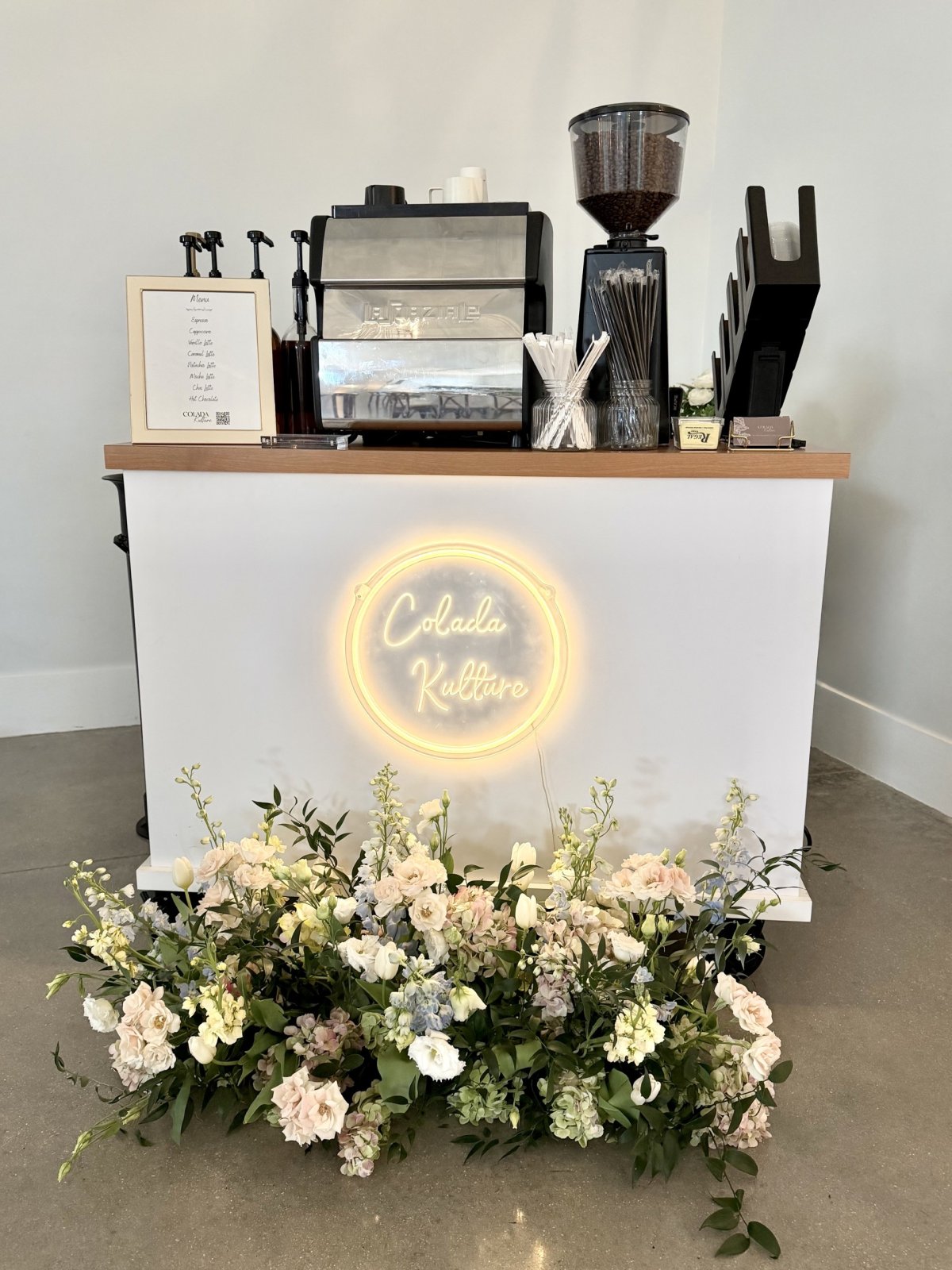
If you are weighing espresso for a large trade show floor, our guide to espresso cart rental for trade show events covers setup, power, and crowd flow.
Where Cold Brew Wins and Where It Stalls
Cold brew wins on prep-ahead logistics and hot-weather events. It stalls when guests expect a hot latte, or when the batch runs out mid-afternoon with no way to brew more quickly. Plan cold brew as a parallel option, never the only one.
Commercial Coffee Brewing Equipment and Capacity Planning
Capacity planning starts with one question: how many cups per hour do you actually need? Most event planners under-size equipment because they plan to the average rather than the peak. A workable method is to estimate total guests, assume 60 to 75 percent will take a coffee in the first 90 minutes of service, and then divide by the number of minutes in that window to get a cups-per-minute target. That number, not the headcount, is what you size equipment against.
Commercial batch brewers are rated in gallons per hour, and converting that rating to cups per hour is a useful planning step. That is why high-volume service usually pairs one primary batch brewer with a backup, or runs two brewers in parallel on separate stations. Parallel brewing also protects against the single-point failure of one machine going down mid-event.
Equipment categories matter more than brand names. Batch brewers do the heavy lifting for plain drip. Thermal urns and airpots hold brewed coffee without the scorched flavor that open burners create, and they let you brew ahead and stage multiple batches. Airpots are especially useful for satellite stations because they are portable and keep coffee hot for hours without power. For iced service, a dedicated cold brew dispenser or a large batch chilled overnight removes the iced option from the hot-line queue entirely.
One high-output batch brewer with a backup, airpots for holding and satellite service, and a separate cold-brew dispenser if iced drinks are offered is a common approach for larger crowds. Several small consumer machines are generally slower and less dependable than one commercial brewer.
Budget pressure is real, and our budget-friendly coffee catering tips for event planners show where to save without cutting quality. Pair equipment with a clear staffing plan, including a runner to restock cups, milk, and syrups so the line keeps moving.
Manual Methods That Do Not Scale: Pour-Over, French Press, AeroPress, Moka Pot
Manual brewing methods are wonderful and wrong for a crowd, but the reason is throughput, not taste. Each method makes coffee a cup or a small batch at a time, which caps output and multiplies staffing. The honest comparison is cups per hour per operator, and on that measure the manual methods fall far behind batch brew.
Pour-over is the slowest common method at scale. Pour-over is slow per operator because each cup is made individually. That is fine for a specialty corner and hopeless for a 300-guest service. French press is batch-limited and slow to operate at scale. AeroPress is slower still and does not batch well. Moka pots make small, strong yields, so they work better as a supplementary option than a primary station.
Each manual station generally needs its own operator, which leaves little spare capacity for restocking cups or managing a line.
Watch out: the failure mode with manual methods is not slow service on average, it is a queue that builds during the peak arrival window and never recovers, because there is no way to brew ahead without the coffee going stale.
Manual methods can suit a small specialty corner, a VIP lounge, or a quiet setup before a main rush. Pair them with a batch station so the manual bar handles the experience seekers while the batch brewer keeps the main line moving. For high-volume service at tricky venues, our coffee cart logistics guide for high-rise venues covers power, loading dock access, and cart placement, all of which matter more when you are running multiple small stations instead of one high-output brewer.
Frequently Asked Questions
What is the best way to brew coffee for a crowd of 200 or more?
Batch drip brewing in commercial urns is the most reliable option at that size. A two-burner automatic brewer can keep hot coffee flowing while a second batch brews, so guests are less likely to wait on an empty urn. Pair it with a pre-batched cold brew dispenser for iced drinks. Espresso bars work for crowds too, but only with enough machines and baristas to keep the line moving. Match the brewing methods to your guest count and service window before you book equipment.
Which coffee brewing method is fastest for serving a large group?
Batch brew wins on raw speed because one cycle fills dozens of cups at once. Espresso is fast per drink only when you have multiple group heads and a trained barista on each; a single machine creates a bottleneck at 100 or more guests. Cold brew is the fastest of all to serve since it is pre-made and poured over ice, but you must brew it 12 to 18 hours ahead. For mixed crowds, run batch brew as the base and add an espresso station for specialty drinks.
How much coffee should you plan per guest at an event?
A common planning figure is two 8-ounce cups per guest across a two-hour window, which works out to roughly 1.5 to 2 gallons of brewed coffee per 50 attendees. Morning events and cold-weather gatherings skew higher; evening receptions skew lower. Add a separate iced coffee or cold brew estimate if you are serving both. Always round up by 10 to 15 percent, because running out mid-event is worse than pouring out a little extra at the end.
How do you keep brewed coffee fresh during a busy event?
Hold drip coffee in preheated thermal carafes or airpots rather than on an open burner, and brew in smaller batches you replace every 30 to 45 minutes. Coffee held above 175°F for hours turns bitter and stale. Label each batch with its brew time so staff know what to dump. For cold brew, keep it refrigerated and topped with ice at service. A holding plan is part of commercial coffee brewing equipment planning, not an afterthought.
Can cold brew work for a high-traffic event?
Yes, and it is one of the easiest methods to serve at volume because there is no brewing on site. Brew concentrate 12 to 18 hours ahead, dilute to taste, and dispense over ice from a chilled container. It suits warm-weather weddings and afternoon corporate events especially well. The catch is that cold brew only covers iced drinks, so plan a hot option alongside it, and confirm your venue has refrigeration or bring coolers with enough capacity.