Last Updated: October 28, 2026
Quick Summary
Incorporating local coffee roasters into conference catering means building your beverage service around beans roasted close to the event, paired with a caterer who can brew them well. Coffee peaks in flavor days after roasting, so a local roaster can deliver beans close to your event date and the espresso tastes the way the roaster intended.
- Score each roaster on roast freshness, sourcing transparency, production capacity, batch consistency, and event fit.
- Ask what roast date will be printed on beans delivered the week of your event; a best-by date tells you nothing.
- A 500-attendee morning with two cups each is about 1,000 cups, roughly 22 pounds of drip coffee.
- Plan 1.5 cups per attendee across a morning session, adding a 10-15% buffer for walk-ups.
- Size staffing to the 15-20 minute peak after a session breaks, not the average.
Table of Contents
- Why Local Coffee Roasters Belong in Your Conference Coffee Catering
- How to Vet Local Coffee Roasters for Events
- The Roaster-to-Caterer Coordination Workflow
- Why a Coffee Cart for Conferences Beats a Bulk Urn
- Coffee Catering Menu Ideas That Feature Local Beans
- Planning Quantities, Budget, and Staffing Ratios
- Measuring Whether Local Coffee Improved Your Event
- Request a Quote for Your Conference Coffee Service
- Frequently Asked Questions
Why Local Coffee Roasters Belong in Your Conference Coffee Catering
Coffee catering is one of the few conference costs that every attendee touches. According to Specialty Coffee Association research on consumer coffee preferences, a growing share of U.S. coffee drinkers now seek out specialty coffee and can tell fresh-roasted beans from stale ones. That matters when your conference coffee service is the last impression guests carry home.
Incorporating local coffee roasters into conference catering means building your beverage service around beans roasted close to the event, paired with a caterer who can brew them well.
Local beans do not fix a bad service setup, and a great cart cannot rescue stale coffee. You need both.
Freshness, Story, and Guest Satisfaction
Coffee peaks in flavor days after roasting and fades from there, so a local roaster can deliver beans close to your event date and the espresso tastes the way the roaster intended.
How to Vet Local Coffee Roasters for Events
Vetting a local roaster for a conference is not the same as picking a café you like. A café roaster optimizes for daily retail; an event roaster must hit a delivery date, a volume, and a consistency standard under pressure. Score each roaster on five criteria: roast freshness, sourcing transparency, production capacity, batch consistency, and event fit.
1. Roast Freshness, Read the Date, Not the Bag
Ask every roaster one question first: “What roast date will be printed on the beans delivered the week of our event?”
A “best by” date tells you nothing about freshness. If a roaster cannot state a roast date for your delivery, treat that as a no.
2. Sourcing Transparency, Can They Tell You the Origin?
Ask for the origin sheet for the specific lot you will serve. If the answer is vague (“a blend from a few places”), that is fine for a house blend but a warning sign if you are paying for a single-origin feature.
3. Production Capacity, Pounds per Week, Not Cups per Day
A rough planning figure most practitioners use: about 10 grams of ground coffee per 6-ounce cup for drip, and roughly 18-20 grams per double espresso. A 500-attendee morning with two cups each is about 1,000 cups, roughly 22 pounds of drip coffee or the espresso equivalent. Confirm the roaster can supply that in one order plus a buffer, and ask what happens if attendance runs 20% high.
4. Batch Consistency, The Same Cup at 8 A.M. and Noon
Request a sample from the actual production batch, not a special tasting roast. The batch you taste should be the batch you get.
5. Event Fit, Grind, Equipment, and Support
Confirm the operational handoff: whether the roaster supplies whole bean, pre-ground, or both; whether they can grind to your caterer’s brew method; and whether they offer on-site dial-in support. For espresso, roaster and caterer must agree on grind setting and dose before the event morning.
Questions to Ask Before You Book
A roaster who answers with specifics is ready for event work. One who hedges is not, and on a conference morning, the hedge is what attendees taste.
The Roaster-to-Caterer Coordination Workflow
The handoff between roaster and caterer is where most events stumble. Put one person in charge of that handoff and give them both contacts.
Why a Coffee Cart for Conferences Beats a Bulk Urn
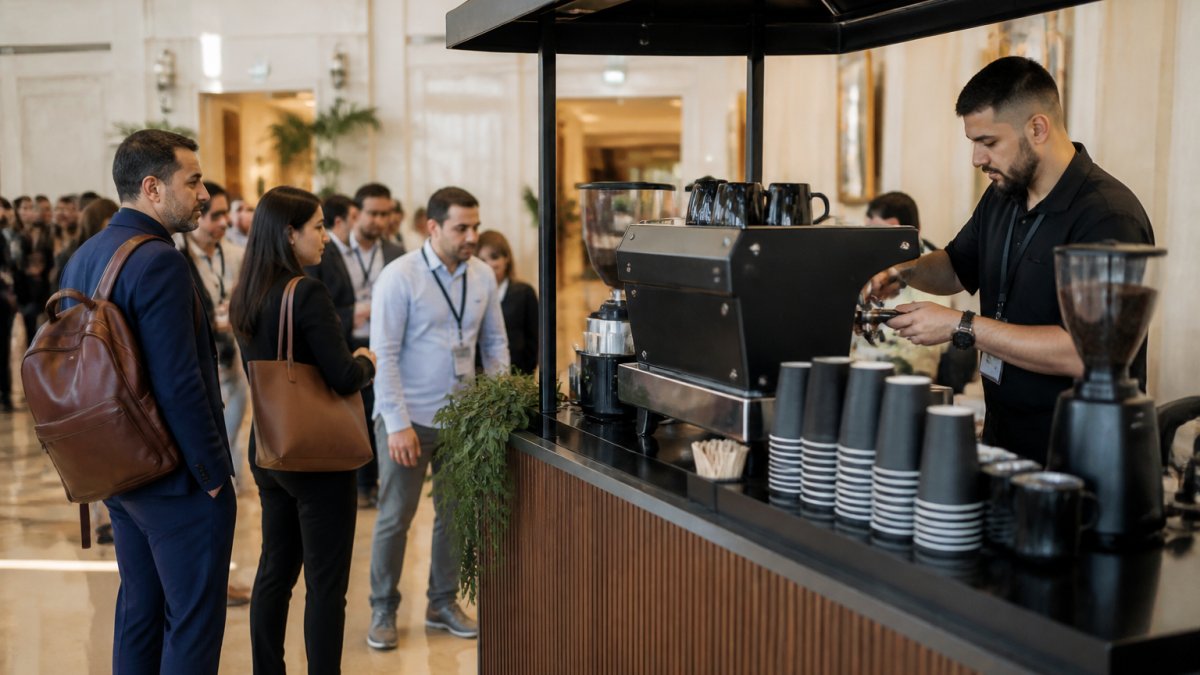
Bulk coffee is cheap and easy, and the fastest way to make your beverage service forgettable. Urn coffee goes bitter within the hour, and attendees notice.
Setup, Power, and Service Capacity
Service capacity depends on staffing ratios. For practical guidance on managing power and logistics for a coffee cart setup at your venue, see how to manage catering power food trucks. A single barista line moves slower than two, and high-volume service needs queue management. Ask your caterer for servings per hour and match it to your peak attendance window.
Coffee Catering Menu Ideas That Feature Local Beans
For more drink inspiration, browse the Brew Blog, and if your event leans celebratory, see what coffee cocktail ideas work best for weddings.
Accessible and Inclusive Drink Options
Keep the menu readable and the service line clear. Guests with mobility needs should reach the counter without a bottleneck. A short, well-labeled menu speeds up the line and helps attendees decide fast.
Planning Quantities, Budget, and Staffing Ratios
Quantities, budget, and staffing decide whether your coffee service runs smoothly, and they are the numbers most planners guess at. Here is the working math, cost drivers, and staffing ratios to build a conference around.
Coffee Quantity Formula
- Cups per attendee: plan on 1.5 cups across a morning session, 2-2.5 if coffee is the main draw or the session runs past three hours. Add 10-15% buffer for walk-ups and re-pours.
- Beans per cup: about 10 grams of ground coffee per 6-ounce drip cup; roughly 18-20 grams per double espresso. A 12-ounce latte uses a double shot plus milk.
- Water: drip brewing runs roughly 16-18 parts water to 1 part coffee by weight, so a pound of beans yields about 30-35 six-ounce cups.
- Milk: for a latte-heavy menu, plan on 6-8 ounces of milk per milk drink; oat and almond alternatives run out faster than whole milk at most conferences, so stock them at roughly 1.5x the whole-milk rate.
Budget: The Five Cost Drivers
The bean premium is usually the smallest of the five drivers, while labor and equipment decide the quote. Comparing local-roaster coffee to bulk service on bean price alone misleads, compare total service cost per attendee across the same service window.
Staffing Ratios and Station Capacity
- Drip or batch service: one attendant can manage a self-serve station for several hundred attendees; the constraint is refill speed, not pouring.
- Espresso cart: plan one barista per line, with a second added once the queue exceeds a short wait. A single barista pulling made-to-order drinks serves far fewer guests per hour than a batch station, ask your caterer for servings per hour and match it to your peak attendance window.
- Peak window: conferences concentrate demand in the 15-20 minutes after a session breaks. Size staffing to the peak, not the average, or the line becomes the story.
Operational Planning Checklist
Under-ordering beans ends service early, and a local roaster cannot fix it on the day. Confirm your volume before the order window closes, and keep the buffer in the plan.
Here is the working math the article lays out for planning conference coffee service.
| Item | Value | Note |
|---|---|---|
| Cups per attendee | 1.5 across a morning session | 2-2.5 if coffee is the main draw |
| Buffer | 10-15% | For walk-ups and re-pours |
| Grounds per 6-ounce drip cup | About 10 grams | , |
| Grounds per double espresso | Roughly 18-20 grams | 12-ounce latte uses a double shot plus milk |
| Water-to-coffee ratio | 16-18 parts water to 1 part coffee | By weight, for drip brewing |
| Yield per pound of beans | About 30-35 six-ounce cups | , |
| Milk per milk drink | 6-8 ounces | Oat and almond stocked at 1.5x whole-milk rate |
| Peak demand window | 15-20 minutes after a session breaks | Size staffing to the peak, not the average |
Measuring Whether Local Coffee Improved Your Event
For planners weighing local sourcing against other options, the benefits of hiring local mobile baristas for events lay out the practical upside.
Request a Quote for Your Conference Coffee Service
Our mobile coffee cart and trailer options are available for events. Our baristas serve freshly prepared hot or iced drinks, with whole, oat, and almond milk options and a menu we tailor to your crowd. We have served more than 35 weddings, corporate events, and private celebrations.
Get started with Colada Kulture Co. Request a quote for your next event today.
Frequently Asked Questions
How do you choose a local coffee roaster for a conference?
Start by confirming the roaster can supply fresh-roasted beans in the volume your headcount needs and can deliver on your event date. Ask for roast dates, not just bag dates, and request a sample tasting. Check whether they work with caterers or mobile coffee carts, since coordination matters as much as bean quality. Verify their licensing and delivery logistics, then get references from other corporate events. A roaster who has served 200-plus guest conferences will already know how to pace production and packaging.
How much coffee should you plan for a conference?
A common planning baseline is one to two cups per attendee for a morning block, then roughly one cup per person for each additional break. For a 200-person conference with two coffee breaks, plan for 400 to 600 servings. Factor in that espresso drinks take longer per cup than batch brew, so a mobile espresso bar should be sized by servings per hour, not just total volume. Confirm staffing ratios with your caterer so the service line keeps moving and wait times stay short.
Is a coffee cart a good option for conference catering?
Yes, especially when guest experience and networking matter. A coffee cart for conferences creates a natural gathering point, lets attendees order custom espresso or cold brew, and gives your brand a visible, social-media-friendly station. The tradeoff is throughput: a cart needs adequate power, floor space, and staffing to handle high-volume service. Share your venue’s loading dock access and power requirements with the caterer early so setup goes smoothly and the line never stalls.
What should you ask a coffee roaster before booking conference catering?
Ask about roast freshness and delivery timing, minimum order quantities, and whether they supply whole bean or ground. Confirm they can accommodate oat, almond, and whole milk options through your caterer. Request a customized menu tasting and ask how they handle last-minute headcount changes. Finally, ask for references from comparable corporate events and confirm the caterer and roaster have worked together before, since a practical roaster-to-caterer workflow prevents day-of surprises.