Table of Contents
- Understanding Your Wedding Coffee Catering Options
- Mobile Espresso Bar for Weddings: Setup and Logistics
- Wedding Coffee Menu Ideas and Customization
- Wedding Coffee Station Setup: Design and Aesthetic
- Wedding Coffee Catering Cost and Pricing Considerations
- Evaluating and Selecting Your Coffee Catering Vendor
- Common Mistakes to Avoid When Choosing Wedding Coffee Catering
- Conclusion
How to Choose Wedding Coffee Catering: A Complete Guide
Last Updated: July 19, 2026
Selecting the right wedding coffee catering transforms your reception from ordinary to memorable. Quality espresso drinks and specialty lattes give guests a reason to linger, feel welcomed, and talk about your event for months. This guide walks you through assessing venue requirements, matching coffee service to your wedding theme, and identifying vendors most likely to deliver consistent quality on your big day.
Understanding Your Wedding Coffee Catering Options
Your first decision is understanding what types of wedding coffee catering setups exist.
Types of Coffee Catering Setups
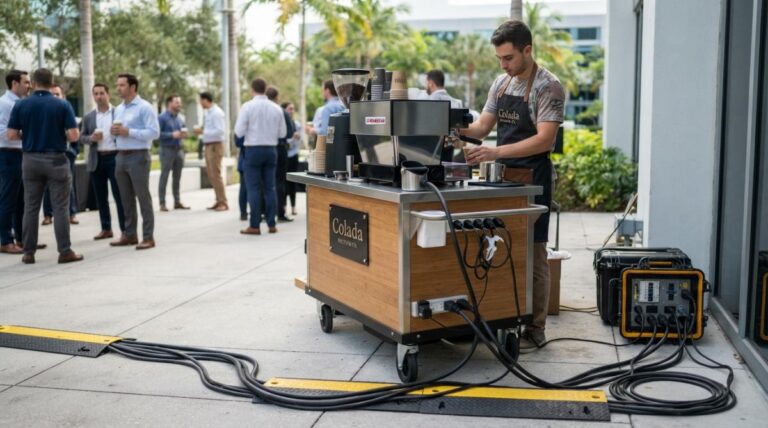
A mobile coffee cart is the most popular option because it combines flexibility, visual appeal, and operational simplicity. These carts arrive fully equipped with espresso machines, grinders, and milk steamers, serving 100-200 guests during a 4-6 hour reception. The cart becomes a focal point, guests queue naturally, and the barista creates theater through latte art.
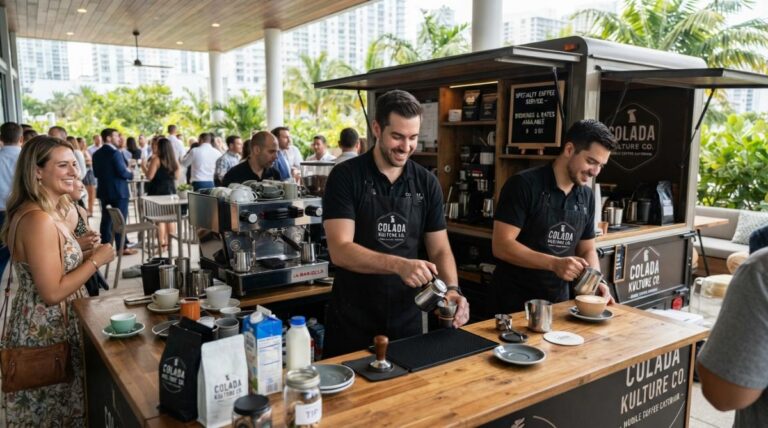
Larger events sometimes require a mobile espresso bar or coffee trailer, offering more counter space and multiple baristas to serve 300+ guests without bottlenecks.
A stationary coffee station set up inside your venue works when weather is unpredictable. This gives you less visual impact but more weather protection.
Beverage stations where guests self-serve pre-made cold brew require minimal staffing but sacrifice the personalization that makes coffee service memorable.
The key difference: professional barista services deliver customized drinks on demand, while self-service stations prioritize volume over quality.
Ask potential vendors whether they’ve worked at your specific venue before. Experienced vendors know venue quirks, loading dock heights, electrical panel locations, and water access points.
Benefits of Professional Barista Services
Professional baristas transform coffee service into an experience. A trained barista prepares 8-12 specialty drinks per hour while maintaining quality, handling special requests, and engaging guests with expertise.
When you hire a professional barista, you’re paying for reliability. Experienced baristas manage the rush during cocktail hour, diagnose espresso machine issues before they become problems, and adapt their service style to your reception’s flow. Some baristas offer latte art customization, adding your initials or decorative designs to cappuccinos for a personal touch guests remember.
The alternative, hiring an inexperienced vendor or self-serving cold brew, saves money but creates risk. Guests encounter slow service during peak times and limited drink options. For a wedding where you’re already investing significantly, professional barista service typically delivers better return on investment.
Mobile Espresso Bar for Weddings: Setup and Logistics
The logistics of a mobile espresso bar often determine whether your coffee service succeeds or fails.
Power and Electrical Requirements
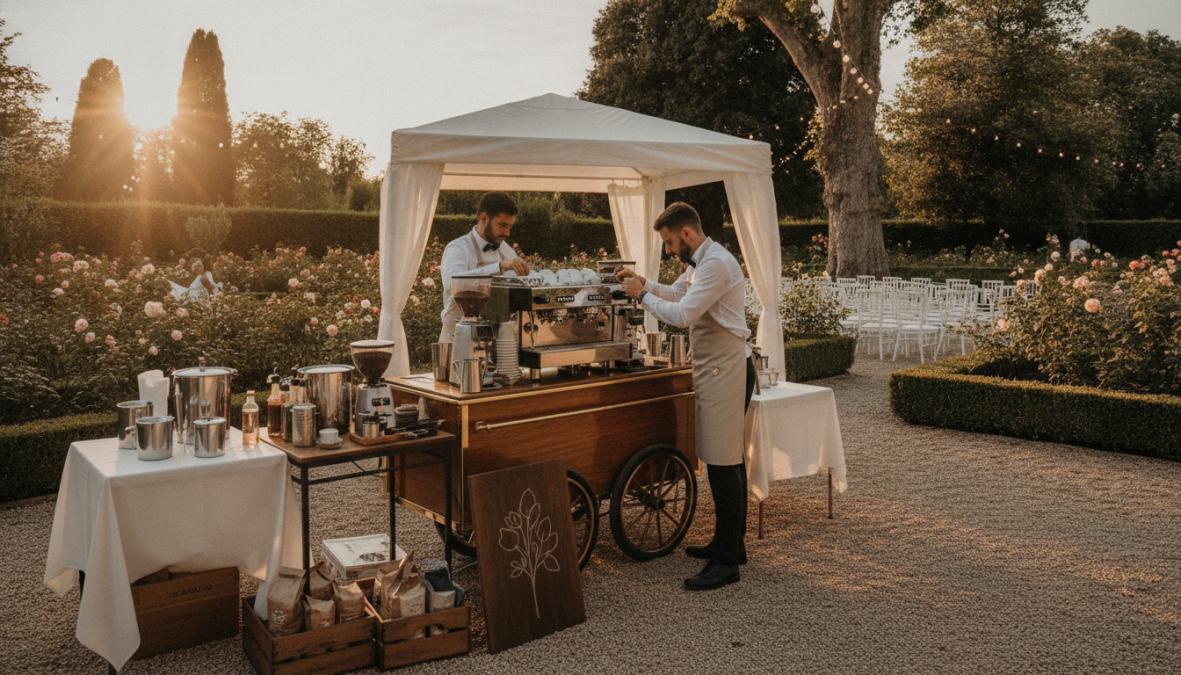
This is the detail most wedding planners overlook. A mobile coffee cart requires either a dedicated 20-amp electrical outlet or a generator. The espresso machine alone draws 1,500-2,000 watts when heating water and pulling shots simultaneously. Add a refrigerator for milk, a grinder, and a water heater, and you’re looking at 3,000-4,000 watts total draw.
Your venue likely has standard 15-amp household outlets, which cannot safely power a professional espresso machine without tripping breakers.
Ask your coffee caterer: "What are your power requirements, and do you bring your own generator?" If they say "We’ll just plug into your outlet," they’re underestimating the electrical demand. The best vendors arrive with a portable generator or confirm in advance that your venue has a dedicated 20-amp circuit near the coffee service location.
If your caterer can’t clearly explain their electrical setup during consultation, this is a red flag. They may arrive unprepared, causing delays. Ask for written confirmation of power requirements and solutions in your contract.
Water Access and Venue Compatibility
An espresso machine requires fresh water for brewing shots and steam wand cleaning. Most mobile carts carry 5-10 gallons of pre-filled water, covering 100-150 drinks before needing a refill. For larger events, your caterer needs access to a water source, an outdoor spigot, indoor sink, or water delivery truck.
Ask your venue: "Where is the nearest water source to where the coffee cart will be positioned?" Then confirm with your caterer that they can access it without disrupting guest flow.
Some venues restrict where equipment can be positioned. A rooftop venue might prohibit generators due to noise. An indoor ballroom might have limited floor space. A historic mansion might restrict electrical access. These constraints should be identified during your initial venue tour, then discussed with your caterer.
The best vendors ask detailed logistical questions during consultation: venue dimensions, loading dock access, electrical panel locations, water sources, parking proximity, and setup timeline.
Wedding Coffee Menu Ideas and Customization
Your coffee menu should reflect your wedding’s tone and your guests’ preferences.
Specialty Drinks and Signature Options
Start with the essentials: espresso, Americano, cappuccino, latte, and flat white. These five drinks cover 80% of guest requests. Then add seasonal or signature options that feel personal to your celebration.
Many couples create a custom signature drink, a house-made specialty that appears on your reception program and becomes part of your wedding story. This might be a lavender honey latte, a spiced chai latte, or a salted caramel cold brew.
Matcha lattes, cortados, macchiatos, and affogatos appeal to coffee enthusiasts and add perceived premium value. Cold brew and iced lattes are essential for warm-weather or daytime receptions.
Don’t overload your menu. A barista managing 8-12 drinks per hour with a queue of 20+ guests works best with 6-8 total options. Too many choices slow service and frustrate both barista and guests. Ask your caterer which drinks take longest to prepare and simplify accordingly.
Non-Coffee Alternatives and Beverage Pairings
Not all guests drink coffee. A comprehensive menu includes hot tea, hot chocolate, and steamed milk for guests seeking warm beverages without caffeine. Masala chai appeals to guests seeking something different.
For afternoon or evening receptions, consider coffee cocktails, cold brew mixed with bourbon, espresso martinis, or Irish coffee. These bridge your coffee service and bar, giving guests another reason to visit the coffee station.
Matcha lattes serve as a non-coffee caffeine option and appeal to guests interested in wellness. They also photograph beautifully with their vibrant green color.
Your menu should have something for every guest, coffee drinkers, tea drinkers, non-caffeinated guests, and those seeking something Instagram-worthy. A well-rounded menu increases the percentage of guests who visit your coffee station.
Wedding Coffee Station Setup: Design and Aesthetic
How your coffee station looks matters as much as how the coffee tastes. A beautifully styled mobile coffee cart becomes a design element that enhances your overall wedding aesthetic.
Matching Cart Aesthetic to Your Wedding Theme
Your coffee cart should complement your wedding’s visual style. A rustic wedding calls for a cart with farmhouse aesthetic, natural wood finishes, and vintage signage. A modern minimalist wedding demands a sleek cart with clean lines and contemporary branding. A garden wedding benefits from a cart decorated with fresh flowers and greenery.
The best vendors offer customization options: removable branding panels, floral arrangements, custom signage, and lighting tailored to your theme. Ask your caterer: "Can you customize the cart’s appearance to match my wedding theme?" and request photos of past events.
Positioning matters too. A coffee cart placed near the entrance creates an immediate sensory experience as guests arrive. Positioning it in a corner makes it feel like a deliberate design feature rather than an afterthought.
Custom Branding and Visual Integration
Your caterer can add custom elements that make the coffee station feel integrated into your celebration. A custom menu board displaying your names, wedding date, and drink options becomes a keepsake photo opportunity. Custom cups or sleeves with your initials or wedding date transform a functional item into a memorable detail.
Lighting elevates the coffee station’s visual impact. Warm string lights above the cart create ambiance for evening receptions. Spotlights highlighting the barista’s work add theater and draw attention.
Ask your caterer what branding and customization options they offer, and request examples from past weddings.
Wedding Coffee Catering Cost and Pricing Considerations
Understanding how wedding coffee catering pricing works prevents budget surprises.
Understanding Per-Person Pricing Models
Most coffee caterers charge per guest or per hour of service. Per-guest pricing typically ranges based on your location, menu complexity, and service level. Per-hour pricing works better for events where you’re uncertain about guest count or service duration.
Some caterers charge a base fee plus per-drink charges if you want a second barista or extended service hours. This model protects the caterer from low-volume events while giving you flexibility to scale up.
Ask potential vendors: "What does your pricing include?" Clarify whether setup and breakdown are included, whether the price covers all drink options, and whether gratuity is included.
Request quotes from at least three caterers using the same parameters: guest count, event duration, and menu preferences. This lets you compare pricing fairly.
Budget Planning and Hidden Costs
Beyond the base catering fee, watch for these potential add-ons: premium milk options, specialty syrups, custom signage, extended service hours, additional baristas, and gratuity.
Some venues charge a rental fee or require you to use preferred vendors. Confirm whether your caterer can work at your venue without additional fees.
Weather contingencies matter for outdoor events. Confirm that your caterer can provide weather protection without additional cost, or understand what the extra charge is.
Travel fees apply if your caterer operates in a specific geographic area and your venue is outside their typical service radius. Ask about travel fees upfront.
The most transparent vendors provide detailed written quotes breaking down all costs. Request itemized quotes and confirm the number matches what you discussed.
Evaluating and Selecting Your Coffee Catering Vendor
Choosing the right vendor requires more than comparing prices. You’re hiring someone who will represent your wedding’s hospitality and quality standards.
Key Questions to Ask Your Coffee Caterer
Start with operational questions: "How many weddings have you catered?" / "Do you have references from other couples?" / "What’s your contingency plan if your primary barista becomes unavailable?" / "How do you handle equipment failures during service?"
Experience matters. A vendor who’s catered 35+ weddings has encountered and solved most problems. They know how to manage rush periods, adapt to venue quirks, and maintain quality under pressure.
Ask about their coffee sourcing: "Where do your coffee beans come from?" / "Do you roast your own beans or partner with a local roaster?" Quality-focused caterers can articulate their coffee sourcing story.
Discuss service style: "Will you prepare drinks to order?" / "Can you accommodate dietary restrictions?" / "How do you handle peak-hour rushes?" The best baristas work efficiently without sacrificing quality.
Ask about setup timeline: "How long does setup take?" / "When do you need to arrive before the reception?" Confirm logistics align with your reception timeline.
Sustainability, Insurance, and Liability
Ask your caterer: "Do you use compostable cups and lids?" / "How do you manage waste?" Vendors committed to sustainability often use paper cups and compostable sleeves.
Confirm that your caterer carries liability insurance covering their equipment and service. If your venue requires proof of insurance, ask your caterer to provide a certificate naming your venue as an additional insured.
Ask about damage or incident protocols: "What happens if equipment is damaged during setup?" Clear protocols prevent disputes if something goes wrong.
Check their cancellation and rescheduling policy. What happens if your wedding is postponed? Can you reschedule without losing your deposit? Reputable vendors have clear, written policies.
Common Mistakes to Avoid When Choosing Wedding Coffee Catering
Choosing based solely on price. The cheapest vendor often delivers the poorest experience. They may arrive late, use low-quality beans, or encounter equipment failures. A slightly higher price for a vendor with strong references usually delivers better value.
Not confirming venue logistics in advance. Venues have constraints, limited electrical access, restricted water sources, parking limitations. If your caterer can’t work within these constraints, you’ll face service disruptions. Confirm logistics with both your venue and caterer before signing contracts.
Overcomplicating the menu. A 12-drink menu slows service and frustrates guests waiting in line. Stick to 6-8 options with 2-3 being specialty drinks.
Skipping the reference check. Ask your caterer for references and actually call them. Ask other couples: "Did they arrive on time?" / "Was the barista professional?" / "Would you hire them again?" This takes 15 minutes and prevents hiring a vendor with hidden problems.
Not discussing contingencies. What happens if the primary barista gets sick? What if the espresso machine malfunctions? Vendors with solid contingency plans won’t panic if something goes wrong.
Assuming the caterer will solve logistical problems. Clearly communicate your venue’s constraints and ask whether they can work within them. Ambiguity leads to problems.
Choosing the right wedding coffee catering transforms your reception from standard to memorable. The best vendors combine quality coffee expertise with professional reliability, clear communication, and problem-solving experience. They understand your venue’s logistics, customize their service to match your wedding’s aesthetic, and deliver consistent quality under pressure.
Request a quote and discover how premium mobile coffee catering elevates your celebration.
Frequently Asked Questions
How much does wedding coffee catering typically cost?
Wedding coffee catering pricing depends on several factors including guest count, service duration, drink complexity, and whether you choose a mobile espresso bar or stationary station. Most vendors offer per-person pricing models, but costs vary based on location, date, and customization. For accurate pricing tailored to your wedding, contact vendors directly for quotes that reflect your specific needs and guest count.
What drinks should be included in a wedding coffee menu?
A well-rounded wedding coffee menu typically includes espresso-based drinks like lattes, cappuccinos, macchiatos, and flat whites, plus cold brew for warm-weather receptions. Consider adding specialty options such as matcha lattes, organic tea, and masala chai for non-coffee drinkers. Many couples also customize signature drinks that reflect their theme. Ask your professional barista about options that complement your reception timeline and guest preferences.
What power and electrical requirements does a mobile coffee cart need?
Mobile coffee carts require reliable electrical access to power espresso machines, grinders, and refrigeration units. Most professional setups need a dedicated 20-amp circuit with standard outlets near the service area. High-rise venues or outdoor locations may require generator rental or special arrangements. Discuss venue electrical specifications with your coffee catering vendor early, this is critical for ensuring seamless service delivery on your wedding day.
How far in advance should I book wedding coffee catering?
It's best to book wedding coffee catering 2-3 months before your event, especially during peak wedding season. This allows time to discuss menu customization, confirm logistics like power supply and water access, and ensure your chosen vendor is available. Early booking also gives you flexibility to coordinate the aesthetic design and branding to match your wedding theme, and to address any venue-specific requirements your caterer identifies.
This article was written using GrandRanker