Table of Contents
- Why Small Conferences Need a Dedicated Coffee Station
- Space-Saving Coffee Station Layouts for Tight Venues
- Mobile Coffee Cart Catering for Corporate Events: What to Look For
- Coffee Station Menu Ideas for Meetings That Keep People Talking
- Best Practices for Event Coffee Service: Logistics, Sustainability, and Accessibility
- Modern Aesthetic and Decor Tips for Conference Coffee Stations
- Budget-Conscious Scaling for Corporate Coffee Stations
- Frequently Asked Questions
Last Updated: September 27, 2026
Why Small Conferences Need a Dedicated Coffee Station
A dedicated coffee station is a self-service beverage area set up specifically for conference attendees, and these coffee station ideas for small conferences often matter more than the keynote. At Colada Kulture Co., we have catered more than 35 weddings, corporate events, and private celebrations, and the pattern is consistent: when the coffee is good and the line moves fast, people stay, network, and remember the event.
Space-Saving Coffee Station Layouts for Tight Venues
The best small-conference layouts build upward, not outward. When floor space is limited, vertical storage and fold-away furniture do the heavy lifting.
Vertical Storage and Tiered Display Solutions
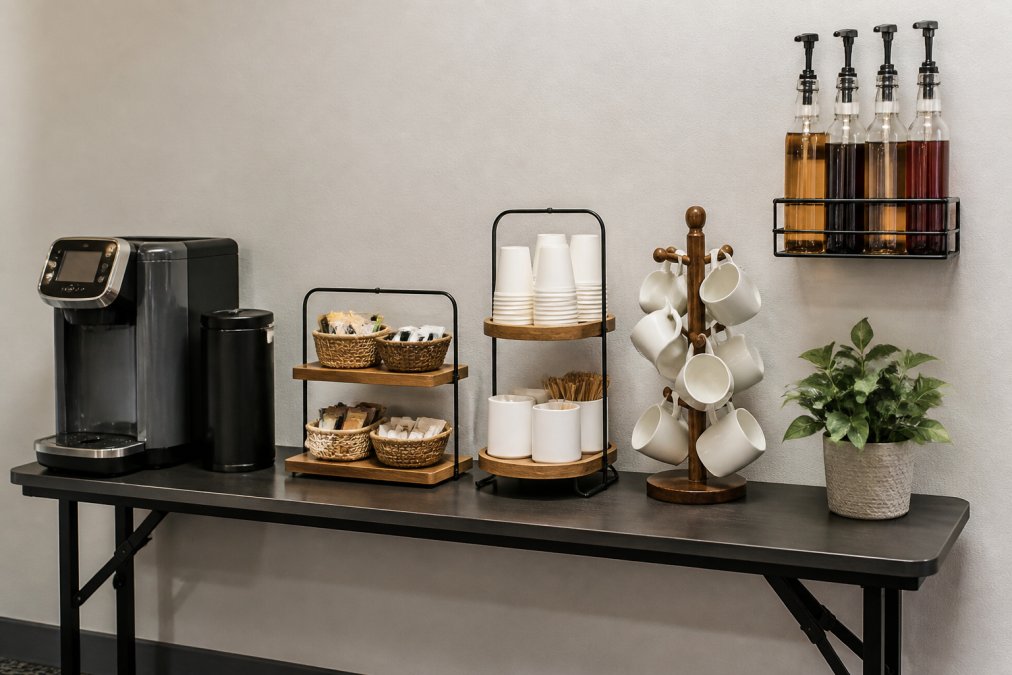
Tiered serving stands start around $20 and let you stack cups, lids, and condiments on multiple levels instead of spreading them across a counter. Wall-mounted syrup racks, typically $15 and up, keep flavorings off the table entirely, which cuts spills and clutter. A mug tree, often $10 or less, holds drinkware in a footprint smaller than a dinner plate.
Furniture and Cabinetry That Folds Away
Narrow folding tables, usually $50 and up, are the workhorse of pop-up stations. They store flat and set up in minutes. For rooms that double as meeting spaces, concealed storage cabinets (from about $150) hide equipment behind closed doors. Recessed coffee cabinets go further by using wall depth, but they require professional installation and a permanent room modification.
A common mistake is placing the station against the wall behind the speaker. Put it near the exit or a corner with two open sides so guests can approach from more than one direction and the line never blocks the room.
Mobile Coffee Cart Catering for Corporate Events: What to Look For
Mobile coffee cart catering for corporate events replaces the DIY table with a staffed barista station, and for anything above 50 guests it usually pays for itself in saved setup time and better drink quality. Here is what separates a reliable vendor from a risky one:
- Arrival buffer: Ask how early the team arrives and what backup equipment they bring.
- Power plan: Confirm whether the cart runs on standard outlets or needs a dedicated circuit.
- Throughput: Ask how many drinks per hour the setup handles during a rush.
- Menu flexibility: Look for a vendor that builds a custom menu, not a fixed list.
- Milk options: Whole, oat, and almond should all be standard, not add-ons.
Coffee Station Menu Ideas for Meetings That Keep People Talking
A strong menu covers three needs: caffeine, novelty, and inclusion. Coffee station menu ideas for meetings should give the espresso drinkers their ritual, give everyone else something worth photographing, and leave no guest without an option.
Signature Drinks and Coffee Flights
A signature drink tied to your brand or event theme turns a beverage into a talking point. Coffee flights, served as small tasting portions, work especially well at product launches because they encourage guests to linger and compare. Cold brew on tap adds a self-service option that keeps lines short during peak breaks.
Non-Coffee Options and Dietary Inclusions
Matcha lattes, hot chocolate, and seasonal flavors give non-coffee drinkers a real choice rather than an afterthought. Always confirm dairy alternatives and any dietary needs with your caterer in advance. Colada Kulture Co. includes whole, oat, and almond milk options as standard, along with flexible menu items like pastries and cold brew.
The most memorable conference menus are the ones where every guest, coffee drinker or not, finds something made for them.
Best Practices for Event Coffee Service: Logistics, Sustainability, and Accessibility
Best practices for event coffee service come down to three things: power and access, waste, and whether every guest can actually use the station. Get these right and the rest of the event runs easier.
Power, Loading Dock, and Small-Space Logistics
Map the route before the event. Confirm outlet locations, circuit capacity, and loading dock hours in writing. For small conference spaces, position the station so it never blocks a fire exit or the main walking path. A vendor that has worked tight downtown venues will ask these questions before you do.
Sustainable and Accessible Conference Coffee
Sustainability and accessibility are the two areas most planners overlook. Compostable cups, clearly labeled waste bins, and refillable options reduce the event’s footprint. For accessibility, keep the counter at a reachable height, leave clear floor space for wheelchairs and mobility aids, and label every drink option so guests with dietary restrictions or allergies can choose confidently.
Modern Aesthetic and Decor Tips for Conference Coffee Stations
Most decor advice for coffee stations was written for kitchens and weddings, where the station is the backdrop. At a small conference, the station is a working surface that 40 to 80 people touch in a 15-minute break, so the aesthetic has to survive traffic, spills, and a room that was designed for presentations, not hospitality.
Design Around the Room You Actually Have
Start by matching the station to the venue’s existing palette instead of importing a theme. A glass-walled boardroom with cool gray carpet and chrome fixtures will make a rustic burlap-and-chalkboard setup look like it wandered in from a different event. A hotel breakout room with warm wood and beige walls will make matte black and acrylic look sterile.
Lighting and Signage Do More Than Props
Two upgrades consistently outperform decorative extras at small conferences:
- A small battery LED task light or clip lamp aimed at the menu and condiment area. Conference rooms are lit for projection, which means the coffee station often sits in the dimmest part of the room. A single warm-white light makes the station legible and photographable without competing with the screen.
- A printed or framed menu card at eye level, not a handwritten sticky note. Guests decide what they want before they reach the front of the line, which cuts the average service time per person. List every option, including the non-dairy milks and any decaf, so nobody has to ask.
What to Skip
Skip anything that has to be rearranged between breaks. Tall floral arrangements, loose confetti, unwrapped stirrers in an open cup, and fabric runners that soak up drips all create work for whoever is restocking. If a decorative item cannot survive a spilled latte and a hurried wipe-down, it does not belong on a conference station.
Photograph your station during setup, before the first guest arrives. That image becomes your reference for the next event and shows your client exactly what they are paying for, most planners never capture this and rebuild the layout from scratch every time.
Aesthetic Choices That Also Solve Logistics
Some of the best-looking choices are also the most functional. Tiered stands look deliberate and free up counter space. Matching insulated carafes look cleaner than mismatched airpots and hold temperature longer. Clear acrylic risers make cups and lids visible from across the room, which shortens the “where are the lids” pause that stalls a line.
Budget-Conscious Scaling for Corporate Coffee Stations
The gap in most coffee station advice is that it jumps from “DIY table for $100” to “hire a luxury cart for $2,000” with nothing in between, which is exactly where small business conferences live. You need a station that looks professional to a room of clients and partners, without a per-guest cost that has to be defended to a finance team.
The Three Cost Drivers That Actually Move the Number
Before you compare setups, understand what you are paying for. Almost every coffee station budget breaks into three buckets:
- Labor. A staffed barista station is the single largest line item. It scales with hours on site, not just guests served, so a two-hour window costs far less than an all-day presence. If your conference has one long morning block and a short afternoon break, staff only the morning and run self-service in the afternoon.
- Consumables. Cups, lids, stirrers, napkins, milk, syrups, and coffee itself scale directly with headcount. This is the bucket where sustainability choices and portion planning pay off fastest.
- Equipment and setup. Carts, urns, airpots, and tables are largely fixed costs, they cost the same whether you serve 30 people or 80. That means the per-guest cost of equipment drops sharply as headcount rises, which is why a staffed cart often looks expensive for 25 guests and reasonable for 75.
A Practical Tier Framework
| Tier | What to Include | Best For |
|---|---|---|
| Self-Service Starter | Folding table, tiered stand, mug tree, drip coffee in airpots, printed menu | Under 30 guests, internal meetings |
| Professional Mid-Range | Narrow table or small cart, syrup rack, cold brew dispenser, dairy alternatives, laminated signage, labeled waste bins | 30-75 guests, client-facing events |
| Staffed Premium | Barista cart or trailer, signature drinks, coffee flights, custom menu, dedicated attendant | 75+ guests, launches and galas |
Start at the tier that matches your headcount, then add exactly one upgrade that guests will remember. For most corporate events, that upgrade is a staffed barista for the peak morning window, because it removes setup and restocking work from your own team and keeps quality consistent when the line is longest.
Where to Save Without Looking Cheap
- Cut variety, not quality. Two well-made options beat six mediocre ones. Guests forgive a short menu; they remember cold coffee and empty carafes.
- Serve in batches. Brewing in larger volumes and holding in insulated carafes costs less per cup than brewing small pots continuously, and it keeps the line moving.
- Skip single-use specialty cups. Standard hot cups with a printed sleeve look more professional than novelty cups and cost less.
- Reuse your own equipment. If your office already owns airpots, urns, or a grinder, bring them. Renting duplicates you already have is the most common wasted line item.
- Time the staff, not the day. Paying for a barista during a 90-minute break window is a fraction of paying for a full-day presence.
Do not scale by cutting drink quality or staffing the peak window too thin. A long line at a small conference is more visible than at a large one, because there is nowhere for guests to go. If the budget is tight, serve fewer options and serve them well.
The Sustainability Trade-Off
Compostable cups and clearly labeled waste bins usually cost slightly more per unit than standard disposables, but they reduce the cleanup labor and the venue’s waste-handling fees, which often offsets the difference at events over 50 guests. If your venue does not offer compost collection, check before you buy, compostable cups sent to a landfill behave like any other cup, and the premium buys you nothing.
Frequently Asked Questions
What are the essential elements of a professional conference coffee station?
A professional setup includes a reliable brewing method (espresso machine or high-volume drip), a variety of fresh dairy and plant milks, sweeteners, cups, stirrers, and napkins. For small conferences, add tiered display stands or wall-mounted racks to save table space. A self-service station with clear signage keeps lines moving. If you want barista-quality drinks without the equipment, mobile coffee cart catering for corporate events brings the full setup and trained staff to your venue.
How can you make a coffee station interactive for conference guests?
Offer a build-your-own drink bar with flavored syrups, cold brew taps, or a signature drink menu guests can customize. Coffee flights (small samples of different roasts or espresso-based drinks) encourage conversation and exploration. A barista-led tasting or latte art demo adds a memorable experience. These touches turn a basic refreshment area into a networking hub, especially in small conference settings where engagement matters.
How much coffee should you budget per person for a half-day conference?
Plan for 2 to 3 cups per person for a half-day event. For a 75-person conference, that means roughly 150 to 225 servings. If offering espresso drinks, account for 1.5 to 2 drinks per attendee since portions are smaller. Always round up and include decaf and non-coffee options like tea or matcha. A mobile coffee cart can help you scale accurately without over-ordering supplies.
What are some creative non-coffee beverage additions for a conference station?
Matcha lattes, chai, hot chocolate, and cold brew taps offer variety. Seasonal options like spiced apple cider or peppermint mocha add a timely touch. For warmer months, consider iced matcha or fruit-infused cold brew. Offering whole, oat, and almond milk ensures inclusivity. These additions keep non-coffee drinkers engaged and make the station feel thoughtfully curated rather than an afterthought.

