Last Updated: November 23, 2026
Quick Summary
The logistics of setting up a mobile coffee bar come down to six connected decisions: format, concept, equipment, permits, utilities, and money. Choose your format first, since a cart, trailer, or truck decides your budget, permits, and where you can park. Then plan power, water, and wastewater before buying equipment, because utilities are where most setups fail.
- A working mobile coffee bar needs four systems: espresso, grinding, refrigeration, and service ware.
- Confirm local health department rules before you buy anything, since requirements vary by state and county.
- Buildout quotes commonly grow 15 to 25 percent once health department plan review adds sinks or tanks.
- In the worked example, fixed event costs of $650 divided by $4.50 contribution equals about 145 break-even drinks.
- Hold at least three months of fixed costs as working capital.
Table of Contents
- What are the logistics of setting up mobile coffee bars?
- Mobile coffee bar equipment you actually need
- Permits, health department rules, and compliance checklist
- Building a coffee truck business plan that holds up
- Coffee truck startup costs and break-even math
- Booking a mobile coffee cart for events and vending sites
- Request a Quote for Your Event
- Frequently Asked Questions
What are the logistics of setting up mobile coffee bars?
The logistics of setting up mobile coffee bars come down to six connected decisions: format, concept, equipment, permits, utilities, and money. Get those right and the rest is scheduling. Get them wrong and you will spend your first season fixing problems instead of serving drinks.
The coffee is the easy part, and the logistics are where most mobile coffee operations get tested.
Below, we walk through each stage in order.
Choosing your format: cart, trailer, or truck
Your format decides your budget, your permits, and where you can park.
- Cart: Smallest footprint. Fits lobbies, patios, and freight elevators. Best for indoor events and high-rise venues.
- Trailer: More counter space and onboard water. Good for outdoor weddings and multi-hour service.
- Truck: Highest volume, highest cost. Needs commercial parking and a bigger buildout.
Start with the venues you want to serve. If most are indoors, a cart wins. If you are weighing a cart against full catering, see our comparison of coffee cart vs traditional catering before you commit.
Building your concept and target market
A mobile coffee bar is a self-contained beverage service that travels to events and serves espresso, cold brew, matcha, and specialty drinks on site. The concept is the part most new owners rush.
Ask three questions:
- Who is paying? A couple, a marketing manager, or an HR lead.
- What do they want to feel? Celebrated, impressed, or appreciated.
- What will they photograph? Guests post what looks good.
Your answers help shape your menu and branding.
Mobile coffee bar equipment you actually need
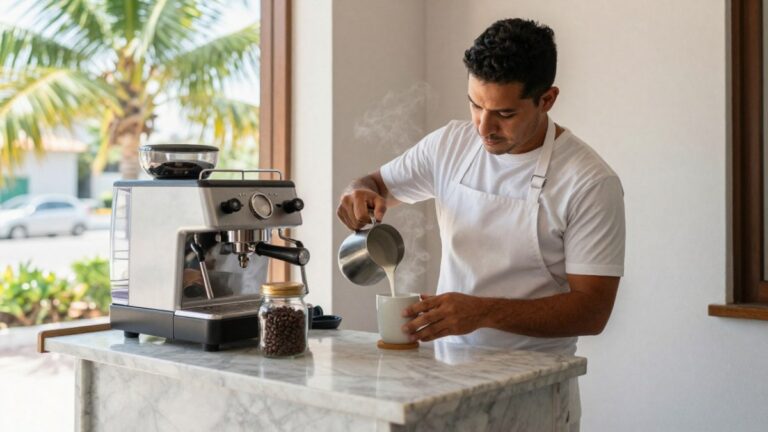
A working mobile coffee bar needs four systems: espresso, grinding, refrigeration, and service ware. Everything else is optional.
The core list:
- Espresso machine sized to your busiest hour, not your average one
- Commercial burr grinder
- Refrigeration for milk and cold brew
- Water supply and a wastewater tank
- Cups, lids, stirrers, and napkins
- Menu board and a card reader
A common mistake is buying a second grinder before buying a backup water pump. In practice, water and power failures end events. Extra grinders do not.
Power, water, and wastewater planning
Utilities are where most setups fail. Plan them before you buy equipment.
Most carts run on standard wall power, which matters for indoor venues. High-rise buildings often restrict loading dock hours and require proof of insurance before you unload. Our guide to coffee cart service for high-rise venues covers power access, freight elevator rules, and insurance requirements.
For outdoor sites, you need a quiet generator, a fresh water tank, and a wastewater tank sized to your guest count. Dump stations are not everywhere. Find yours before you book the event.
Permits, health department rules, and compliance checklist
Health department rules vary by state and county, so confirm local requirements before you buy anything.
Your compliance checklist:
- Register the business and get an EIN
- Apply for a mobile food unit permit
- Submit plans for the cart or trailer buildout
- Secure a commissary agreement
- Get a food handler certification for each barista
- Pass the health inspection
- Confirm liability insurance minimums with each venue
Keep your inspection sheet in the cart. Inspectors ask for it. Our mobile food trailer inspection checklist lists what inspectors actually look for, so you can prepare your setup to pass the first time.
Building a coffee truck business plan that holds up
A coffee truck business plan earns its keep by answering one question: how many drinks must you sell to cover a day? Build the plan around that number, not around a vision statement.
Include:
- Fixed monthly costs: insurance, storage, loan payments
- Per-event costs: supplies, staff, fuel, commissary fees
- Your break-even drink count per event
- A booking calendar for the next 12 months
For deeper planning help, the Brew Blog has operations and business articles that go past the basics.
Coffee truck startup costs and break-even math
Startup costs and break-even are two different questions, and most new operators answer only the first. The second, how many drinks must you sell per event before you earn anything, is the number that decides whether the business works.
Startup costs: five buckets, in order of risk
Get quotes rather than estimates, and treat the buildout and permits as the two buckets most likely to overrun.
| Cost bucket | What it covers | How to plan |
|---|---|---|
| Equipment | Espresso machine, grinder, refrigeration, water system | Buy used where service records exist; budget for a service call on day one |
| Buildout | Cart build or vehicle conversion, including plumbing and electrical | Get three quotes and a written change-order policy |
| Permits and compliance | Business registration, health permit, plan review, commissary agreement | Call the local health department before you buy anything |
| Insurance | General liability, auto, and equipment coverage | Confirm venue minimums in writing |
| Working capital | Supplies, first-month labor, fuel, and a reserve | Hold at least three months of fixed costs |
A common pattern is that the buildout quote grows by 15 to 25 percent once the health department’s plan review adds a handwash sink, a three-compartment sink, or a specific tank configuration. Build that contingency into the budget from the start.
Break-even: a worked example
Break-even per event is a short calculation, but every input matters. Use your own numbers; the example below shows the mechanism.
- Average ticket. Take total revenue divided by number of transactions at a recent event. If you sold 240 drinks for $1,440, your average ticket is $6.00.
- Ingredient cost per drink. Add coffee, milk, cup, lid, sleeve, and syrup, then divide by drinks. If supplies for 240 drinks cost $360, ingredient cost is $1.50 per drink, or 25 percent of the ticket.
- Contribution per drink. Average ticket minus ingredient cost: $6.00 minus $1.50 equals $4.50.
- Fixed event costs. Add event fee, labor, fuel, commissary fee, and any rental. If the event fee is $250, two baristas cost $300, fuel is $40, and commissary is $60, fixed event costs are $650.
- Break-even drinks. Fixed event costs divided by contribution per drink: $650 divided by $4.50 equals about 145 drinks. Below that, the event loses money.
- Break-even transactions per hour. Divide break-even drinks by service hours. A four-hour service needs about 36 drinks per hour, which is roughly one drink every 100 seconds, a realistic pace for two baristas only if the workflow is tight.
Run the same math for a monthly view by adding up your fixed monthly costs and dividing by your contribution per drink.
The inputs that move the number most
Watch out: Quoting break-even from a competitor’s numbers rather than your own event fees and labor rates is the fastest way to underprice a booking.
Pricing and booking implications
Once you know your break-even drinks per event, you can price with intent. Track actual drinks per hour at every event for the first season, since that data helps inform future bookings.
Fixed event costs in the break-even example
Booking a mobile coffee cart for events and vending sites
A mobile coffee cart for events can build its calendar through repeat clients and venue referrals.
What works:
- Build a one-page booking sheet with menu, power needs, and space requirements
- Ask every venue for a referral after a good event
- Book weddings early; peak dates go first
- Confirm loading dock access and setup time in writing
If you are hiring rather than building, our mobile barista booking guide explains what to expect and how booking works.
Request a Quote for Your Event
Building a mobile coffee operation is a logistics problem dressed up as a coffee problem. Solve power, water, permits, and break-even first, and the drinks take care of themselves.
At Colada Kulture Co., our mobile coffee cart and trailer options include a wide drink selection, from espresso to matcha and seasonal flavors, plus whole, oat, and almond milk. Professional baristas serve drinks fresh, hot or iced, and menus can be customized for weddings, corporate events, and brand activations.
Get started with Colada Kulture Co. and give your guests a coffee experience they will remember.
Frequently Asked Questions
What do you need to start a mobile coffee bar?
You need a service format (cart, trailer, or truck), a compact espresso machine, grinder, refrigeration, water and power supply, cups and lids, and a menu plan. On the compliance side, confirm your local requirements with the health department. A written business plan and a realistic startup budget keep the buildout on track. Most operators also line up event bookings and vending sites before launch so the calendar is not empty on day one.
How much does it cost to start a mobile coffee shop?
Coffee truck startup costs vary widely based on whether you buy a used cart or convert a vehicle. A basic cart setup costs far less than a full truck conversion with plumbing and electrical work. Equipment, permits, insurance, and initial inventory add up quickly, so build a line-item budget before committing. Request quotes from equipment suppliers and your local health department to get real numbers for your area.
What permits do you need for a mobile coffee cart?
Requirements vary by jurisdiction, so check with your local health department and city business office. Check with your local health department and city business office early, because permit timelines can delay your launch. Keep copies of all licenses in the unit during service.
How much water and power does a mobile coffee bar need?
A typical mobile coffee bar needs a fresh water tank and a wastewater tank sized for your expected service volume, plus a power supply that can run an espresso machine, grinder, and refrigerator. Many carts use a generator or shore power from the venue. Confirm the venue’s power capacity before booking, especially at high-rise offices with strict electrical requirements. Test your full setup under load before your first event.