Table of Contents
- Coffee Catering vs Soda Bar: The Quick Comparison
- Daytime vs Evening: Which Drink Fits Your Event?
- Mobile Coffee Cart Rental Cost: What Actually Drives the Price
- Dirty Soda Bar Catering Ideas That Guests Talk About
- Beverage Catering Logistics for Outdoor Venues
- Guest Experience, Staffing, and Sustainability
- ROI for Corporate Brand Activations
- Which Beverage Service Fits Your Outdoor Event?
- Frequently Asked Questions
Last Updated: September 16, 2026
Coffee Catering vs Soda Bar: The Quick Comparison
Choosing between coffee catering and a soda bar comes down to timing, guest energy, and the experience you want. Coffee catering is a mobile service built around espresso, cold brew, and matcha prepared fresh on site; a soda bar centers on customizable soft drinks with syrups and creams. This guide from Colada Kulture Co. breaks down cost drivers, logistics, and guest experience.
| Factor | Coffee Catering | Soda Bar |
|---|---|---|
| Best time of day | Morning to late afternoon | Afternoon to evening |
| Signature drink | Espresso, cold brew, matcha | Dirty soda, mocktails |
| Power needs | Higher (espresso machine) | Lower (ice, syrups, dispensers) |
| Space footprint | Compact cart or trailer | Wider display for toppings |
| Guest interaction | Barista-led, personal | Self-serve or staffed mixology |
| Best for | Corporate, weddings, activations | Dry weddings, social galas |
Coffee Catering at a Glance
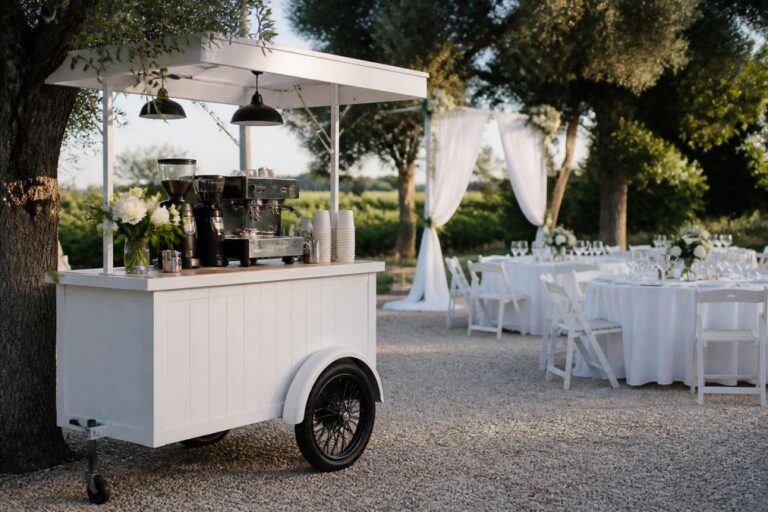
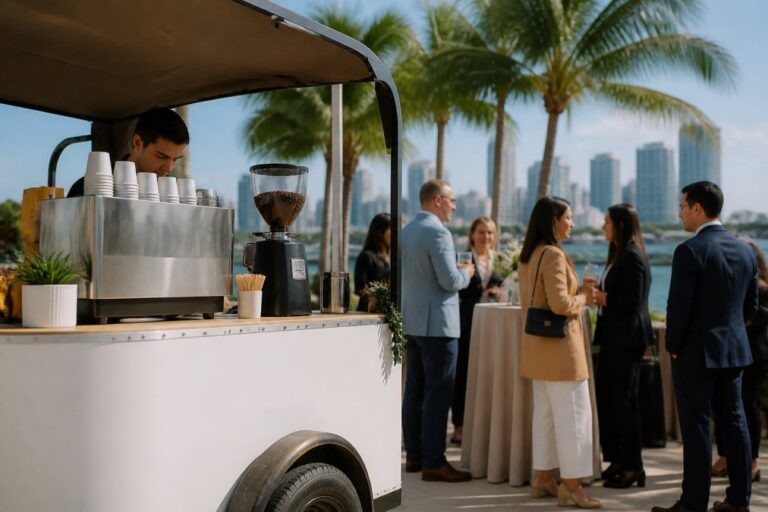
Coffee catering is a mobile beverage service in which trained baristas prepare espresso drinks, cold brew, and specialty coffee fresh at your venue. A typical setup includes a cart or trailer, an espresso machine, grinders, milk options like whole, oat, and almond, and a customizable drink menu. Because drinks are made to order, guests get a personal interaction with the barista, which is why coffee carts photograph well.
Soda Bar at a Glance
A soda bar is a refreshment station where guests build custom soft drinks from a base soda plus syrups, creams, and toppings, the format behind the popular dirty soda. Setup leans on ice capacity, syrup infusions, and a visually appealing display rather than heavy equipment. It suits high-volume, self-serve service and works well as a non-alcoholic experience at dry weddings and pop-up events.
Daytime vs Evening: Which Drink Fits Your Event?
Coffee catering fits daytime events; a soda bar fits evening ones. That rule holds up across most outdoor venues.
Mobile Coffee Cart Rental Cost: What Actually Drives the Price
Ask for a per-guest drink estimate rather than a flat package price. It forces the vendor to account for peak-hour demand, and it makes two quotes actually comparable.
Pricing depends on quantity, dates, and delivery, so request a quote rather than assuming a rate. Colada Kulture Co. builds custom packages around your guest count and menu.
Dirty Soda Bar Catering Ideas That Guests Talk About
Dirty soda bar catering ideas work best when the menu is interactive and photogenic. The dirty soda format, a base soda finished with cream, flavored syrup, and a garnish, is endlessly customizable, which keeps guests coming back for a second round.
A few formats that land well:
- The classic cream soda: cola, coconut cream, and lime for a tropical twist
- Citrus-forward: lemon-lime soda with raspberry and fresh citrus
- Coffee crossover: cola with a shot of cold brew for guests who want both
- Mocktail station: soda base with muddled fruit and herbs for a grown-up feel
Beverage Catering Logistics for Outdoor Venues
Beverage catering logistics for outdoor venues come down to four things: power, water, ice, and weather. Get those right and service runs smoothly; get them wrong and even a great menu falls flat.
Power and Infrastructure Requirements
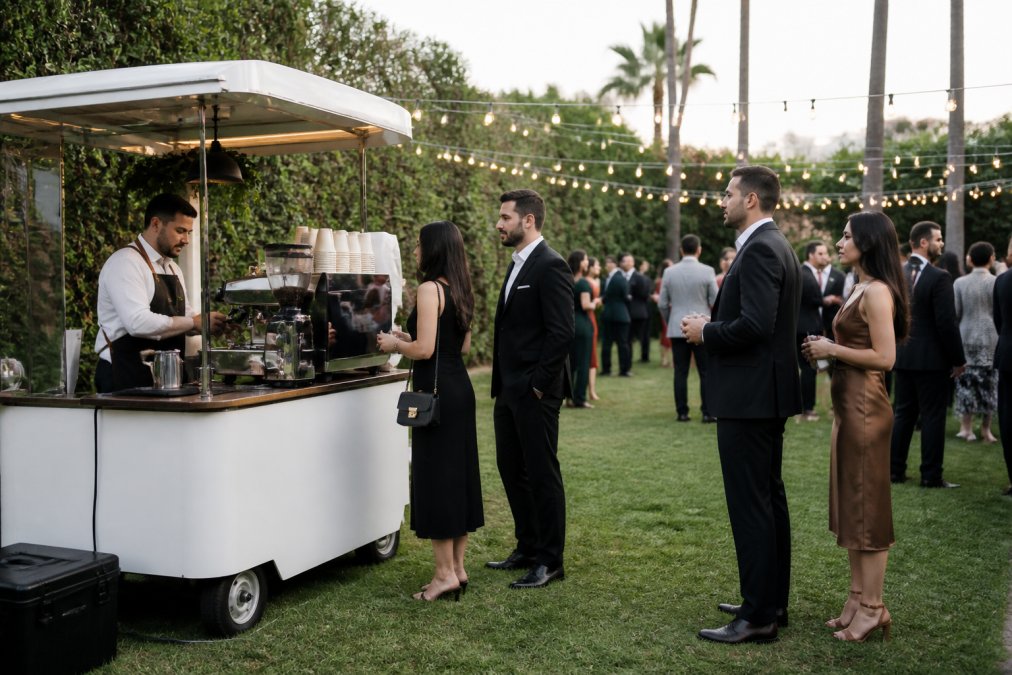
Power is the most overlooked piece of outdoor beverage planning and the one that most often forces a last-minute equipment swap. A commercial single-group espresso machine commonly draws a 15- to 20-amp circuit on a standard 120-volt outlet, and a two-group machine running alongside a grinder, refrigerator, and lights can push toward a 30-amp or 50-amp service.
A few practical rules of thumb:
- Dedicated circuit: Never share a circuit with the DJ, lighting rig, or catering ovens. Voltage sag from a shared circuit is the most common cause of an espresso machine tripping mid-service.
- Cable distance: Standard extension cords lose voltage over distance. Runs over roughly 50 feet usually call for a heavier-gauge cord, and anything over 100 feet should push the vendor toward a generator instead.
- Generator etiquette: For evening events, ask about decibel rating. A generator that reads like a lawnmower will be audible during toasts and vows.
- Fuel and runtime: Confirm the generator can run the full service window plus a buffer, and that the vendor brings spare fuel.
Water and Drainage
Water is the quiet logistics problem. Espresso machines need a water source and a way to manage wastewater, and many outdoor venues offer neither. Vendors typically solve this with a self-contained water tank and a wastewater catch tank, which means the cart is heavier and needs a flat, stable surface. Soda bars need water mainly for ice and rinsing.
Ice Capacity and Melt Rate
Ice is the soda bar’s version of the espresso machine’s power draw: the constraint that determines how long the station can run. On a warm day, ice in an open bin melts noticeably faster than ice in a closed cooler, and a busy station can burn through a surprising volume in two hours.
Weather Contingency Planning
Weather contingency planning separates a prepared vendor from a hopeful one. Heat melts ice and stresses refrigeration, wind knocks over displays and unweighted tents, and rain ruins an uncovered cart and drives guests indoors.
Do not assume the venue’s indoor backup space is available to you. Many venues book a rain plan as a separate room with a separate fee, and some outdoor-only permits do not include indoor access at all. Confirm the fallback in writing before you sign.
Venue Rules That Change the Setup
A few venue-specific rules catch planners off guard. Some parks prohibit generators entirely, ruling out a full espresso setup unless the site has power. Some venues require a certificate of insurance from the beverage vendor, and some restrict open flames. Ask for the venue’s vendor requirements list early, because a rule discovered the week of the event can force a menu change or a different vendor.
Guest Experience, Staffing, and Sustainability
Guest experience, staffing, and sustainability are usually treated as separate topics, but outdoors they are one system: how you staff the station determines the line, the line determines the wait, and the wait determines how much waste piles up. Planners who treat them together get a smoother event and a smaller cleanup bill.
Staffing Ratios and Throughput
A barista-led coffee cart creates a personal, premium interaction: guests order, chat, and watch their drink being made, slower per drink but memorable. A soda bar can run self-serve for speed or staffed for a guided mixology feel.
A practical way to plan:
- Under 75 guests, two-hour window: one barista or one staffed soda station is usually enough.
- 75 to 150 guests: plan for two service points or two staff, especially if the event has a defined arrival window where everyone wants a drink at once.
- 150 guests and up: treat the beverage station like a bar and staff for the peak 30 minutes, not the average hour. Ask the vendor how they handle a rush, because a line of 200 guests at a single station will test any setup.
Guest Engagement Without a Line
Engagement is not the same as interaction, a long line is a wait. The setups that keep guests happy without queuing have a clear menu, pre-batched options, and a second self-serve element like a water or iced tea station that pulls casual guests away from the main line. For brand activations, a named signature drink and a visible menu board do more for dwell time than an elaborate build-your-own format.
Sustainability and Waste Management
Sustainability is where many vendors fall short, and outdoors it is also where the venue can charge you. Compostable cups, lids, and straws help, but only if the waste stream accepts them, a compostable cup thrown in a general trash bin goes to the landfill just like a plastic one.
A workable outdoor waste plan has four parts:
- Matched bins: Pair every trash bin with a recycling bin and, where the venue or hauler supports it, a compost bin. Guests sort correctly when the bins are side by side and labeled with pictures, not just words.
- Signage: A simple sign above each bin showing what goes where cuts contamination more than any verbal instruction.
- Ice and liquid disposal: Melting ice and leftover drinks are a common cause of a soggy, messy station. Plan a designated drain or dump area, not the lawn.
- End-of-night sweep: Assign someone to do a final pass. Unmanaged cups and melting ice turn a polished outdoor venue into a cleanup problem, and some venues charge a fee if you leave refuse behind.
Skipping a waste plan is a common mistake, and it is also a common line item on a final venue invoice. Confirm the venue’s cleanup expectations and any associated fee before the event, not after.
The Sustainability Trade-Off Worth Naming
The honest trade-off is that compostable serviceware often costs more than standard disposables and can be harder to source in large-event quantities. For planners weighing budget against values, the higher-impact move is reducing total waste, not just swapping materials. A staffed station pouring into reusable cups, or a soda bar using larger dispensers instead of individual cans, cuts waste at the source in a way a cup swap alone cannot.
ROI for Corporate Brand Activations
ROI for corporate brand activations is where a beverage station earns its budget. A branded coffee cart or soda bar isn’t just refreshment; it’s a touchpoint that keeps guests at your activation longer and gives them something to post about.
Which Beverage Service Fits Your Outdoor Event?
Coffee catering fits outdoor events that run before late afternoon, need a crafted premium feel, and can support the power an espresso setup requires. A soda bar fits evening receptions, dry weddings, and high-volume social events where a fun, interactive, non-alcoholic experience is the goal.
Frequently Asked Questions
How many cases of soda do I need for 100 guests at an outdoor event?
Plan on roughly two to three drinks per guest for a two-hour event, which works out to about 200 to 300 servings. A standard case holds 24 cans, so that is 9 to 13 cases. Add extra if the event runs longer or the weather is hot, since guests drink more in the heat. A soda bar vendor usually builds this estimate into your quote based on guest count and service duration.
What are the pros and cons of coffee catering versus a soda bar for weddings?
Coffee catering shines at morning and early afternoon weddings, cocktail hour, and late-night dessert service, and it photographs well with custom cart branding. A soda bar suits dry weddings and all-day social events, and its syrup and topping display is highly interactive. Coffee setups need more power and water access, while soda bars need more counter space for mixers, creams, and garnishes.
Is coffee catering better for morning or evening outdoor events?
Coffee catering performs strongest in the morning and early afternoon, when guests expect espresso, cold brew, and matcha. For evening receptions, it works best as a late-night station paired with dessert, or as a signature iced drink during cocktail hour. A soda bar holds its own across the whole day, which is why many planners run both and let guests choose.
What equipment is required for mobile coffee catering versus a soda bar?
A mobile coffee cart needs an espresso machine, grinder, refrigeration for milk, a water supply, and a dedicated power source, often a generator or a 20-amp circuit at the venue. A soda bar needs an ice supply, syrup pumps, carbonated mixers, cups, and a large display footprint. Both need a service table and staffing, but coffee setups carry the heavier infrastructure load.