Table of Contents
- How to Calculate Coffee for Events: The Golden Ratio and Beyond
- How Many Cups of Coffee Per Person for Events?
- Using a Coffee Catering Calculator for Accurate Estimates
- Best Practices for Event Coffee Stations
- Accounting for Decaf, Tea, and Specialty Drinks
- Calculating Supplies: Milk, Sugar, Stirrers, and Cups
- Waste Management and Sustainability for Event Coffee
- Conclusion: Your Event Coffee Planning Checklist
- Frequently Asked Questions
Last Updated: September 17, 2026
How to Calculate Coffee for Events: The Golden Ratio and Beyond
Getting coffee quantities right is one of the most common planning headaches for event hosts. The good news: a few simple formulas will get you close enough that no guest ever goes without a cup. At Colada Kulture Co., we’ve worked enough weddings and corporate events to know that the math matters, but so does the context around it. This guide shows you how to calculate coffee for events without overbuying or running dry.
The core rule is simple. Plan on one cup per guest for every hour of your event, then add a 20% buffer. A two-hour reception for 100 guests needs roughly 240 cups. That’s the baseline. Everything else in this guide adjusts that number up or down.
The Golden Ratio for Large-Batch Brewing
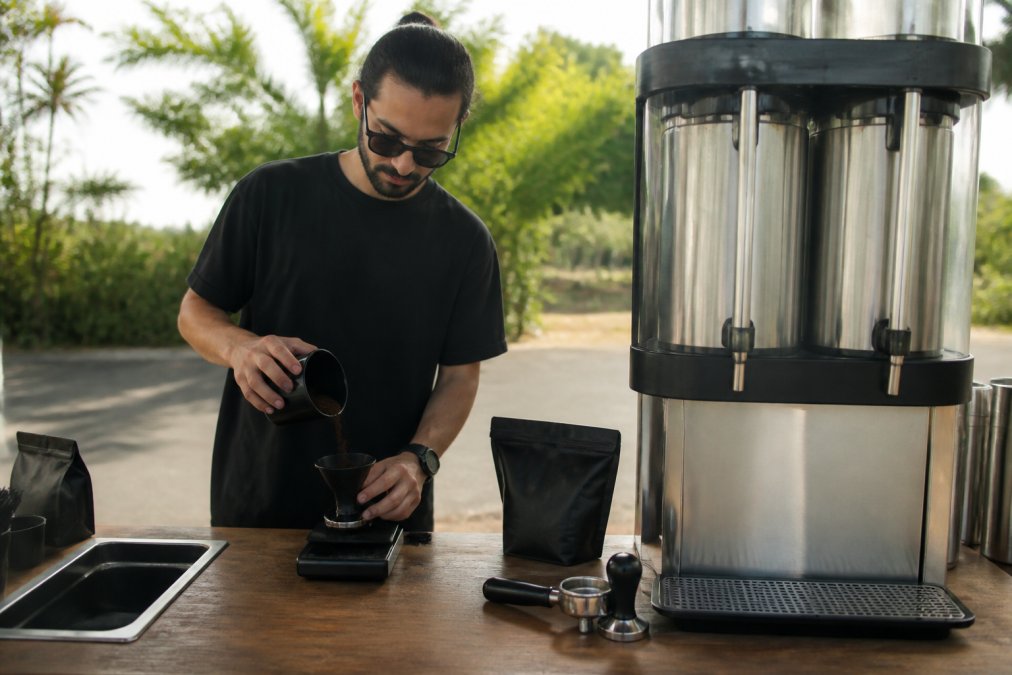
The golden ratio for coffee is 1 gram of coffee to 15-18 grams of water. That ratio holds whether you’re brewing one cup or ten gallons. For bulk brewing, use 1 pound of coffee per 5 gallons of water. This gives you a balanced, medium-strength cup that suits most crowds.
Small changes shift the taste. Use less coffee for a milder brew. Add more for a bolder one. Test your ratio before the event day.
How Many Cups of Coffee Per Person for Events?
Most event planners land on two to three cups per person for a full-day event, and one to two cups for a shorter gathering. Time of day, event type, and weather all push that number up or down. Cold mornings and long conferences push it up. Evening receptions with wine service push it down.
Here’s a quick reference:
| Event Type | Cups Per Person | Notes |
|---|---|---|
| Morning meeting (2 hrs) | 1.5 | Peak caffeine intake early |
| All-day conference | 3 | Refills throughout |
| Evening reception | 0.75 | Competes with bar service |
| Wedding brunch | 2 | Coffee pairs with dessert |
| Outdoor winter event | 2.5 | Warm drinks rise in demand |
The 80/20 Rule for Event Coffee Planning
Roughly 80% of your guests will drink regular coffee. The other 20% split between decaf, tea, and specialty drinks. Use this split to decide how much of each to brew. It keeps your supply estimation tight and cuts waste.
- 80% regular coffee
- 10% decaf
- 5% tea
- 5% specialty or alternative drinks
Using a Coffee Catering Calculator for Accurate Estimates
A coffee catering calculator does the math for you in seconds. You enter guest count, event length, and time of day. The tool returns a gallon yield and a grounds estimate. If you’d rather do it by hand, use this formula:
Gallons needed = (Guests × Cups per person × 10 oz) ÷ 128
A 100-guest, two-hour event at 1.5 cups each works out to about 12 gallons. Round up to 13 or 14 gallons for safety.
Always brew in batches, not all at once. Coffee held longer than 30 minutes loses its edge. Fresh batches keep quality high even when lines form.
Best Practices for Event Coffee Stations
A well-planned beverage station moves fast and stays clean. Set up two stations for events over 150 guests to avoid bottlenecks. Keep cups, lids, and stirrers within arm’s reach of the pour spout.
- Place the station away from food lines
- Use clearly labeled urns: Regular, Decaf, Hot Water
- Stock cups in stacks of 25 for easy refills
- Add a small trash bin right at the station
Event logistics matter as much as the coffee itself. A station that’s hard to reach slows service and frustrates guests.
Temperature Maintenance and Logistics
Temperature maintenance is where many DIY setups fall short. Coffee should hold between 155°F and 175°F for safe, enjoyable service. Insulated urns hold heat for about two hours. After that, quality drops fast.
For longer events, plan a mid-event refresh. Swap in fresh urns rather than reheating old coffee. Reheated coffee tastes flat and bitter.
Never reheat coffee in a percolator or urn. The repeated heat cycle burns the oils and turns the flavor bitter. Brew fresh instead.
Accounting for Decaf, Tea, and Specialty Drinks
Not every guest drinks regular coffee, and planning for them keeps your event inclusive. A decaf ratio of about 10% of total coffee volume works for most crowds. Older guests and evening events often push that number higher.
Tea drinkers need hot water and a selection of bags. Offer at least black, green, and herbal options. For specialty drinks, an espresso cart or barista service handles lattes, cappuccinos, and matcha on demand.
- Decaf: 10% of coffee volume
- Tea: hot water urn plus 3-4 tea varieties
- Specialty: espresso, matcha, seasonal flavors
- Non-dairy milk: whole, oat, and almond
Calculating Supplies: Milk, Sugar, Stirrers, and Cups
Supply estimation trips up more planners than coffee math does. Guests use more condiments than you would expect, especially at morning events. Plan on 1 ounce of milk per coffee drinker and 2 sugar packets per cup.
| Supply | Per 100 Guests | Notes |
|---|---|---|
| 10 oz cups | 250 | 2.5 per guest |
| Stirrers | 200 | 2 per guest |
| Milk (half & half) | 100 oz | 1 oz per coffee drinker |
| Oat/almond milk | 50 oz | For non-dairy guests |
| Sugar packets | 200 | 2 per cup |
| Napkins | 300 | 3 per guest |
Add a condiment station with cinnamon, cocoa, and flavored syrups for a premium touch. Disposable cups with lids work well for corporate events. For weddings, consider compostable options.
The Cost-Per-Cup Breakdown Most Guides Skip
Almost no event coffee guide tells you what a cup actually costs, and that is the number that decides whether you brew it yourself or hire a cart. The math below uses commodity pricing ranges you can verify at any warehouse club or restaurant supply store; plug in your own local numbers.
DIY brewed coffee, per 10 oz cup:
| Bean Tier | Grounds Cost Per Cup | Cup + Lid + Stirrer | Condiments | Total Per Cup |
|---|---|---|---|---|
| Standard commercial (canned, pre-ground) | $0.10-$0.20 | $0.08-$0.15 | $0.05-$0.10 | $0.23-$0.45 |
| Mid-tier specialty (bagged, whole bean) | $0.25-$0.45 | $0.08-$0.15 | $0.05-$0.10 | $0.38-$0.70 |
| Premium single-origin or small-roaster | $0.50-$0.90 | $0.08-$0.15 | $0.05-$0.10 | $0.63-$1.15 |
Those figures assume the 1 pound per 5 gallons ratio from earlier in this guide, which yields roughly 60-65 ten-ounce cups per pound of coffee.
Choosing a Tier Without Wasting Money
A few rules of thumb keep the budget honest:
- Match the bean tier to the event. A morning board meeting notices good coffee; a 300-guest evening reception with an open bar mostly does not.
- Do not buy premium beans and then hold them in a cheap airpot for four hours. You will pay premium prices for a standard cup.
- If you are serving espresso drinks, the bean tier matters far more than it does for drip, because the concentration amplifies defects.
- Buy cups and lids in case quantities from a restaurant supply store rather than a grocery store. The per-unit savings are typically 40-60%.
- Skip single-serve pods for events over 50 guests. The per-cup cost is two to four times higher than bulk brewing, and the waste volume is significant.
DIY drip coffee runs roughly $0.25-$1.15 per cup depending on bean tier. Catered service runs $2-$7 per cup. Decide which side of that gap your event belongs on before you build the supply list.
Waste Management and Sustainability for Event Coffee
Coffee waste adds up fast. Leftover coffee grounds can go to compost instead of the trash. Many venues now offer composting programs, so ask before you plan disposal.
A few practical moves cut waste without cutting quality:
- Brew in smaller batches throughout the event
- Use compostable cups and stirrers where possible
- Donate unopened milk and supplies to local shelters
- Set out clearly marked bins for cups, lids, and grounds
Brewing in batches and composting grounds are the two highest-impact moves for cutting event coffee waste. Both take minutes to set up and save money on supplies.
Conclusion: Your Event Coffee Planning Checklist
The math behind how to calculate coffee for events comes down to a few reliable numbers. One cup per guest per hour. A 20% buffer. The 80/20 split for regular versus specialty drinks. Nail those and you’ll rarely run short or pour money down the drain.
Frequently Asked Questions
How much coffee do I need for 100 guests?
For 100 guests, plan for about 1.5 cups per person, totaling 150 cups. Using the golden ratio of 1:15 (coffee to water), you’ll need approximately 1.5 pounds of coffee grounds. This yields roughly 9 gallons of brewed coffee. Adjust based on event duration: add 0.5 cups per person for each additional hour beyond two hours.
What is the 80/20 rule for coffee at events?
The 80/20 rule suggests that 80% of your guests will drink regular coffee, while 20% will prefer decaf, tea, or other beverages. For 100 guests, prepare 80 servings of regular coffee and 20 servings of alternatives. This ratio helps reduce waste while ensuring variety. Always offer at least one decaf and one tea option.
How many gallons of coffee for 40 people?
For 40 people, estimate 1.5 cups per person, totaling 60 cups. Since there are 16 cups in a gallon, you’ll need about 3.75 gallons. Using the golden ratio, this requires roughly 0.6 pounds of coffee grounds. If your event lasts more than two hours, increase to 2 cups per person, which means 5 gallons.
Should I account for decaf and tea when calculating coffee needs?
Yes, always account for decaf and tea. Follow the 80/20 rule: 80% regular coffee, 20% alternatives. For 100 guests, that’s 20 servings of decaf or tea. Offer both hot water and tea bags for flexibility. This ensures all guests have options and reduces the risk of running out of regular coffee.