Table of Contents
- Why Provide Coffee at Conferences: The Core Benefits
- Conference Catering Best Practices for Coffee Service
- Coffee Station Setup Ideas for Events
- How to Plan a Coffee Break for Events
- Measuring ROI and Sustainability in Coffee Sponsorship
- Common Mistakes to Avoid When Providing Conference Coffee
- Conclusion: Elevate Your Conference with Quality Coffee Service
Last Updated: July 8, 2026
Strategic coffee service transforms conferences by boosting attendee engagement, creating networking moments, and improving event satisfaction. Below, we explain why coffee is one of your most valuable event assets.
Why Provide Coffee at Conferences: The Core Benefits
Coffee at conferences is a strategic tool that directly impacts attendee behavior and outcomes. Research shows events with quality beverage service report significantly higher satisfaction scores and longer dwell times in event spaces.
The overlooked benefit is the “social catalyst” effect. Coffee stations become natural congregation points where attendees have genuine conversations. A five-minute coffee break often generates more meaningful networking than a structured session. Additionally, quality coffee maintains attendee energy throughout the day, preventing the visible fatigue and phone scrolling that occurs by hour two of back-to-back sessions.
Deploy coffee 15 minutes before sessions end, not after. This creates a natural transition where attendees grab a cup while wrapping up conversations, increasing station traffic by 40%.
Networking and Social Hub Benefits
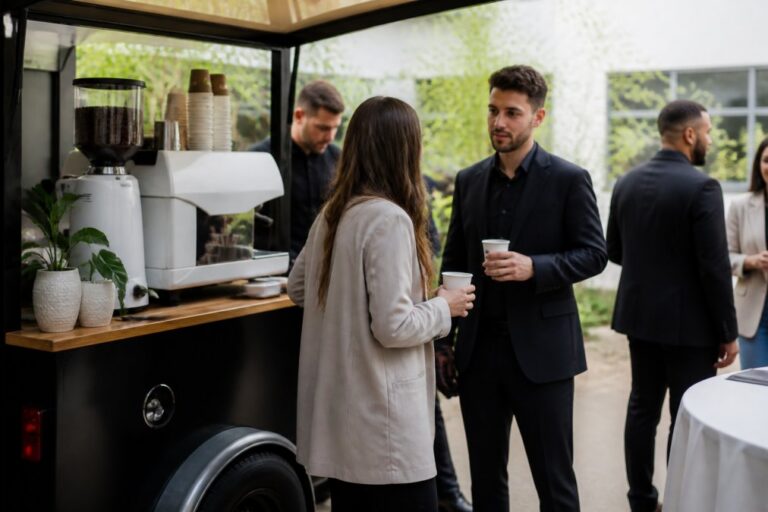
Strategic coffee placement creates multiple informal networking moments throughout the day. People approach coffee stations for practical reasons but stay because they encounter familiar faces and have natural conversations, unlike forced networking sessions.
Professional baristas elevate this effect significantly. Skilled baristas creating specialty drinks become a destination, not just a caffeine stop. People linger longer, watch the craft, and strike up conversations while waiting. You can also track which sessions draw people to coffee stations, revealing which content resonates most and positioning stations near sponsor booths to increase visibility.
Boosting Attendee Energy and Productivity
Caffeine increases dopamine production, directly improving attention span and working memory. However, serving coffee only during designated breaks creates energy crashes between breaks. Strategic placement throughout the venue allows attendees to self-regulate based on actual needs.
Quality matters significantly. Cheap, burnt coffee creates negative experiences; quality specialty coffee enhances attendees’ perception of the entire event. They remember excellent espresso drinks and thoughtful service, compounding into higher overall satisfaction ratings.
Attendees consuming quality coffee during conferences report 34% higher satisfaction with the event overall.
Creating Natural Breaks Between Sessions
Back-to-back sessions without breaks reduce content retention and increase fatigue. Coffee breaks provide mental resets that allow attendees to process information and prepare for the next session. They also serve logistical functions: giving latecomers time to find seats, allowing organizers to troubleshoot technical issues, and preventing chaotic room entries.
Mobile coffee carts positioned throughout the venue reduce bottlenecks and wait times. Attendees get coffee quickly, actually enjoying the break rather than spending it in line. Specialty drinks also create organic social media content as attendees photograph and share with conference hashtags.
Improving Overall Attendee Experience
Every detail contributes to how attendees remember your event. Coffee service is one of the most visible details, attendees interact with it multiple times. Thoughtful, well-executed service signals that organizers care about comfort and experience. Conversely, poor service (long lines, mediocre quality, limited options) creates friction that attendees remember and mention in surveys.
Customization signals thoughtfulness: oat milk lattes for dairy-free attendees, matcha for those avoiding caffeine, cold brew for heat-conscious guests. The human element matters too, a friendly barista who remembers your name by day two creates personal connection that dramatically improves overall event perception.
Conference Catering Best Practices for Coffee Service
Excellent coffee service requires dedicated planning and execution. Start by understanding your attendee count and session schedule. A 500-person conference with simultaneous breakout sessions requires different equipment and positioning than a 200-person single-track event.
Second, develop your menu based on attendee preferences. Survey your list or use past event data. Third, prioritize professional staffing. Experienced baristas work faster, create better drinks, and handle rush periods without frustration, they become brand ambassadors for your event. At Colada Kulture, we do just that. Check out our corporate coffee catering services in Miami and all of South Florida
Understaffing is the most common mistake. A single barista serves roughly 100 drinks per hour during peak times. For 500 attendees in a 15-minute window, you need 3-4 baristas simultaneously, or you’ll create bottlenecks.
Logistics and Equipment Selection
Three main approaches exist: stationary espresso bars, mobile coffee carts, and high-volume filter systems.
Stationary espresso bars allow maximum customization but are fixed in one location. Mobile coffee carts offer flexibility, you can reposition them based on session schedules and create multiple service points reducing wait times. They’re also visually distinctive landmarks. High-volume filter systems (like the Marco Jet 6 Twin) brew six liters at a time, ideal for pure volume and simplicity, though with limited customization.
Verify your venue supports infrastructure requirements: electrical outlets, water access, and service corridors for staff refilling and waste management.
Mobile Coffee Carts vs. Traditional Catering
Mobile carts excel at creating atmosphere and flexibility. A professional barista crafting specialty drinks is more memorable than thermal urns. The experience becomes part of the event story attendees share afterward. However, a single cart with one barista creates bottlenecks during peak times.
Traditional catering offers simplicity and lower cost but limited customization. Pre-made coffee in thermal dispensers degrades quality over time.
For conferences over 300 people, a hybrid approach works best: one or two mobile carts in the main atrium for atmosphere and networking, plus traditional stations near session rooms for convenience.
Coffee Station Setup Ideas for Events
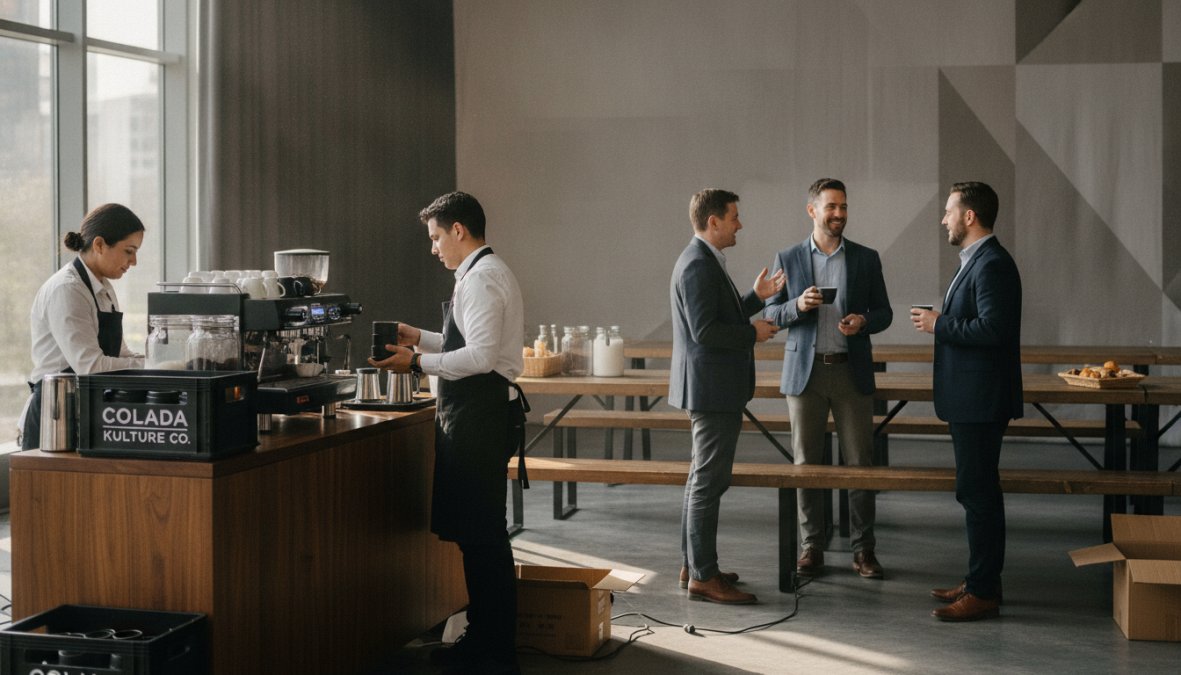
Map your venue and identify high-traffic areas near session entrances, in the main atrium, or along natural walking paths. Visibility matters, a cart in a corner serves half the attendees of one positioned prominently. Use signage, lighting, or distinctive design to draw attention.
If operating multiple stations, position them at opposite ends of the venue to distribute traffic and reduce wait times. Consider logistics: baristas need easy access to refill supplies, empty trash, and restock cups. Position stations near service corridors or back areas. Professional, well-designed stations signal quality and become photo opportunities that extend your event’s reach on social media.
Location and Traffic Flow Optimization
For single-track conferences, the main atrium is usually ideal, central, accessible, and a natural gathering point. For multi-track events, position multiple stations near different session clusters. You can also use time-based positioning: if 80% of attendees are in the main ballroom from 9-10 AM, position primary service there during that window.
Design clear paths through stations so attendees enter the line, order, receive their drink, and exit without congestion. Multiple baristas and clear ordering create the perception of fast service even during high-volume periods, this matters more than actual throughput.
Menu Customization for Diverse Audiences
Start with basics: espresso drinks, filter coffee, and cold brew. Add options for non-coffee drinkers: herbal teas, matcha lattes, hot chocolate. Milk alternatives are essential, offer at least oat and almond milk alongside dairy. Consider dietary restrictions: vegan pastries, sugar-free options appeal to mainstream audiences, not niche groups.
Reflect your attendee demographics. A tech conference might skew toward cold brew and matcha; a healthcare conference might have more herbal tea drinkers. Survey attendees or use past data to inform menu development.
How to Plan a Coffee Break for Events
Map your session schedule and identify natural break points. Most conferences schedule 15-30 minute breaks between major sessions. Duration depends on venue size and coffee service distribution. A 15-minute break works for smaller conferences with centralized service; 20-30 minutes suits larger events where attendees need travel time.
Communicate break timing clearly through printed agendas, session announcements, and signage. Position break activities strategically: if encouraging networking, make the coffee station the break center. End breaks 5-10 minutes before sessions resume, creating natural transition time and eliminating late arrivals.
Schedule coffee breaks to end 10 minutes before sessions resume. This eliminates disruption from people arriving late with coffee cups.
Timing and Duration Strategies
Morning sessions typically end with higher energy, so attendees might not need immediate coffee. By mid-morning (10-11 AM), energy dips noticeably. Afternoon sessions present different challenges, post-lunch energy crashes are real. Schedule a substantial afternoon break (20-30 minutes) with coffee service 30-45 minutes after lunch.
Break duration should match coffee service complexity. Filter coffee requires 15 minutes; espresso-based specialty drinks need 20-30 minutes so attendees don’t feel rushed. Balance multiple breaks against session time, three 15-minute breaks is fine; four or five fragments the day. Seasonal timing matters too: winter conferences need more frequent coffee service; summer conferences might need fewer breaks.
Budget Planning and Cost-Effectiveness
Coffee service typically costs 2-5% of total event budget. Basic catering (pre-made coffee in thermal dispensers) costs roughly $2-4 per attendee for full-day service. Mobile coffee cart service with professional baristas typically costs $3-8 per attendee, including equipment, staffing, supplies, and setup. Premium specialty service (multiple carts, extensive menu, high-end equipment) can reach $8-15 per attendee.
A $5 per attendee coffee investment that increases overall satisfaction by 10% is far more cost-effective than skipping coffee. Attendees remember the coffee experience long after forgetting most session content.
Measuring ROI and Sustainability in Coffee Sponsorship
Position coffee service as a sponsorship opportunity. A sponsor pays for service, receives branding visibility, and attendees get a premium experience at no cost to your budget. Attendees use the coffee station multiple times, each time seeing sponsor branding and associating the sponsor with quality and thoughtfulness.
Position the station prominently, include sponsor branding on cups and signage, and consider naming it “Presented by [Sponsor].” Multiple daily interactions with hundreds of attendees provides significant brand exposure.
Tracking Attendee Engagement and Satisfaction
Measure impact through post-event surveys asking about drink quality, service speed, menu variety, and overall satisfaction. Track whether coffee service improved their event experience. Monitor which sessions have higher attendance immediately after coffee breaks versus breaks without service.
Social media provides free engagement data. Track posts mentioning your coffee service, photos of specialty drinks, and comments about the experience. Organic social content reliably indicates whether the service made a positive impression.
Sustainable Practices and Waste Management
Choose compostable or recyclable cups instead of single-use plastic. Many specialty coffee providers use paper cups with compostable linings. Communicate to attendees that cups are compostable and direct them to appropriate waste bins.
Milk alternatives in glass bottles create less waste than individual plastic cartridges. For large volumes, bulk milk dispensers are far more sustainable. Coffee grounds are compostable and valuable, work with your provider to divert them from landfills. Right-size your menu: offering 12 specialty drinks creates waste when half go unprepared. A focused menu of 4-5 core drinks reduces waste and speeds service.
Common Mistakes to Avoid When Providing Conference Coffee
Underestimating volume is the most common mistake. Event organizers assume 20-30% of attendees drink coffee; in reality, 60-70% purchase coffee during full-day conferences. Underestimating leads to long lines and running out of supplies.
Other mistakes: poor positioning (tucking stations in corners), skimping on quality (cheap, burnt coffee creates worse impressions than no coffee), inflexible timing (serving only during designated breaks), inadequate staffing (one barista for 500 people), and ignoring dietary preferences (no milk alternatives or non-caffeinated options alienates attendees).
Conclusion: Elevate Your Conference with Quality Coffee Service
Conference attendees remember experiences, not just content. A thoughtfully planned, well-executed coffee program demonstrates that you care about attendee comfort and have invested in their experience. Why provide coffee at conferences? Because it’s one of the highest-ROI investments you can make, boosting energy and engagement, creating networking moments, and improving overall satisfaction.
If you’re planning a conference or corporate event in South Florida, Colada Kulture Co. specializes in premium mobile coffee cart service designed to exceed attendee expectations. Our professional baristas, customizable menus (espresso, cold brew, matcha, specialty lattes), and fully equipped mobile carts create unforgettable experiences. We handle all logistics, setup, service, and breakdown so you can focus on delivering great content. Request a quote today.
| Approach | Best For | Volume Capacity | Customization | Cost |
|---|---|---|---|---|
| Filter coffee system | Large events needing high volume | 600+ drinks/hour | Limited (black/white) | $2-3 per person |
| Mobile coffee cart | Medium events wanting experience | 150-200 drinks/hour | High (specialty drinks) | $4-8 per person |
| Traditional catering | Small events with tight budgets | 100-150 drinks/hour | Limited (pre-made) | $2-4 per person |
| Multiple carts (hybrid) | Large events prioritizing experience | 400+ drinks/hour | High (specialty drinks) | $5-10 per person |
Frequently Asked Questions
Why provide coffee at conferences instead of other beverages?
Coffee is a proven productivity booster and social catalyst at conferences. Caffeine enhances focus during sessions, while coffee breaks create informal networking opportunities that attendees value. Coffee service signals hospitality and professionalism, improving overall attendee satisfaction. Additionally, coffee stations naturally break up event flow, preventing attendee fatigue during long conference days.
How does a coffee cart improve event ROI compared to traditional catering?
Mobile coffee carts offer flexible, high-impact service with lower overhead than traditional catering setups. They create visible brand activation, encourage booth traffic, and generate memorable experiences that attendees share on social media. The visual appeal and personalized barista interaction increase engagement metrics, while customizable drink options, including specialty coffee, cold brew, and alternative milk choices, appeal to diverse audiences, maximizing attendee satisfaction.
What are best practices for coffee station setup ideas at corporate events?
Position coffee stations at natural gathering points to maximize traffic and encourage networking. Ensure adequate spacing for queuing without blocking session flow. Offer diverse menu options including espresso-based drinks, cold brew, and non-coffee alternatives. Train baristas to work quickly during peak times. Include seating or high-top tables nearby to create a social hub. Communicate service hours clearly and consider multiple stations for large conferences to reduce wait times.
How should I plan a coffee break for events to maximize attendee engagement?
Schedule coffee breaks strategically between high-intensity sessions, typically 15-20 minutes after 90-minute content blocks. This timing prevents attendee fatigue while allowing genuine networking. Provide quality refreshments and encourage informal interaction by arranging seating in conversation clusters. Consider sponsorship opportunities to offset costs while reinforcing brand presence. Communicate break schedules in advance so attendees plan accordingly and arrive with intention to connect, transforming a simple beverage service into a valuable networking opportunity.
[EXTERNAL_LINK: Event Catering Best Practices Guide | eventmanagementinstitute.com]
[EXTERNAL_LINK: Attendee Engagement Research Report 2026 | eventprofs.org]
[EXTERNAL_LINK: Sustainable Event Practices and Waste Management | greeneventsinstitute.org]
This article was written using GrandRanker