Table of Contents
- How to Style Mobile Coffee Bars: The Foundation
- Mobile Coffee Bar Design Ideas That Stand Out
- Decorating a Coffee Cart for Events: Practical Styling Steps
- Coffee Cart Branding: Creating Visual Identity
- Portable Coffee Bar Setup Tips for Workflow and Layout
- Infrastructure Requirements: Power, Plumbing, and Permits
- Common Styling Mistakes to Avoid
- Styling Your Mobile Coffee Bar for Customer Experience
Last Updated: July 21, 2026
How to Style Mobile Coffee Bars: The Foundation
A well-designed mobile coffee bar becomes the focal point of an event, generating word-of-mouth marketing and social media buzz. Visual presentation directly influences customer perception and willingness to pay premium prices. This guide covers design inspiration, branding strategy, workflow optimization, and infrastructure requirements to help you create a memorable mobile coffee experience.
The most successful mobile coffee bars treat design as a business tool, not an afterthought. Visual consistency, intentional color choices, and smart layout decisions directly impact revenue per event.
Mobile Coffee Bar Design Ideas That Stand Out
Color Schemes and Visual Hierarchy
Your color palette determines whether customers notice your cart from across a crowded venue. Bold, contrasting colors work better than muted tones. Use 2-3 primary colors maximum to maintain brand recognition without visual chaos.
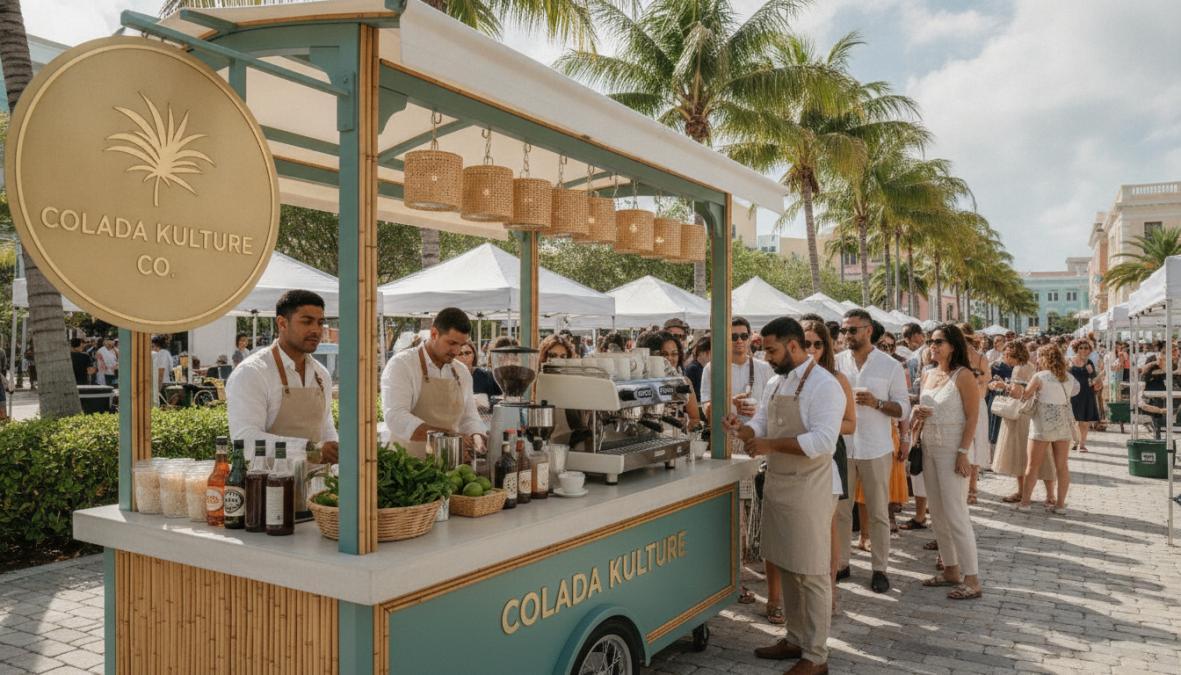
Consider the venue: white-and-black for upscale corporate events, warm earth tones for outdoor weddings, bright jewel tones for brand activations. Contrast is your most powerful tool, if your cart body is dark, use bright accents on signage. If light, use deep colors for text and logos.
Lighting amplifies color impact. Warm LED strips hidden under the counter edge create ambiance while highlighting your color scheme. Warm amber lighting suits rustic aesthetics; cool white works for modern designs. Customers linger longer and spend more with thoughtful lighting.
Materials and Finishes for Durability
Mobile coffee bars endure constant movement and weather exposure. Real wood finishes project quality but require maintenance. Powder-coated metal resists weather better than paint. Stainless steel accents signal professionalism and clean easily.
Mixing materials creates visual interest: a wood-paneled front with stainless steel countertop and metal framing looks custom-built and upscale. Matte finishes hide fingerprints better than glossy ones. The counter surface matters most, use food-grade materials like stainless steel, sealed wood, or commercial composite. Invest in durable countertops and establish a cleaning routine between events.
For outdoor operations, all materials must resist moisture and UV damage. Sealed wood holds up better than raw wood. Powder-coated metal outperforms painted surfaces. Budget for vinyl decal replacement every 12-18 months.
Skimping on material quality backfires. A worn cart damages your brand reputation more than initial cost savings. Invest in durable materials and plan for maintenance.
Decorating a Coffee Cart for Events: Practical Styling Steps
Seasonal and Theme-Based Decoration
Event-specific decoration transforms a standard cart into a thematic experience. For weddings, incorporate the couple’s colors and add floral arrangements. For corporate events, match company branding. For holiday markets, add garland and seasonal menu boards.
Decoration should enhance, not overwhelm. The sweet spot is 2-3 decorative elements that complement core design without competing for attention. Temporary decoration allows flexibility, removable vinyl decals and interchangeable menu boards let you adapt the same cart for different events.
Lighting transforms decoration impact. String lights create warmth and celebration. Spotlights highlight signage. LED strips under the counter create an upscale glow.
Lighting and Ambiance Elements
Ambiance drives customer behavior. Create lighting layers: task lighting for the barista workspace (bright, focused), ambient lighting for customers (warm, diffused), and accent lighting for branding (highlighting your logo or menu board).
Consider the time of day. Daytime events benefit from bright accents and bold colors. Evening events rely more heavily on lighting, string lights, LED strips, and uplighting become essential. Many operators invest in battery-powered lighting systems for flexibility.
Use warm-colored LED lights (2700K-3000K) for evening events. They’re energy-efficient, create inviting ambiance, and make drinks look more appetizing than cool white lights.
Coffee Cart Branding: Creating Visual Identity
Logo Placement and Signage Strategy
Your logo should appear exactly twice on the cart: once prominently on the front-facing side and once on the side or back for visibility from different angles. Position the front-facing logo at eye level (5-6 feet high) so it’s visible from 20+ feet away.
Menu boards deserve equal design attention. Use the same typography, color scheme, and branding elements as your logo. Consistency creates professional perception. Use signage hierarchy to guide attention: largest text for your business name, secondary text for menu categories, small text for disclaimers.
Materials matter for signage. Printed vinyl decals look professional and last longer than painted text. Wooden signs feel artisanal. Neon signs add modern edge. Metal lettering projects premium quality.
Budget-Friendly Branding Tiers
Tier 1 (Limited Budget, $500-$1,500): Use printed vinyl decals for your logo and business name. Add one color accent. Use printed menu boards in simple frames. This creates a clean, professional look.
Tier 2 (Moderate Budget, $2,000-$4,000): Add a full vinyl wrap in your brand colors. Include custom typography. Upgrade to interchangeable menu boards. Add basic lighting. The cart feels intentional and branded.
Tier 3 (Premium Budget, $5,000+): Invest in custom cabinetry with integrated lighting. Use professional-grade signage materials. Include digital menu boards. Add ambient lighting. Customers perceive higher value and pay premium prices.
The key is consistency across tiers. Even a limited-budget cart looks professional when colors, fonts, and branding elements align.
Portable Coffee Bar Setup Tips for Workflow and Layout
Counter Design and Customer-Facing Flow
Position the menu board directly above the counter at eye level. Customers should see pricing and options before approaching the barista. Mark the order point clearly with a sign or visual cue to prevent congestion.
Counter depth should be 24-30 inches, providing enough space for the barista while maintaining comfortable customer distance. Height should be 36-42 inches, standard bar height. Create a clear workflow: order → pay → pickup. This prevents congestion and keeps the line moving.
Storage Solutions and Equipment Placement
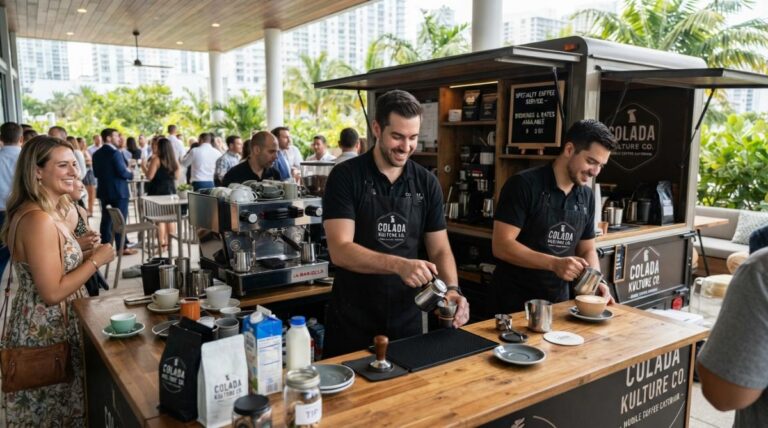
The espresso machine should be positioned where customers can see the barista working, adding theater and perceived value. Store cups, napkins, and supplies in under-counter cabinets or wall-mounted shelving without cluttering the customer-facing area.
Position the ice machine or cold brew dispenser on the side of the cart, away from the main counter. Place the generator behind or to the side, not front-facing. Position trash and compost bins to the side or rear, not visible to customers.
Test your layout with a mock event before your first real booking. Have team members simulate customer flow and adjust equipment placement to prevent bottlenecks.
Infrastructure Requirements: Power, Plumbing, and Permits
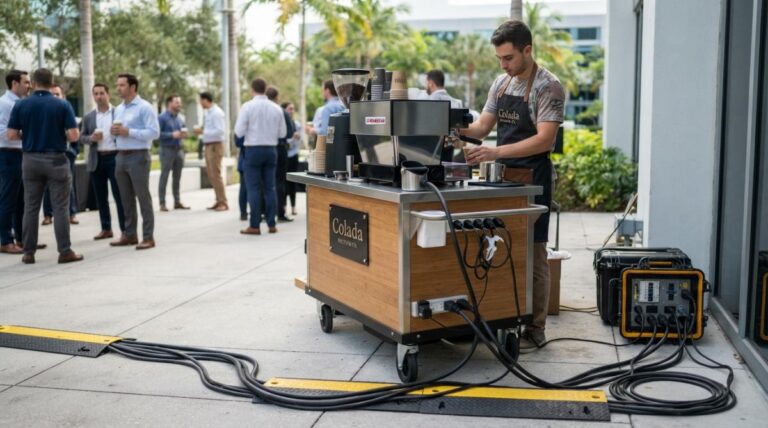
Power requirements depend on equipment. A single espresso machine draws 1,500-2,000 watts. Adding a grinder, steamer, and lighting can push demand to 3,000-4,000 watts. Confirm power availability with venues before booking. Portable generators work as backup but are noisy and visible.
Water access is critical. Many venues have outdoor faucets or can connect to indoor plumbing. Portable water tanks (20-50 gallons) work for smaller events. Check venue requirements for wastewater disposal before every event.
Health permits vary by location. Most jurisdictions require food service permits, health inspections, and liability insurance. Liability insurance is non-negotiable, event venues require proof before allowing food service. Coverage typically costs $300-$800 annually.
Use properly grounded outlets and avoid extension cords longer than 50 feet. Use GFCI-protected outlets near water sources. Inspect cords and plugs before every event.
Common Styling Mistakes to Avoid
Overcrowding the design is the most common mistake. Too many colors, fonts, and decorative elements create visual chaos. Pick 2-3 colors, use one or two fonts, and limit decorative elements to 2-3 pieces.
Ignoring the counter experience costs revenue. A cluttered counter signals poor quality. Spend as much attention on counter cleanliness as on exterior branding.
Poor lighting undermines excellent design. Test your lighting setup before events. Invest in quality LED fixtures that create warm, welcoming ambiance.
Inconsistent branding damages perception. Using different logos or colors across materials reads as unprofessional. Establish brand guidelines and apply them consistently everywhere.
Neglecting maintenance between events accelerates wear. Establish a post-event cleaning and inspection routine. Fix small issues immediately.
Underestimating workflow needs leads to bottlenecks. Design counter layout around your target throughput, not just aesthetics.
Always confirm venue infrastructure requirements before committing to an event. Arriving to discover inadequate power or water access damages your reputation and loses revenue.
Styling Your Mobile Coffee Bar for Customer Experience
The first impression happens in 5 seconds. Bold branding, clean design, and intentional styling create premium perception that justifies higher prices.
Sensory experience matters. Visual design is primary, but sound, smell, and touch combine to create memorable experiences. A beautifully styled cart generates Instagram posts and TikTok videos, creating organic marketing.
Personalization within consistency creates connection. Allow baristas to add personal touches like hand-written specials or custom recommendations. Use branded cups and include small touches like pastries or napkins with your logo. These details increase perceived value and generate repeat customers.
Styling a mobile coffee bar is ultimately about creating experiences that customers remember and recommend. Visual design, layout efficiency, and attention to infrastructure determine whether your operation becomes a sought-after vendor or blends into the background.
Colada Kulture Co. specializes in transforming mobile coffee experiences for weddings, corporate events, and brand activations across Miami and South Florida. Our team handles styling, equipment optimization, and barista expertise to create memorable moments. Ready to elevate your next event? Request a quote from Colada Kulture Co. today.
Supporting References
Understanding how to style mobile coffee bars draws from principles used by hospitality design professionals featured in industry publications, who emphasize that customer-facing spaces directly influence purchasing behavior and brand perception. Research from food service operations research at Cornell University demonstrates that visual presentation and workflow efficiency increase both customer satisfaction and operational revenue. Additionally, small business branding guidance from SCORE mentoring organization confirms that consistent visual identity across all customer touchpoints builds trust and justifies premium pricing.
| Design Element | Impact on Customer Perception | Implementation Difficulty | Cost Range |
|---|---|---|---|
| Color scheme and visual hierarchy | High, first impression in 5 seconds | Low | $200-$500 |
| Counter organization and cleanliness | High, affects perceived quality | Low | $100-$300 |
| Lighting and ambiance | High, influences mood and dwell time | Medium | $300-$1,500 |
| Signage clarity and placement | High, guides customer flow | Low | $200-$800 |
| Material quality and durability | Medium, affects longevity | High | $1,000-$5,000 |
| Equipment workflow optimization | High, enables throughput | Medium | $500-$2,000 |
| Branding consistency across materials | Medium, builds professionalism | Low | $300-$1,000 |
Frequently Asked Questions
What should be included in a mobile coffee bar setup?
A functional mobile coffee bar needs an espresso machine, grinder, milk frother, water supply system, waste management, point-of-sale equipment, and storage for cups, napkins, and ingredients. Beyond equipment, your setup should include a well-designed counter for customer service, clear menu signage, branding elements like logos and colors, and adequate lighting. Power and plumbing infrastructure are critical, ensure your venue can support electrical requirements and water access. Professional setups also include backup supplies and contingency plans for high-volume events.
How do you decorate a coffee cart for an event to match the theme?
Start by identifying the event's color palette and style, corporate, wedding, casual, or brand activation. Incorporate these colors through wrap designs, signage, and accent pieces. Add seasonal decorations like flowers, garland, or themed bunting that complement without overwhelming your cart. Use lighting strategically with string lights or uplighting to create ambiance. Ensure your branding remains visible and cohesive. For weddings and corporate events, elegant finishes and coordinated elements enhance the customer experience. Keep decorations secure and functional so they don't interfere with barista workflow or equipment access.
How do I make my coffee cart stand out and build brand recognition?
Strong visual branding is essential for standing out. Invest in a distinctive logo, consistent color scheme, and professional signage that's visible from a distance. Use high-quality materials and finishes that reflect your brand's premium positioning. Consider custom wraps or paint designs that tell your story. Display your menu clearly with specialty drink options and seasonal specials. Train your baristas to deliver exceptional service and engage customers, people remember experiences. Social media presence and word-of-mouth from satisfied customers at events amplify recognition. Consistency across all touchpoints, cart design, uniforms, cups, and service, builds lasting brand identity.
What permits and regulations do I need to operate a mobile coffee bar?
Mobile coffee operations typically require health permits, business licenses, and food service certifications specific to your county or municipality. In South Florida, regulations may include inspections of water systems, waste disposal, and food handling practices. Some venues require additional permits or liability insurance. Power and plumbing infrastructure must meet local codes. Permits vary by location and event type, weddings, corporate events, and pop-up activations may have different requirements. Contact your local health department and venue coordinator early to understand specific requirements. Professional mobile coffee services like Colada Kulture handle these logistics, ensuring full compliance so you can focus on your event.
This article was written using GrandRanker