Table of Contents
- Why Standard Coffee Bars Fall Short at Weddings
- Mobile Espresso Bar for Weddings: The Interactive Upgrade
- Hiring a Mobile Barista for Events: What to Expect
- Specialty Coffee Catering Costs: What Drives the Price
- Power, Venue, and Accessibility Requirements
- Integrating Coffee Service with Alcohol and Dessert
- Sustainability and Waste Management for Wedding Coffee Bars
- Frequently Asked Questions
Last Updated: September 16, 2026
Why Standard Coffee Bars Fall Short at Weddings
The traditional hotel coffee urn is the most reliable way to make a wedding feel like a conference. Alternatives to standard coffee bars for weddings exist because the standard version fails at the exact moment it matters: the end of the night, when guests want something made for them, not poured for them.
The problems are consistent. Urn coffee sits and stews, so the last cup tastes nothing like the first. Self-serve stations create queues at the worst possible time. And a plain table with a pump thermos gives guests nothing to photograph, which matters when half your reception is being documented for social media.
This guide from Colada Kulture Co. breaks down the realistic alternatives and the logistics most couples discover too late.
Mobile Espresso Bar for Weddings: The Interactive Upgrade
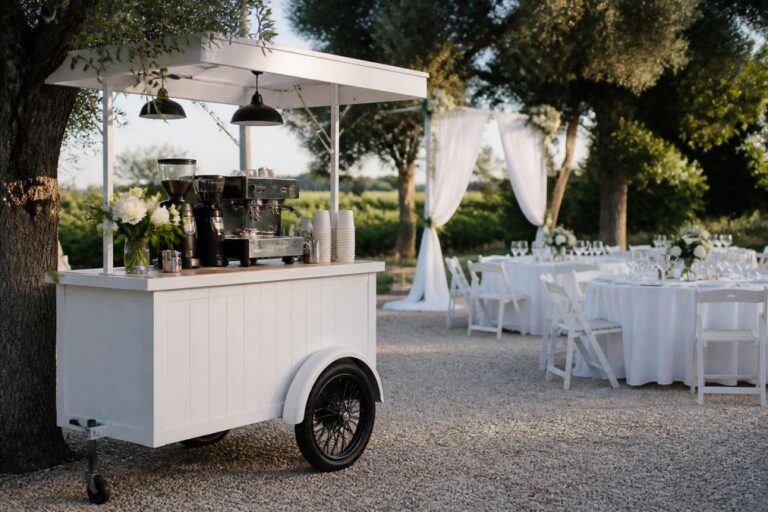
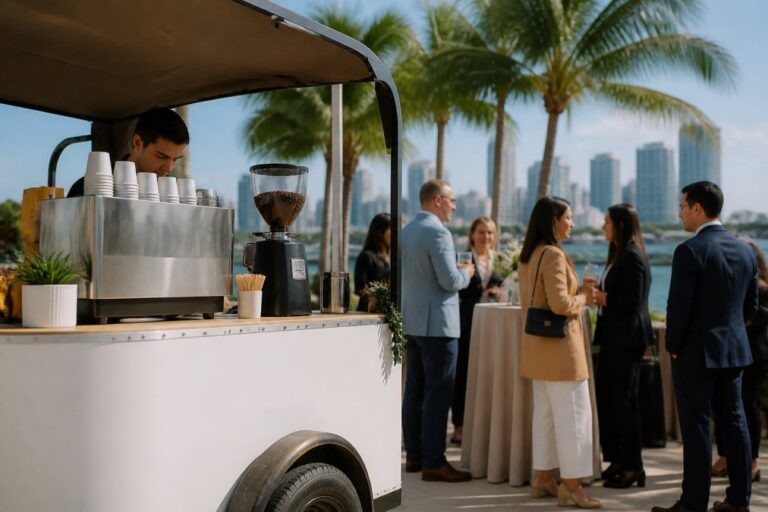
A mobile espresso bar for weddings replaces the urn with a barista, a real espresso machine, and a menu guests order from. The drink is made in front of them, which turns a five-second transaction into a two-minute experience.
That shift changes guest behavior. People linger, take photos, and return for a second drink. A handcrafted beverage station also gives non-drinkers and late-night guests something to do besides watch the dance floor.
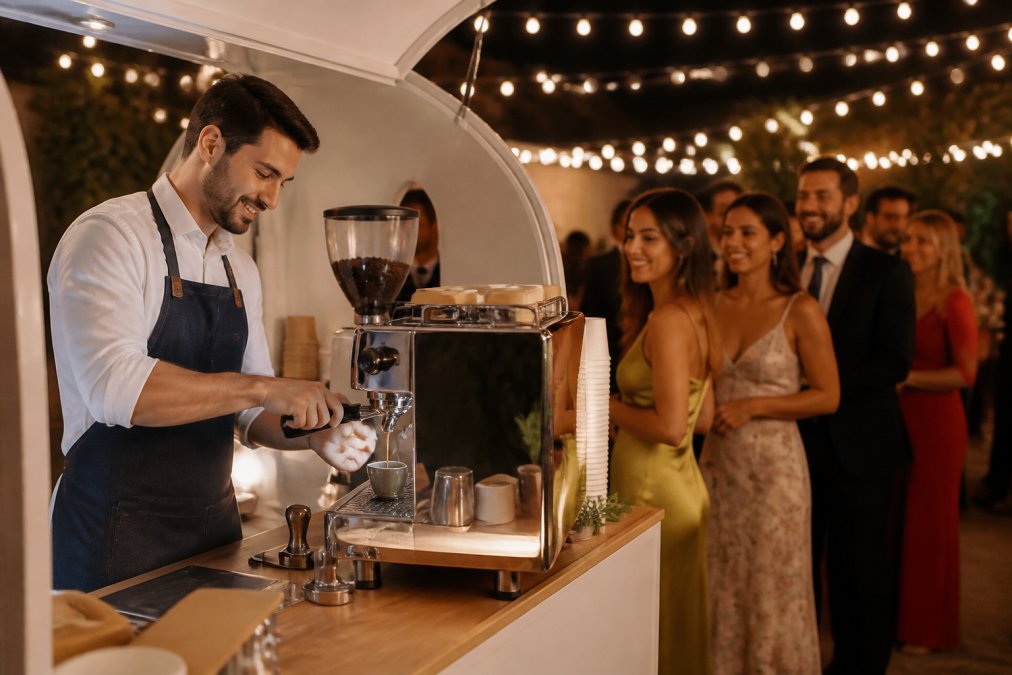
The menu is where these setups earn their keep. Espresso, cappuccino, cold brew, matcha, and seasonal syrup flavors all come from the same cart, so a couple can offer a signature drink named after them alongside a standard latte. Oat milk and almond milk belong on the menu as defaults, not upgrades.
Hiring a Mobile Barista for Events: What to Expect
Hiring a mobile barista for events means booking a service, not renting equipment. You get trained staff, the machine, the milk, the cups, and the cleanup.
Here is what a typical booking covers:
- A set service window, usually two to four hours
- One or two baristas depending on guest count
- A custom menu agreed in advance
- Setup and breakdown around your venue’s schedule
- All drinkware, syrups, and dairy alternatives
Ask three questions before signing. How many drinks per hour can the team actually produce during a rush? What happens if the venue’s power fails? And who handles the line when 200 guests leave the ceremony at once?
The most common failure at catered coffee stations is a single barista facing a 200-guest rush. A line that takes 20 minutes to clear stops being charming and starts being a complaint. Confirm barista count against your peak guest flow, not your total headcount.
Specialty Coffee Catering Costs: What Drives the Price
Specialty coffee catering costs depend on four variables: guest count, service duration, menu complexity, and staffing.
Pricing models vary by provider:
| Pricing Model | How It Works | Watch Out For |
|---|---|---|
| Per-guest | Flat rate multiplied by headcount | You pay for no-shows |
| Per-cup | Charged per drink served | Costs climb with a thirsty crowd |
| Flat rate | Fixed fee for a set service window | Overage fees past the window |
| Custom quote | Built around your venue and timeline | Hard to compare side by side |
What Actually Drives the Number
- Service window length. A two-hour window and a four-hour window are not double the price, but they are close. Labor is the largest single cost, and every additional hour adds barista time, milk, and cups.
- Barista count. One barista per 75 to 100 guests is the common planning ratio. Adding a second barista for a 200-guest reception typically adds a meaningful labor line, but it prevents the 20-minute line that turns a feature into a complaint.
- Menu complexity. A two-drink menu (espresso and drip) is the cheapest to run. Every added drink, cold brew, matcha, flavored lattes, signature cocktails, adds prep time, ingredients, and often a second station.
- Milk and syrup volume. Oat, almond, and whole milk are not interchangeable on cost. Oat milk runs higher per gallon than dairy, and a crowd that defaults to oat will push the milk line up. Syrups, seasonal flavors, and toppings add per-drink cost.
Typical Ranges You Will See
Most mobile espresso and coffee catering providers in the United States quote somewhere between $5 and $12 per guest for a standard two-to-three-hour service, with a minimum booking that often lands between $600 and $1,200.
Questions That Reveal the Real Price
- Is travel, setup, and breakdown included, or billed separately?
- What is the overtime rate if the reception runs long?
- Is gratuity built in or added at the end?
- What is the minimum guest count or minimum booking fee?
- What happens if the venue’s power fails, is there a backup, and does it cost extra?
Compare quotes on the same five line items, service window, barista count, menu, travel, and overtime, or you are comparing different products. The cheapest headline number is often the one with the most add-ons.
Colada Kulture Co. builds quotes around guest count and service requirements, so pricing reflects the actual event rather than a published tier.
Power, Venue, and Accessibility Requirements
Power is the requirement couples forget, and it is the one that cancels service.
The Electrical Numbers That Matter
Before booking, confirm these with your venue:
- Available amperage at the service location. Ask for a dedicated 20-amp circuit at minimum. If the venue cannot provide one, the vendor needs a generator.
- Voltage. Most carts run on standard 120V, but some commercial machines require 240V. Confirm which the vendor’s equipment uses.
- Distance from the nearest outlet to the setup spot. A 50-foot run needs a properly rated extension cord, and long runs drop voltage. Ask the vendor what cord length they carry.
- Whether the venue allows generators or requires quiet power. Outdoor and historic venues often restrict generators for noise or fire code reasons. A quiet inverter generator is the usual compromise.
- Circuit sharing. If the coffee cart shares a circuit with a DJ, lighting, or catering equipment, the combined load can trip the breaker mid-service. Ask the venue which circuits are dedicated.
The most common power failure at a wedding coffee bar is not a dead generator, it is a tripped breaker caused by a shared circuit. Confirm the coffee cart has its own dedicated circuit, or that the vendor brings a generator sized for the machine’s startup draw, not just its running draw.
Accessibility and ADA Compliance
Key setup requirements to verify with your venue:
- Approach path. A minimum 36-inch clear width is the common standard for a wheelchair to reach the counter.
- Turning space. A 60-inch diameter circle or a T-shaped turning space is typically required for a wheelchair to turn around at the service point.
- Counter height. A service counter at 36 inches or lower lets a seated guest reach it comfortably. A tall cart with a high counter may not.
- Surface. Keep the station on a hard, level surface. Grass, gravel, and uneven historic stone make a cart unstable and a wheelchair route difficult.
- Location. Place the station where guests using mobility aids can reach the counter without crossing a dance floor or a crowded bar line.
Walk your venue with the coffee vendor’s setup requirements in hand before you sign the catering contract. Loading dock access, elevator dimensions, door widths, and the location of the nearest dedicated circuit decide whether a trailer or a cart is even possible.
Venue-Specific Considerations
Outdoor venues, historic buildings, and barns each create different constraints.
Integrating Coffee Service with Alcohol and Dessert
Coffee service works hardest when it is scheduled against the bar, not against the clock.
Sustainability and Waste Management for Wedding Coffee Bars
The fix is mostly operational:
- Use ceramic or reusable cups for seated service
- Offer compostable cups only where the venue composts
- Skip pods entirely; a traditional espresso machine produces no capsule waste
- Set clearly labeled bins for grounds, cups, and recycling
- Arrange for spent grounds to go to a local garden or compost program
Frequently Asked Questions
How do mobile espresso carts differ from standard self-serve coffee bars?
A standard self-serve station offers pre-brewed drip coffee in urns and guests pour their own. A mobile espresso bar brings a trained barista, a commercial espresso machine, and a menu of made-to-order drinks like lattes, cappuccinos, and cold brew. The barista handles milk steaming, syrup flavors, and latte art, so guests get a fresh handcrafted beverage instead of coffee that has been sitting in a dispenser. The trade-off is cost and space, but the guest experience is more interactive and memorable.
What are some creative alternatives to a traditional wedding coffee station?
Beyond a mobile espresso bar, couples can book a coffee trailer that doubles as a photo backdrop, set up a cold brew tap station for warm-weather receptions, or hire a barista-staffed cart that serves signature drinks named after the couple. A dessert-pairing cart that combines espresso with mini pastries works well as an after-dinner station. Some couples add a matcha or chai bar for guests who avoid coffee. Each option changes the flow of the reception, so match the format to your venue layout and guest count.
Is a mobile coffee cart a good replacement for an after-dinner dessert bar?
It can work as a complement rather than a replacement. An espresso bar gives guests a warm, handcrafted drink that pairs naturally with cake, cookies, or late-night snacks. Many wedding planners position the coffee service right after dinner and keep it open through the cocktail hour and dancing, so guests can grab an espresso or cold brew whenever they want. If you want a single station, a coffee cart with pastries covers both the caffeine and dessert needs in one setup.
How do I know the barista will keep up when 200 guests want coffee at once?
Ask the vendor how many baristas they staff per guest count and whether they use a dual-group espresso machine. A single barista on one machine can typically serve about 60 to 80 drinks per hour, so events with 150 or more guests usually need two baristas or a second machine to avoid long lines. Request references from weddings or corporate events with a similar guest count, and confirm the setup time and service duration in your contract so the bar is ready before guests arrive.