Table of Contents
- Why Great Coffee Is a Strategic Win for Corporate Events
- Specialty Espresso Bars and Mobile Espresso Carts
- Cold Brew Tap Stations and Iced Coffee Options
- Seasonal Coffee Flights and Custom Drink Menus
- How to Plan Corporate Coffee Catering: A Step-by-Step Framework
- Mobile Coffee Cart Rental Cost: What Drives the Price
- Logistics, Sustainability, and Tech Integration for Coffee Stations
- Frequently Asked Questions
Last Updated: September 14, 2026
Why Great Coffee Is a Strategic Win for Corporate Events
Great coffee improves how attendees feel, how long they stay, and how they remember your brand. For planners sourcing corporate event coffee ideas, the payoff is simple: caffeine keeps people alert, and a well-run station gives them a reason to linger and talk.
That matters most during networking gaps: the station becomes a gathering point, and a branded cup works as marketing all day.
At Colada Kulture Co., we’ve served more than 35 weddings, corporate events, and private celebrations, and the pattern is consistent: the coffee station is where conversations start. This guide covers the formats worth booking in 2026, how to plan corporate coffee catering without overpaying, and the logistics most planners learn the hard way.
Specialty Espresso Bars and Mobile Espresso Carts
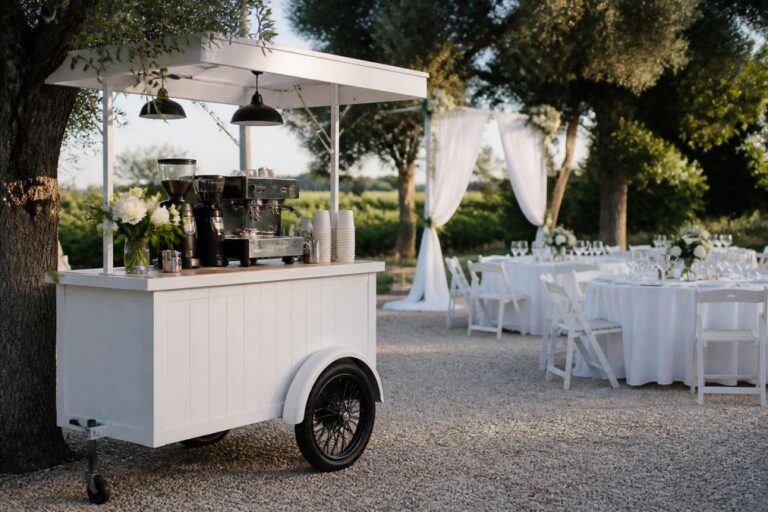
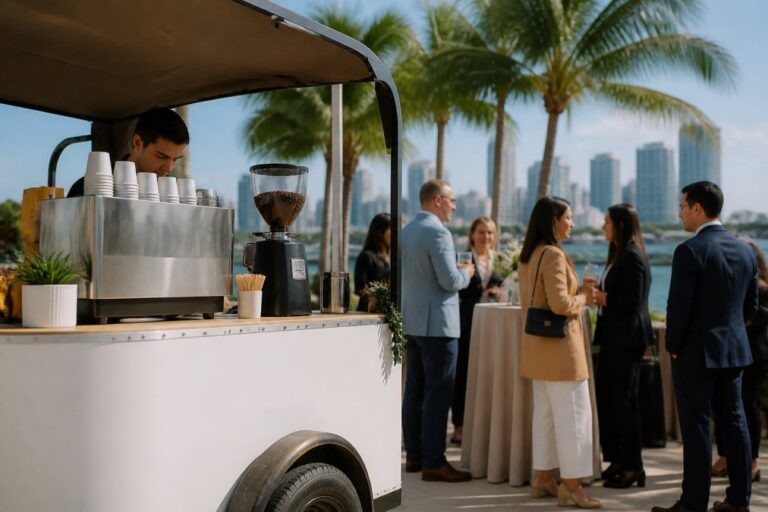
A specialty espresso bar is a staffed station where trained baristas pull fresh espresso drinks to order from a mobile espresso bar or cart. It is the highest-impact option because every cup is made in front of the guest, turning a drink into a moment.
The draw is the theater as much as the caffeine: latte art, the hiss of a steam wand, and a barista who remembers your order create a memorable interaction guests photograph, which is why marketing teams book these setups for launches and brand activations.
For a mobile espresso cart to run smoothly, plan for roughly 2.5 to 3 meters of clear space, a standard power supply, and a queue lane that keeps the line out of main traffic. A tight espresso and milk menu moves a line far faster than a long list of custom drinks.
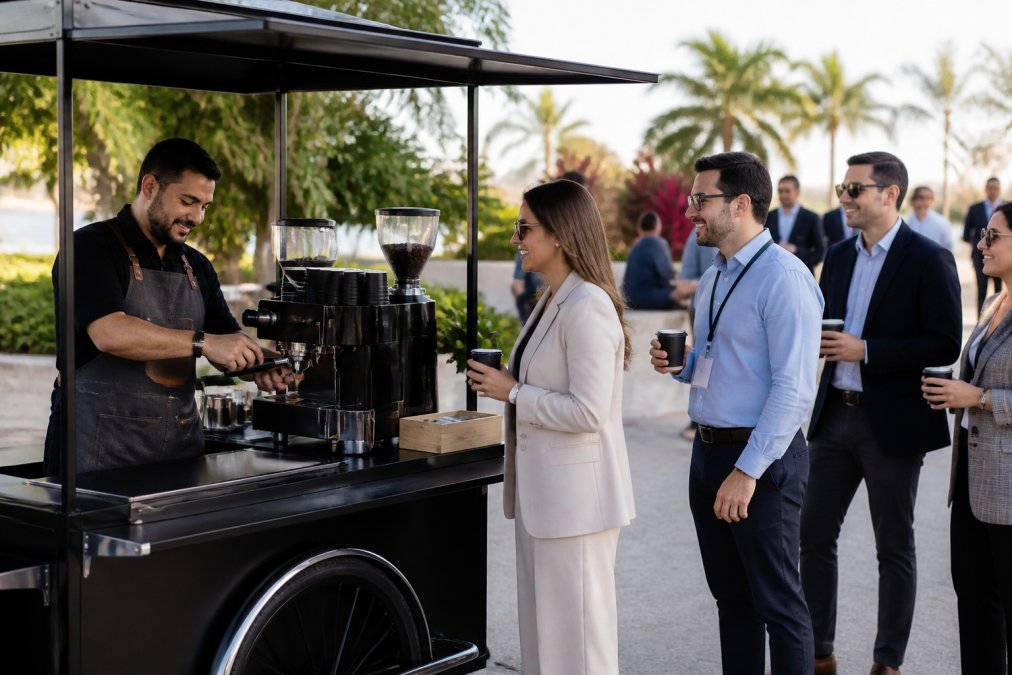
For events over 150 guests, ask your vendor to run two baristas on one cart rather than one (Catering Services). The second barista handles milk and cup staging, which roughly doubles throughput without adding a second setup.
Cold Brew Tap Stations and Iced Coffee Options
A cold brew tap station serves chilled, nitrogen-infused or still cold brew from a tap, poured on demand over ice. It is the fastest-pouring premium option, ideal for warm-weather events and afternoon sessions.
Cold brew appeals to guests who want caffeine without heat, and it pairs well with a self-serve setup that frees your staff. Keep a simple iced coffee and iced latte option alongside it, and consider a dual station, a staffed espresso bar for hot drinks and a tap station for cold, to split the queue and cut wait times.
Cold brew is brewed in advance, so confirm your vendor’s batch timing and volume against your guest count. A tap that runs dry mid-afternoon is a small failure guests remember.
Seasonal Coffee Flights and Custom Drink Menus
A coffee flight is a curated set of small, themed drinks served together, letting guests sample several roasts or flavor profiles in one order. It turns a standard refreshment service into something guests talk about, and works well for brand activations where you want a shareable, photogenic moment.
Build the menu around the season and your brand. A fall activation might offer a maple oat latte flight; a spring launch might lean on a bright, floral pour-over and a matcha option. A customizable menu lets you match drink names and colors to your campaign, and branded cups carry your logo into every photo.
Balance creativity with speed. Every custom drink adds prep time, so cap the flight at three small pours and keep a fast lane for guests who just want drip coffee or an americano.
How to Plan Corporate Coffee Catering: A Step-by-Step Framework
Planning corporate coffee catering comes down to matching the right service format to your guest count, venue, and budget, then confirming logistics before you sign. Use this sequence to avoid the last-minute scramble.
- Estimate attendance and peak timing. Coffee demand spikes in the first 30 minutes and mid-afternoon. Share your agenda so the vendor can staff to the rush, not the average.
- Choose your format. Full espresso bar for engagement, tap station for speed, drop-off for small meetings.
- Confirm the venue’s power and access. Ask about outlets, load-in routes, and any noise or fire-code limits on open flames or gas.
- Set the menu and milk options. Lock in whole, oat, and almond milk, plus matcha or tea for non-coffee drinkers.
- Agree on service window and staffing. Most vendors quote a set service window; confirm what happens if your event runs long.
- Plan waste and cleanup. Ask who removes cups, grounds, and packaging, and whether the venue charges a disposal fee.
- Request a written quote and a reference. Get itemized pricing and speak to a past client before you commit.
Mobile Coffee Cart Rental Cost: What Drives the Price
Mobile coffee cart rental cost depends on guest count, service hours, menu complexity, staffing, and travel distance. There is no single rate, because a two-hour drop-off for 40 people and a full barista bar for 400 guests are different jobs. What planners need is not a number but a way to build one, here is the framework to price your event and defend it to finance.
The five cost drivers, in order of impact:
- Labor and duration. This is the largest line item on almost every quote. A staffed bar with two baristas for four hours costs far more than a self-serve tap station, and overtime is usually billed in 30- or 60-minute increments. Ask for the hourly rate per barista separately from the package price so you can model a shorter or longer window.
- Guest count and peak volume. Vendors price either per head or per service hour. Per-head pricing protects you if attendance drops; per-hour pricing protects the vendor if guests drink more than expected. Know which model you are quoted.
- Menu complexity. A tight espresso-and-milk menu is cheapest to run because it moves the line fastest. Every added syrup, alt-milk, matcha, or seasonal flight adds prep time, ingredient cost, and sometimes a second barista. Custom drink names and branded cups are a small add-on; custom syrups and signature recipes are not.
- Equipment and power. A cart needing a generator, nitrogen tap system, or dedicated 20-amp circuit carries setup and rental costs a simple pour-over station does not. If your venue charges for power access or requires a licensed electrician, that lands on your invoice.
- Travel, load-in, and setup. Vendors typically quote a service window, not a door-to-door window. Setup and breakdown, parking, freight elevator scheduling, and distance from the loading dock all add labor hours you may be billed for even though no guest is served.
How to build a per-head estimate. Divide the itemized quote by your confirmed headcount to get a cost-per-attendee figure, then compare it against what you already spend per head on food, beverage, and swag. Coffee catering commonly lands in the same per-head band as a plated dessert or a one-hour hosted bar, which makes it easy to justify next to those numbers. If the station replaces a paid afternoon break or second snack service, the net cost is the difference between the two, not the full invoice.
What to ask for in an itemized quote:
- Staffing: number of baristas, hourly rate, minimum hours, overtime rate
- Ingredients: coffee volume, milk and alt-milk quantities, syrups, cups and lids
- Equipment: cart, espresso machine, tap system, generator, any rental fees
- Travel and logistics: mileage, parking, load-in time, setup and breakdown hours
- Service window: start, end, and the exact overtime trigger
- Waste and cleanup: who removes grounds, cups, and packaging, and any venue disposal fee
Treat any flat “average price” online with suspicion, it almost never states the guest count, service hours, or menu it assumes. Ask two or three vendors to quote the same scope, then compare line by line rather than on the bottom number. The cheapest quote is frequently the one that omitted setup labor or assumed a smaller menu.
The most common planning mistake is booking on price alone and skipping the logistics call. Vendors who arrive without confirming power, access, or setup time are the ones who show up late with cold machines. Always walk the venue plan with your vendor in advance, and get the setup window in writing.
A note on ROI. Coffee is rarely the line item that gets cut, because it is one of the few event expenses attendees interact with directly and repeatedly. To justify the spend internally, track two things: how long guests linger at the station during networking blocks, and how many scans, sign-ups, or social posts it generates. Those numbers turn a beverage line into a measurable engagement cost, a far easier conversation than defending a per-head coffee charge alone.
Logistics, Sustainability, and Tech Integration for Coffee Stations
Most coffee catering guides stop at the menu. The details that decide whether a station runs smoothly or becomes a bottleneck are the ones planners learn the hard way: power, water, floor space, waste, and how the station connects to the rest of the event.
Space and Power Planning
Before you book any staffed setup, confirm four things with the venue:
- Electrical capacity. A commercial espresso machine typically needs a dedicated circuit, and a nitrogen cold brew tap system may need its own (osha.gov). Ask the venue for the amperage available at the station location, not just whether outlets exist. A shared circuit with the AV team is a recipe for tripped breakers mid-service.
- Water access. Espresso machines and tap systems need a water source or refill plan. If the station is far from a sink, the vendor must bring water in and haul wastewater out, adding setup time and sometimes a fee.
- Floor space and queue lane. Plan for the cart footprint plus a queue lane that keeps the line out of main traffic. A line blocking a doorway or session entrance will get your station shut down by venue staff faster than any other issue. Walk the room and mark the queue path before the event.
- Load-in route and timing. High-rise offices and hotels often restrict freight elevator use to specific windows. A cart that cannot reach the room on time derails the morning, so confirm the load-in slot in writing and share it with your vendor.
Sustainability and Waste Management
Single-use cups are the largest waste stream at most coffee stations, and many venues now require a waste plan in the vendor agreement (the EPA). A practical green checklist:
- Cups and lids. Compostable or recyclable cups only work if the venue has the matching waste stream. Confirm where they actually go, because a compostable cup in a landfill bin is just a more expensive cup.
- Grounds collection. Spent coffee grounds are heavy and wet. Ask your vendor to bag and remove them, or arrange on-site composting with the venue if they have a program.
- Refillables for staff. Encourage your team to bring reusable cups, and ask the vendor whether they discount for guests who bring their own.
- Milk and syrup packaging. Alt-milk cartons and syrup bottles add up. Ask the vendor how they handle empties and whether they take them back.
Put the waste plan in the vendor agreement, not in a verbal conversation. If the venue charges a disposal fee, get it in writing before the event.
Tech Integration and Engagement
A coffee station is one of the few places where attendees voluntarily stand still for two to three minutes, making it a natural engagement point:
- QR codes. A single code at the station can link to your event app, a session feedback form, a lead-capture page, or a social tag. Place it at eye level on the cart, not on a table where cups cover it.
- Lead capture for conferences. If the station is sponsored, a branded QR code or sign-up tablet turns a coffee break into a measurable lead-generation channel. Sponsors pay for this, offsetting part of your catering cost.
- User-generated content. A branded cup plus a visible hashtag or social tag generates photos without extra spend. Ask the vendor to use cups carrying your logo and the tag.
- Feedback loop. A short post-event survey linked from the station gives you data on wait times and menu preferences for planning the next event.
The Pre-Event Logistics Checklist
| Planning Element | What to Confirm | Why It Matters |
|---|---|---|
| Guest count and peak times | Headcount plus agenda | Drives staffing and volume |
| Venue power and access | Amperage, outlets, load-in route, elevator window | Prevents late or failed setup |
| Water access | Source and wastewater plan | Determines setup complexity |
| Floor space and queue lane | Cart footprint plus line path | Keeps traffic clear and station open |
| Menu and milks | Oat, almond, matcha, tea | Covers dietary needs |
| Service window | Start, end, overtime rate | Avoids surprise fees |
| Waste plan | Cup type, grounds removal, disposal fee | Meets venue requirements |
| Tech integration | QR code, lead capture, social tag | Turns the station into a measurable channel |
The details above are the difference between a station guests remember and one they avoid. Work through them with your vendor before the event, not on the morning of.
Frequently Asked Questions
What are some unique coffee ideas for corporate events?
Beyond standard drip coffee, consider a mobile espresso bar with live barista service, cold brew tap stations, or seasonal coffee flights that let guests sample different roasts. A branded coffee cart with custom cups and a signature drink menu creates a memorable touch. For wellness-focused offices, add matcha lattes and alternative milk options like oat and almond. These ideas turn a basic coffee break into an engaging experience that keeps attendees energized and socializing.
How do you set up a professional coffee station for a conference?
Start by choosing a high-traffic location near the main session hall or networking area. Ensure access to power and water, and confirm the venue allows setup during your preferred window. A mobile espresso cart with a trained barista handles high volume and reduces lines. Offer a streamlined menu of espresso drinks, drip coffee, and cold brew to speed service. Stock whole, oat, and almond milk, plus branded cups and napkins. For large conferences, consider two stations to split traffic.
What is the 15-15-15 rule for coffee?
The 15-15-15 rule is a general guideline some coffee professionals use for coffee-to-water ratios, suggesting 15 grams of coffee per 15 milliliters of water, brewed for 15 seconds in certain espresso contexts. It is not a universal standard and varies by roast profile and brew method. For corporate events, the more practical rule is to plan one barista per 50 to 75 guests to maintain service speed and drink quality.
How much coffee should I order for a corporate event?
A common estimate is one to two cups per guest for a morning event, and slightly less for afternoon sessions. For a 100-person conference, plan for 100 to 150 drinks. If offering espresso-based beverages, a mobile cart with a barista can typically serve 60 to 80 drinks per hour. Always confirm guest count and event duration with your caterer. Under-ordering risks long lines; over-ordering adds cost. A per-guest pricing model helps you budget accurately.
What are some creative ways to brand a coffee station at a trade show?
Use custom-branded cups, sleeves, and napkins featuring your logo and social handles. Create a signature drink named after your product or campaign. Set up a photo-friendly backdrop with your brand colors and encourage attendees to share photos. A mobile coffee cart with a digital screen can display your latest promotion. These touches turn a simple coffee break into a shareable brand activation that drives attendee engagement and extends your reach on social media.